I’ll admit, this one confused me more than almost any other digestive symptom.
Burping after a big meal?
That made sense.
Burping after drinking soda?
No surprise there.
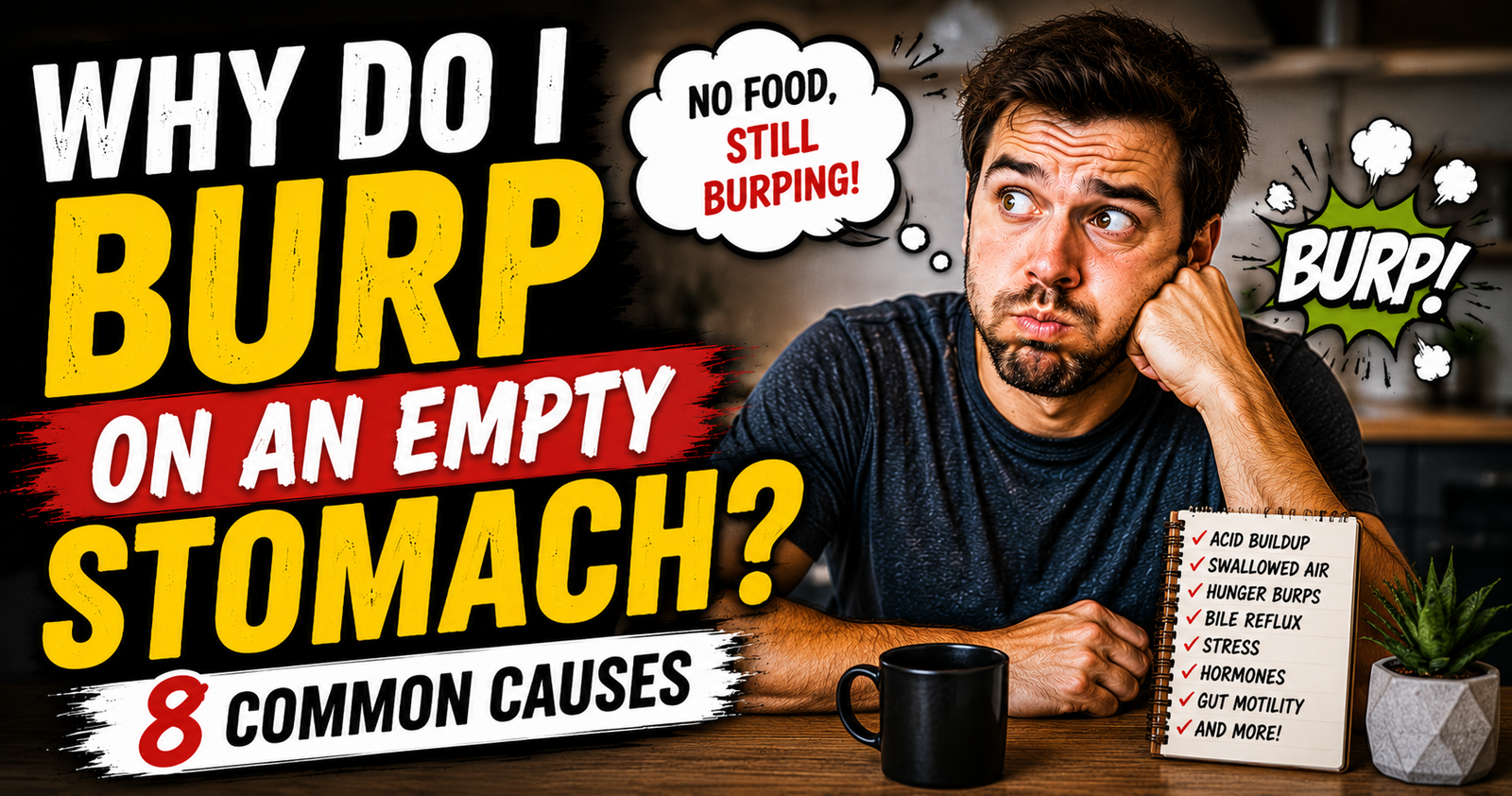
But burping when I hadn’t eaten anything for hours?
That seemed impossible.
If my stomach was empty, where was all that air coming from?
After paying closer attention and learning more about how the digestive system actually works, I realized an empty stomach doesn’t necessarily mean an empty digestive tract. There are still digestive juices, swallowed air, stomach acid, and normal muscle contractions happening all day long.
For many people, burping on an empty stomach is completely harmless.
For others, it can be an early clue that something else is irritating the digestive system.
Is It Normal to Burp Without Eating?
Yes.
Most people assume burping only happens after meals.
That’s not actually true.
Your stomach and esophagus continue working all day, even when you haven’t eaten for several hours.
You still swallow air every time you:
- Drink water.
- Talk.
- Yawn.
- Breathe through your mouth.
- Swallow saliva.
Eventually that air has to go somewhere.
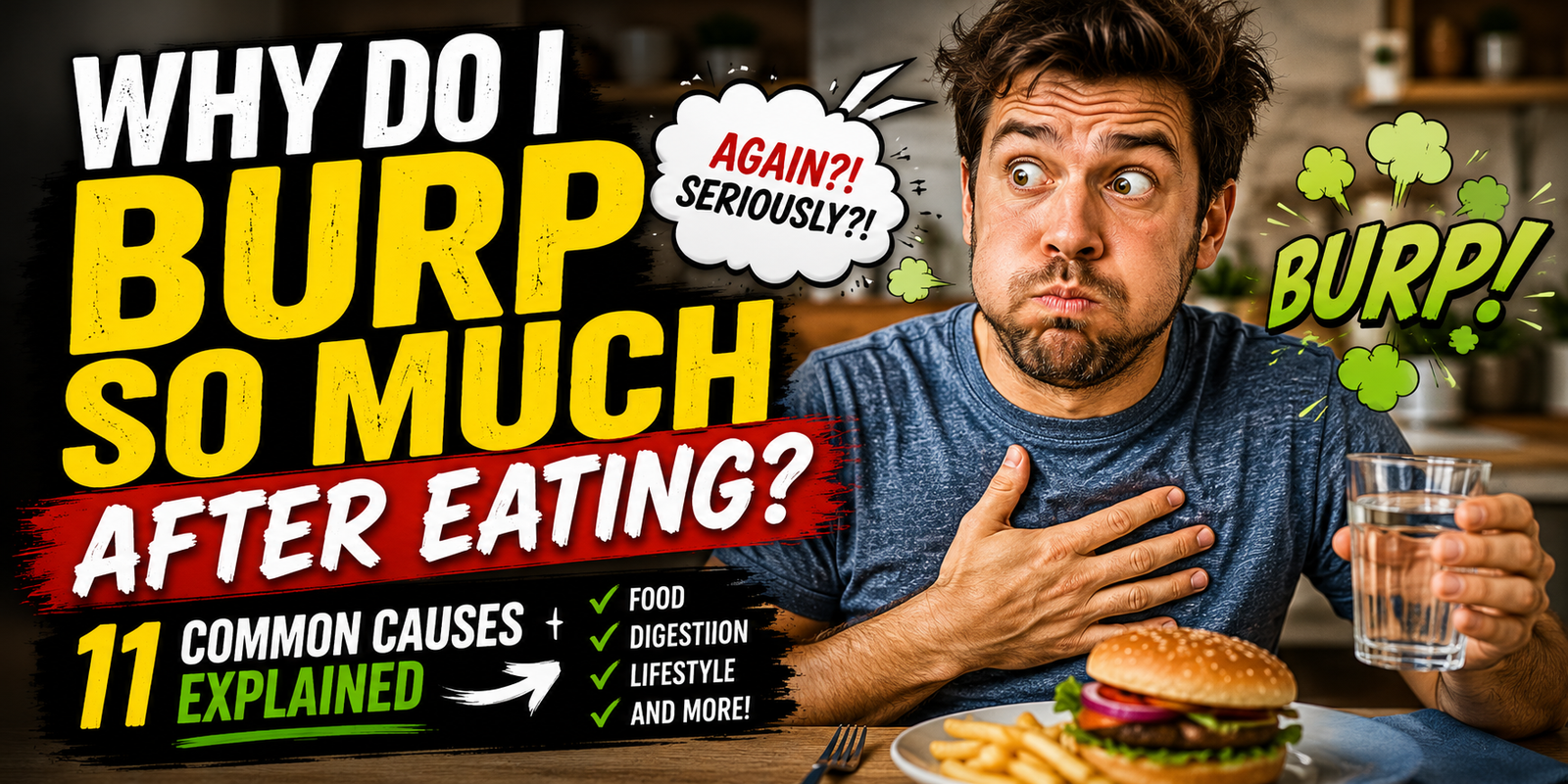
If you’ve also noticed burping after meals, I’d recommend starting with Why Do I Burp So Much After Eating? 11 Common Causes Explained because many of the same digestive conditions can cause burping whether your stomach is full or empty.



What Happens Inside Your Stomach When It’s Empty?
One thing I found fascinating is that your stomach never completely shuts off.
Even hours after your last meal it continues producing:
- stomach acid
- digestive enzymes
- mucus
- digestive contractions
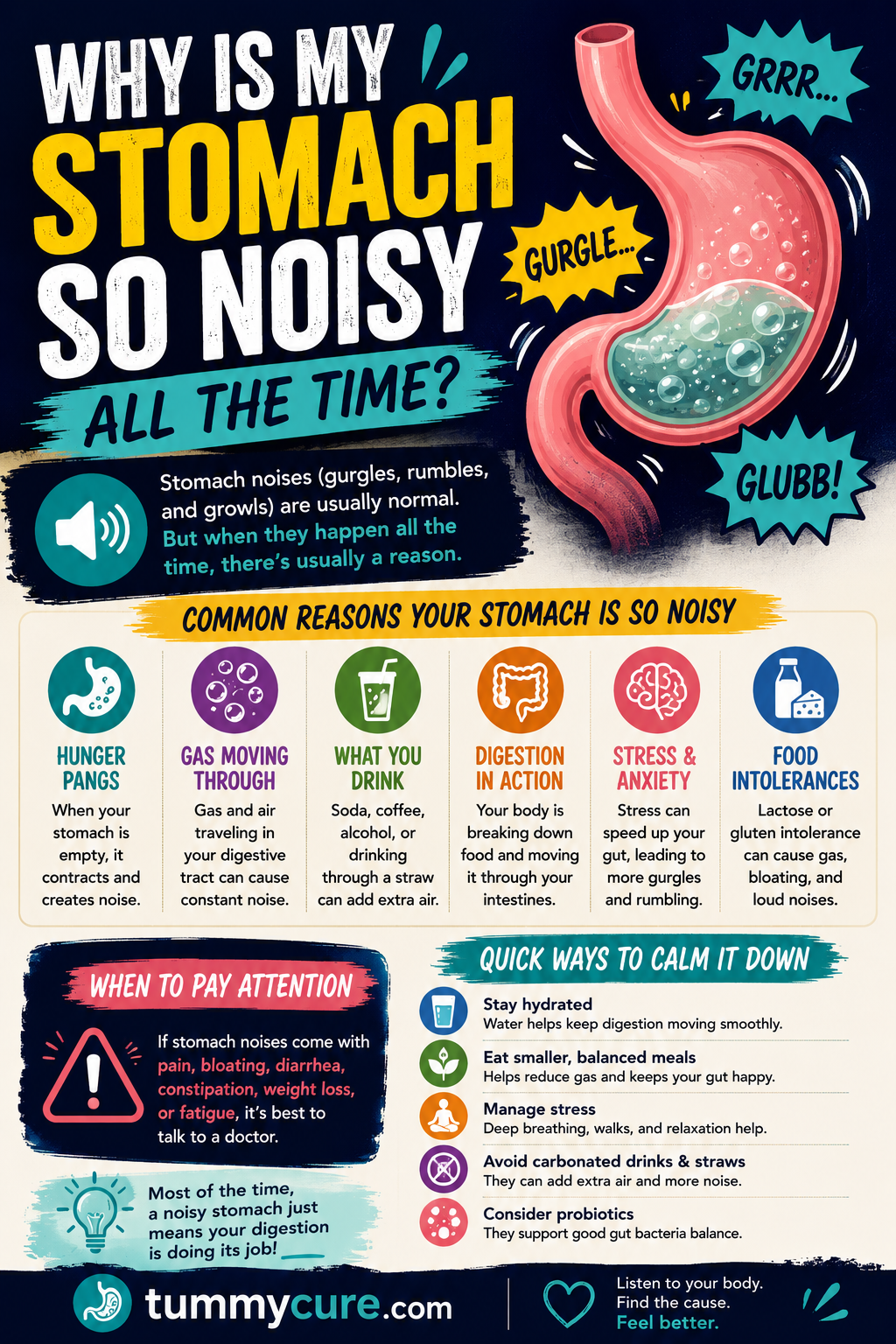
Those contractions are sometimes called the migrating motor complex. These ongoing contractions can also help explain the sounds discussed in Why Is My Stomach So Noisy All the Time?.
Their job is basically to “clean house” between meals by moving leftover food particles, bacteria, and digestive fluids farther through your digestive tract.
During this process it’s perfectly normal for trapped air to move around as well.
Sometimes that simply ends with a burp.
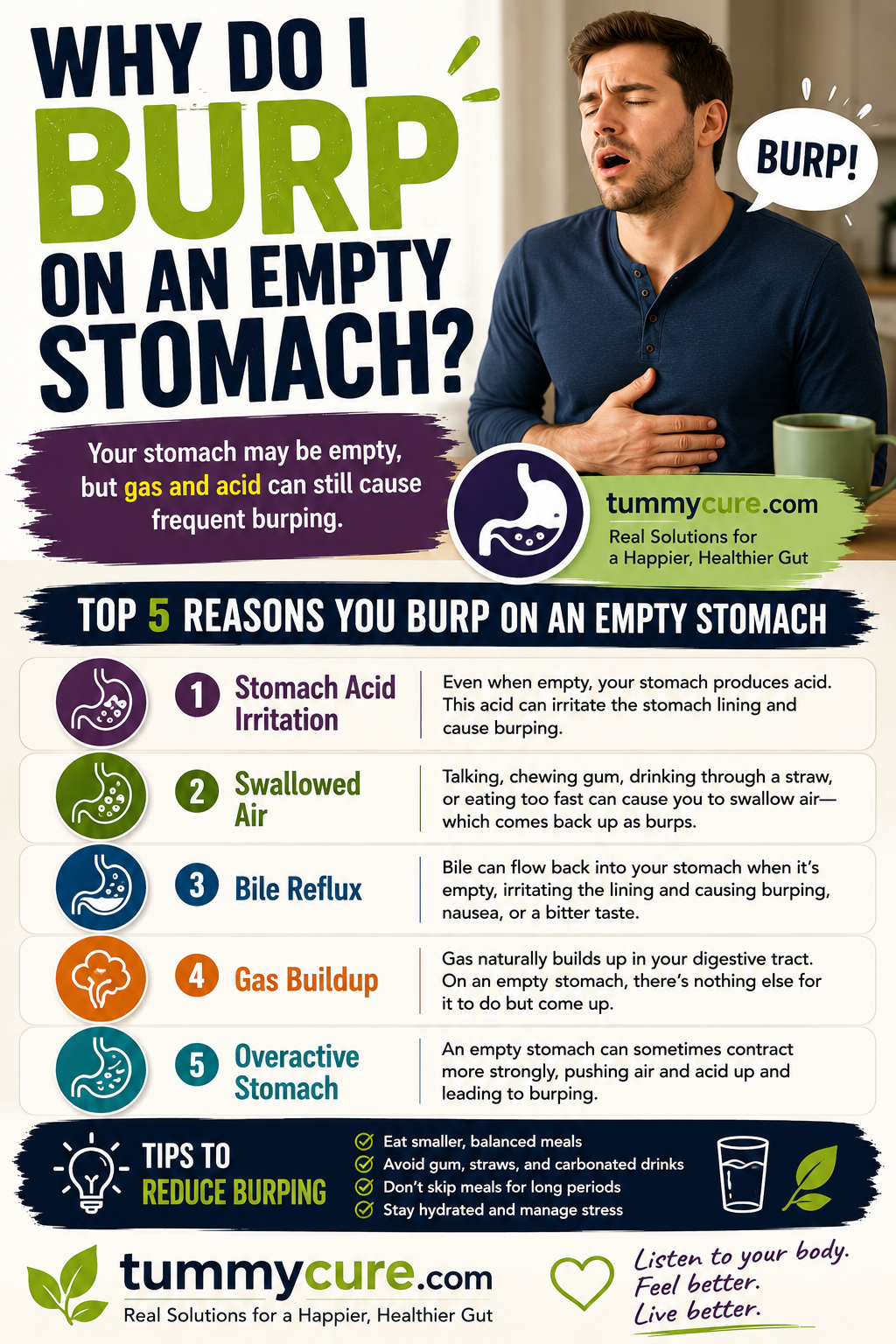
1. You’re Swallowing Air All Day Long
This is still the most common explanation.
I realized I swallowed air constantly without thinking about it.
Some of the biggest contributors include:
- Mouth breathing.
- Talking for long periods.
- Chewing gum.
- Smoking.
- Drinking quickly.
- Stress-related swallowing.
Even without food, all of that air eventually collects in your stomach.
Sooner or later, it comes back out.
2. Acid Reflux Can Happen on an Empty Stomach
This surprised me.
I always associated reflux with eating.
But many people actually notice reflux symptoms first thing in the morning or several hours after their last meal.
When your stomach is empty, acid is still present.
If small amounts move upward into the esophagus, burping may occur even without classic heartburn.
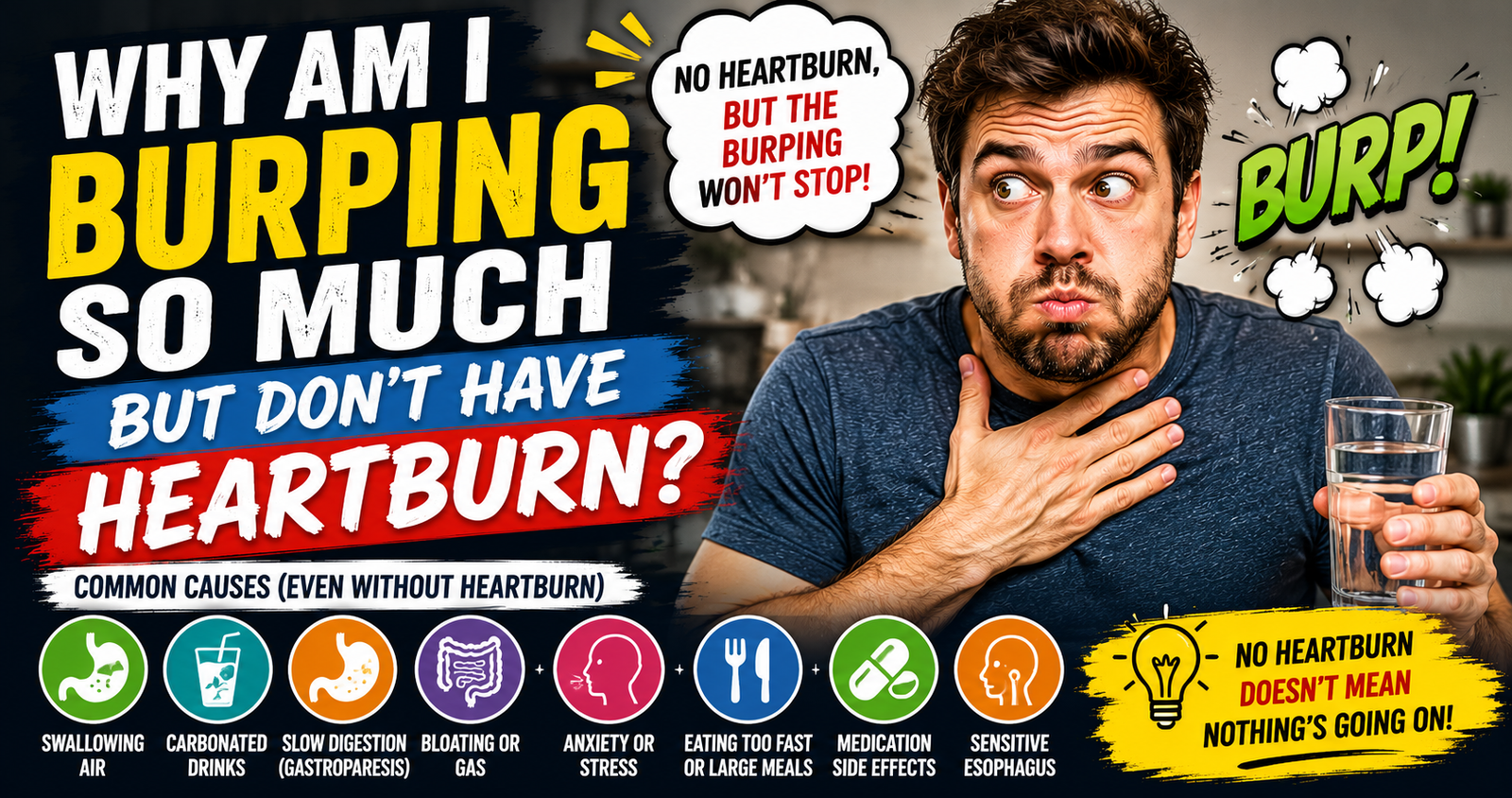
I explain this much more thoroughly in Why Am I Burping So Much but Don’t Have Heartburn? because many people don’t realize reflux can exist without any burning sensation whatsoever.



3. Gastritis Can Irritate an Empty Stomach
An inflamed stomach lining often becomes more noticeable when there’s no food present to buffer stomach acid.
That’s why some people notice:
- Burping.
- Burning.
- Mild nausea.
- Gnawing discomfort.
- Upper stomach pain.
Ironically, eating a small meal may temporarily reduce symptoms for some people because food briefly dilutes stomach acid.
4. Hunger Can Make You Notice Burping More
One thing I realized was that burping wasn’t always happening more on an empty stomach.
Sometimes I simply noticed it more because there weren’t any other digestive sensations competing for my attention.
When you’re hungry, your stomach contracts as part of its normal housekeeping process. Those contractions can move trapped air around inside your stomach, making burping seem much more noticeable than it would after a meal. Those same between-meal contractions can also explain why your stomach growls when you're not hungry.
This is especially common if you’ve gone several hours without eating or you’re intentionally fasting.

5. Stress and Anxiety Can Increase Burping
I never expected stress to have such a big impact on my digestive system.
During particularly busy weeks, I’d find myself burping throughout the morning before I’d even eaten breakfast.
It wasn’t because my stomach was full.
It was because I was unknowingly swallowing extra air.
Stress can lead to:
- Faster breathing
- Mouth breathing
- Frequent swallowing
- Muscle tension
- Changes in stomach movement
All of those can increase burping, even when your stomach is empty.
Once I started recognizing the pattern, it became much easier to understand why my symptoms were worse on workdays than on relaxed weekends.
6. Drinking Water Can Still Trigger Burping
This one caught me off guard.
Even if you haven’t eaten, drinking a large glass of water can push trapped air upward.
The water itself isn’t producing gas.
It’s simply changing the pressure inside your stomach enough for that air to escape.
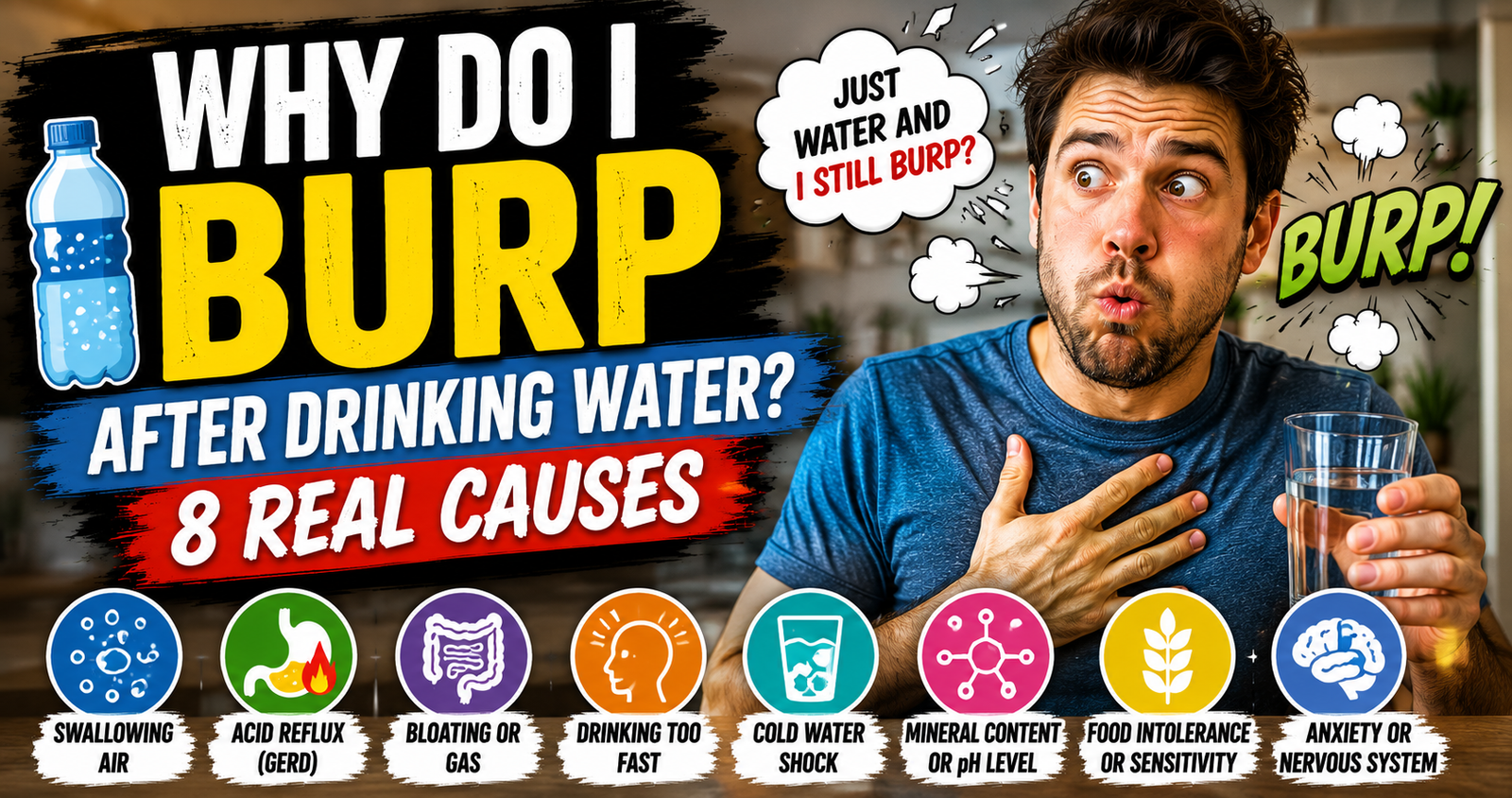
If this happens to you regularly, my article Why Do I Burp After Drinking Water? 8 Real Causes explains why plain water can sometimes trigger burping even though it doesn’t contain carbonation.


7. Your Morning Coffee May Be Part of the Problem
Many people first notice burping before breakfast because they’re drinking coffee on an otherwise empty stomach.
Coffee can stimulate stomach acid production, increase digestive activity, and relax the valve between your stomach and esophagus in some people.
That combination makes burping much more likely.
I experienced this myself for a while. Drinking coffee without eating first almost guaranteed I’d spend the next hour burping.

If that sounds familiar, you may want to read Why Do I Burp After Coffee? 9 Real Causes because coffee affects digestion in several different ways that many people don’t realize.
8. An Empty Stomach Doesn’t Mean Your Digestive System Is Empty
This was probably the biggest takeaway for me.
Your digestive system is constantly working.
Even when you haven’t eaten for several hours, your body is still producing:
- Stomach acid
- Digestive enzymes
- Saliva
- Digestive mucus
- Normal muscle contractions
Small amounts of swallowed air continue collecting throughout the day as well.
Eventually, some of that air escapes through burping.
So while it feels strange to burp without food in your stomach, it’s actually a completely normal process most of the time.

What Helped Me Burp Less on an Empty Stomach
After paying attention for a couple of weeks, I found several habits that consistently helped.
The biggest improvements came from:
- Drinking water slowly instead of gulping it.
- Waiting until after breakfast to have my first cup of coffee.
- Eating a light breakfast instead of skipping meals.
- Slowing my breathing during stressful mornings.
- Avoiding chewing gum between meals.
None of those changes were dramatic, but together they noticeably reduced my morning burping.
Could Gut Health Be Part of the Problem?
If your burping started after antibiotics or you’ve also noticed bloating, stomach discomfort, or changes in bowel habits, your gut bacteria may deserve some attention.
A healthy gut microbiome helps break down food efficiently and influences how much gas is produced during digestion.
When that balance is disrupted, digestive symptoms can linger much longer than people expect.
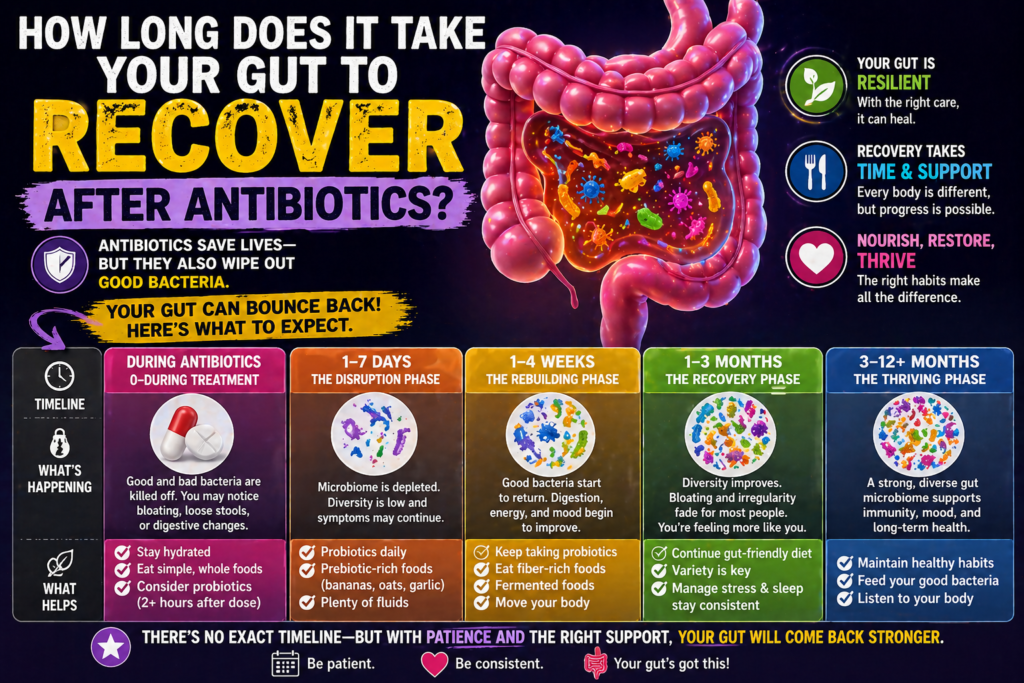
If you’ve recently finished antibiotics, I recommend reading How Long Does It Take Your Gut to Recover After Antibiotics? because I was surprised to learn recovery often takes weeks or even months.
Can Probiotics or Digestive Enzymes Help?
The answer depends on why you’re burping.
If the problem is swallowed air, they probably won’t make much difference.
However, if poor digestion or an imbalance in your gut bacteria is contributing to excess gas, they may help some people.

I spent quite a bit of time researching both while trying to better understand digestive symptoms. If you’re considering digestive enzymes, check out Best Digestive Enzymes for Bloating That Actually Work. If you think gut bacteria may be involved, you may also find Best Probiotic for Bloating That Actually Works helpful.
Burping Doesn’t Always Mean Food Is the Problem
One of the biggest things I learned was that burping isn’t always caused by what you eat.
Stress, swallowed air, acid reflux, and digestive habits can all play a role, even when your stomach is empty.

If you’re dealing with frequent burping throughout the day, not just before meals, How to Stop Burping Naturally brings together many of the lifestyle changes that helped reduce my symptoms.
When You Should See a Healthcare Provider
Burping on an empty stomach is usually harmless.
However, it’s important to seek medical advice if you also experience:
- Difficulty swallowing
- Persistent vomiting
- Vomiting blood
- Black or tar-like stools
- Severe abdominal pain
- Unexplained weight loss
- Chest pain
- Burping that becomes progressively worse over time
These symptoms may point to an underlying digestive condition that requires evaluation.
Frequently Asked Questions
Why do I burp in the morning before I’ve eaten anything?
The most common causes are swallowed air, stomach acid, morning coffee, or normal digestive contractions that continue overnight. Your stomach is still active even when it’s empty.
Can an empty stomach cause acid reflux?
Yes. Your stomach continues producing acid between meals, and some people experience reflux symptoms first thing in the morning or after several hours without eating.
Why do I burp while fasting?
Fasting doesn’t stop you from swallowing air. You’re still swallowing saliva, drinking fluids, talking, and breathing throughout the day, all of which can introduce air into your stomach.
Does eating stop the burping?
Sometimes. If your burping is related to stomach acid irritating an empty stomach, eating a light meal may temporarily improve symptoms. If it’s caused by swallowed air, eating may not make much difference.
Is burping on an empty stomach serious?
Usually not. Occasional burping is a normal digestive function. However, if it’s persistent or accompanied by alarming symptoms like severe pain, weight loss, vomiting blood, or difficulty swallowing, you should seek medical evaluation.
Author: Natalie Mercer
Natalie Mercer is a digestive health writer who specializes in making everyday digestive symptoms easier to understand through practical, evidence-informed guidance. She focuses on helping readers recognize common digestive patterns, explore realistic lifestyle changes, and know when it’s time to seek professional medical care.
As an Amazon Associate we earn from qualifying purchases through some links in our articles.