
Your stomach isn’t supposed to be completely silent.
That’s something I wish I had learned years ago.
For the longest time, every growl, gurgle, or bubbling sound made me wonder if something was wrong.
Eventually I realized there was a big difference between a stomach that’s simply digesting food and one that’s trying to tell you something.
Most stomach noises are completely normal.
The goal isn’t to stop every sound.
The goal is to reduce the excessive noises that happen because of gas, poor eating habits, or digestive problems.
Over time, I found that a handful of simple changes made a much bigger difference than I expected.
Start by Looking for Patterns
One of the biggest mistakes I made was assuming every noisy stomach had the same cause.
It doesn’t.
Ask yourself a few simple questions:
- Does it happen after every meal?
- Is it worse at night?
- Does it happen when I’m hungry?
- Does it follow certain foods?
- Am I also bloated or burping?
Those answers often point you toward the real cause.
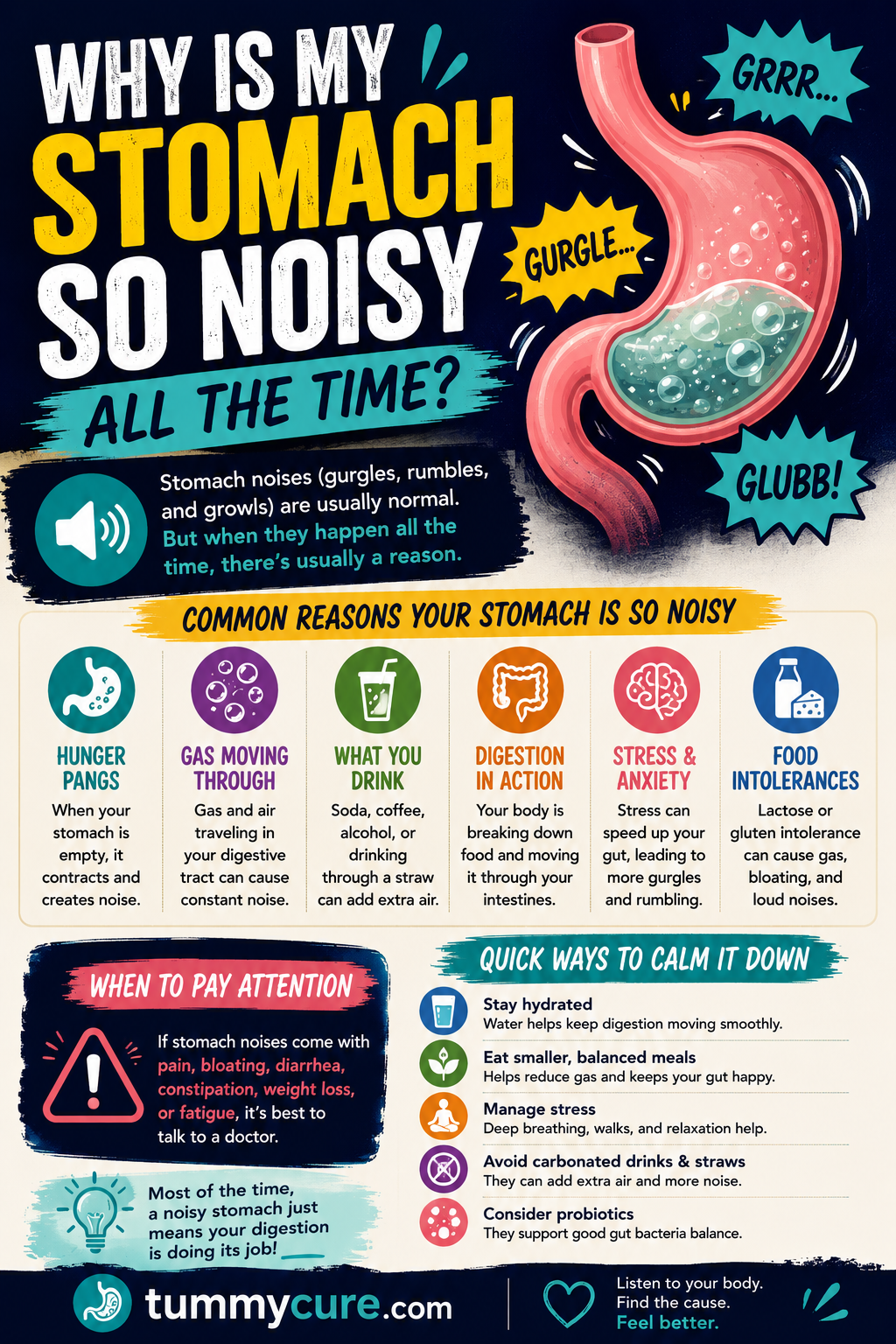
If your stomach seems noisy throughout the day, Why Is My Stomach So Noisy All the Time? is a great place to start because it explains many of the most common reasons digestion becomes louder than usual.

Slow Down at Mealtime
This one helped me more than I expected.
When I rushed through meals, I swallowed far more air.
That extra air eventually moved through my digestive tract, creating more bubbling, rumbling, and gurgling than I realized.
Now I try to:
- Chew my food completely.
- Put my fork down between bites.
- Finish one bite before taking another.
- Avoid talking while chewing.
My stomach definitely became quieter once I stopped treating every meal like a race.


Eat Smaller Meals More Often
Huge meals were almost guaranteed to make my stomach noisy.
Smaller meals spread throughout the day seemed much easier for my digestive system to handle.
Instead of one large lunch that left my stomach working overtime, I found that slightly smaller portions reduced both stomach noises and bloating.
That doesn’t mean you need to eat constantly.
It simply means avoiding the feeling of being completely stuffed whenever possible.
Pay Attention to Foods That Trigger More Gas
Not every food affects digestion the same way.
Some foods naturally create more intestinal gas than others.
Common examples include beans, broccoli, cabbage, onions, garlic, lentils, and carbonated drinks.
Rather than eliminating everything at once, I found it much more useful to notice which foods repeatedly caused problems for me.

If you’re not sure where to begin, What Foods Make You Burp More? covers many of the same foods that also increase stomach rumbling, bubbling, and excess gas.
Stay Hydrated Throughout the Day
This one sounds almost too simple, but I noticed a difference when I was drinking enough water consistently.
When I got busy and hardly drank anything until dinner, my digestion always seemed a little sluggish afterward.
Instead of drinking a large amount all at once, I found it worked better to sip water throughout the day.
Keeping things moving normally through your digestive tract may reduce some of the extra rumbling and gurgling that can happen when digestion slows down.
Take a Short Walk After Larger Meals
I don’t mean going for a long workout.
Even a ten or fifteen minute walk around the neighborhood or through the office seemed to help.
Gentle movement encourages your digestive system to keep food and gas moving naturally.
I especially noticed a difference after dinner.
Instead of sitting on the couch immediately, I’d walk around for a few minutes before relaxing.
It became one of the easiest habits to stick with.



Reduce Carbonated Drinks
I enjoy soda now and then, but I finally realized it was adding more than just flavor.
Carbonated drinks introduce extra carbon dioxide into your digestive system.
Some of that gas comes back out as burps.
The rest continues through your intestines, often making stomach noises much louder.
Simply replacing one or two sodas each day with plain water noticeably reduced the amount of rumbling I experienced.
Give Your Stomach Time Before Lying Down
One habit I didn’t think much about was lying down right after dinner.
Looking back, those evenings usually came with the loudest stomach noises.
Now I try to stay upright for at least a couple of hours after eating whenever possible.
That gives my digestive system time to begin processing the meal before I head to bed.

If your stomach seems especially active overnight, Why Does My Stomach Gurgle at Night? explains why evening routines often play a bigger role than people realize.
Keep a Simple Food Journal
I didn’t need anything fancy.
Just a notebook on the kitchen counter.
For a couple of weeks I wrote down:
- What I ate.
- What time I ate.
- When the stomach noises started.
- Whether I also felt bloated or had excess gas.
The patterns became obvious much faster than I expected.
Instead of guessing, I finally had something concrete to work with.
Could Digestive Enzymes or Probiotics Help?
For some people, yes.
If your stomach noises seem related to meals that leave you feeling overly full or uncomfortable, digestive enzymes may help support more efficient digestion.

If excess gas is related to changes in your gut microbiome, probiotics may also be worth considering. One option to discuss with a healthcare professional is the Garden of Life probiotic formula.

One supplement I spent a lot of time researching is Zenwise Digestive Enzymes because it combines digestive enzymes, probiotics, and prebiotics in one formula.

I also put together detailed guides covering Do Digestive Enzymes Help With Burping? and Do Probiotics Help With Burping? since many of the same digestive issues behind burping also contribute to stomach growling and gurgling.

Know When Home Remedies Aren’t Enough
Most stomach noises don’t need treatment.
They’re simply part of having a healthy digestive system.
However, if the noises become persistent or are accompanied by other symptoms, it’s important to look at the bigger picture.
Contact your healthcare provider if you also develop:
- Severe or persistent abdominal pain.
- Repeated vomiting.
- Bloody stools.
- Black or tar-like stools.
- Ongoing diarrhea.
- Unexplained weight loss.
- Difficulty swallowing.
- A swollen or rigid abdomen.
Those symptoms deserve prompt medical evaluation.
Sometimes Reassurance Is the Best Medicine
When I first started paying attention to my digestion, I spent far too much time worrying that every growl or gurgle meant something was seriously wrong.
The truth is that stomach noises are a normal part of how your digestive system works.
Learning what’s normal gave me just as much peace of mind as the lifestyle changes themselves.

If you’re still unsure whether your symptoms are something to watch or simply part of healthy digestion, When Should You Worry About Stomach Noises? explains the warning signs that deserve medical attention and the situations where a noisy stomach is usually nothing to worry about.
Frequently Asked Questions
Can you stop stomach growling naturally?
You usually can’t eliminate every stomach sound because digestion naturally creates noise. However, eating more slowly, reducing carbonated drinks, staying active after meals, and identifying foods that trigger excess gas can often make your stomach much quieter.
What foods make a noisy stomach worse?
Foods that commonly produce more gas include beans, broccoli, cabbage, onions, garlic, lentils, and carbonated beverages. Everyone’s digestive system is different, so keeping a food journal can help identify your personal triggers.
Does drinking water help a noisy stomach?
It can. Staying hydrated supports normal digestion, although drinking large amounts very quickly may temporarily increase stomach movement and swallowed air in some people.
Can stress make my stomach noisier?
Yes. Stress can affect how food and gas move through your digestive tract, and it can also make you much more aware of normal digestive sounds.
Is it normal for my stomach to make noise every day?
Yes, for many people it is. A healthy digestive system makes noise throughout the day as it moves food, liquids, and gas. The concern is usually not the noise itself, but whether it’s accompanied by pain, persistent diarrhea, vomiting, unexplained weight loss, or other concerning symptoms.
Author: Natalie Mercer
Natalie Mercer is a digestive health writer who enjoys helping readers understand common digestive symptoms through practical, research-informed guidance. She focuses on helping people recognize normal digestive processes, identify everyday habits that may improve digestive comfort, and understand when it’s time to seek professional medical advice.
As an Amazon Associate we earn from qualifying purchases through some links in our articles.