
After 90 days on Seed DS-01, here’s my honest review — what changed, what didn’t, and whether it’s worth the price for bloating, gut health, and digestion.
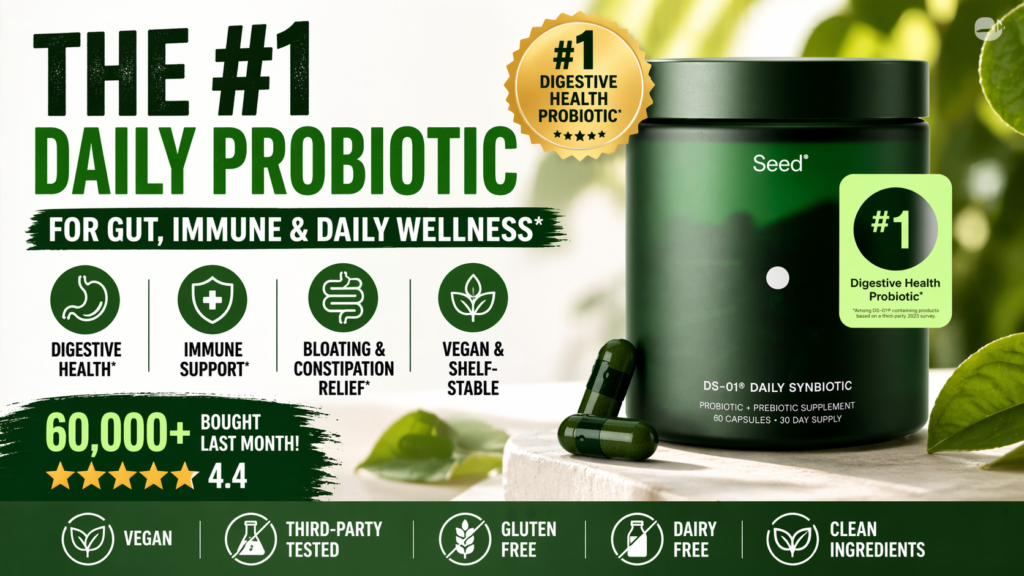
My Honest Take After 90 Days on Seed DS-01
I’ll be straight with you — I was skeptical. Fifty dollars a month for a probiotic felt like a lot when I could grab a bottle of Culturelle at the drugstore for twelve bucks. But after months of dealing with bloating that made me look three months pregnant by 3pm, I decided to stop being cheap about it and actually try something that people kept raving about.
That was three months ago. And yeah, it changed my mind.
This isn’t a sponsored post. I’m going to walk you through exactly what Seed DS-01 is, how it works, what I noticed, what I didn’t, and whether it’s actually worth the price tag — especially compared to what else is out there.
| Quick Facts | Details |
|---|---|
| Product | Seed DS-01 Daily Synbiotic |
| Price | ~$49.99/month (subscription) |
| Strains | 24 clinically studied strains |
| CFU Count | 53.6 billion AFU |
| Prebiotic Included | Yes (outer capsule) |
| Refrigeration Needed | No — shelf stable |
| Vegan | Yes |
| Best For | Bloating, gut health, digestion, immunity |
What Even Is a Synbiotic?
Most people have heard of probiotics — the live bacteria that help balance your gut. And you’ve probably seen “prebiotic” on labels too, which is basically the food that feeds those bacteria. A synbiotic combines both in one product, designed so they work together instead of separately.
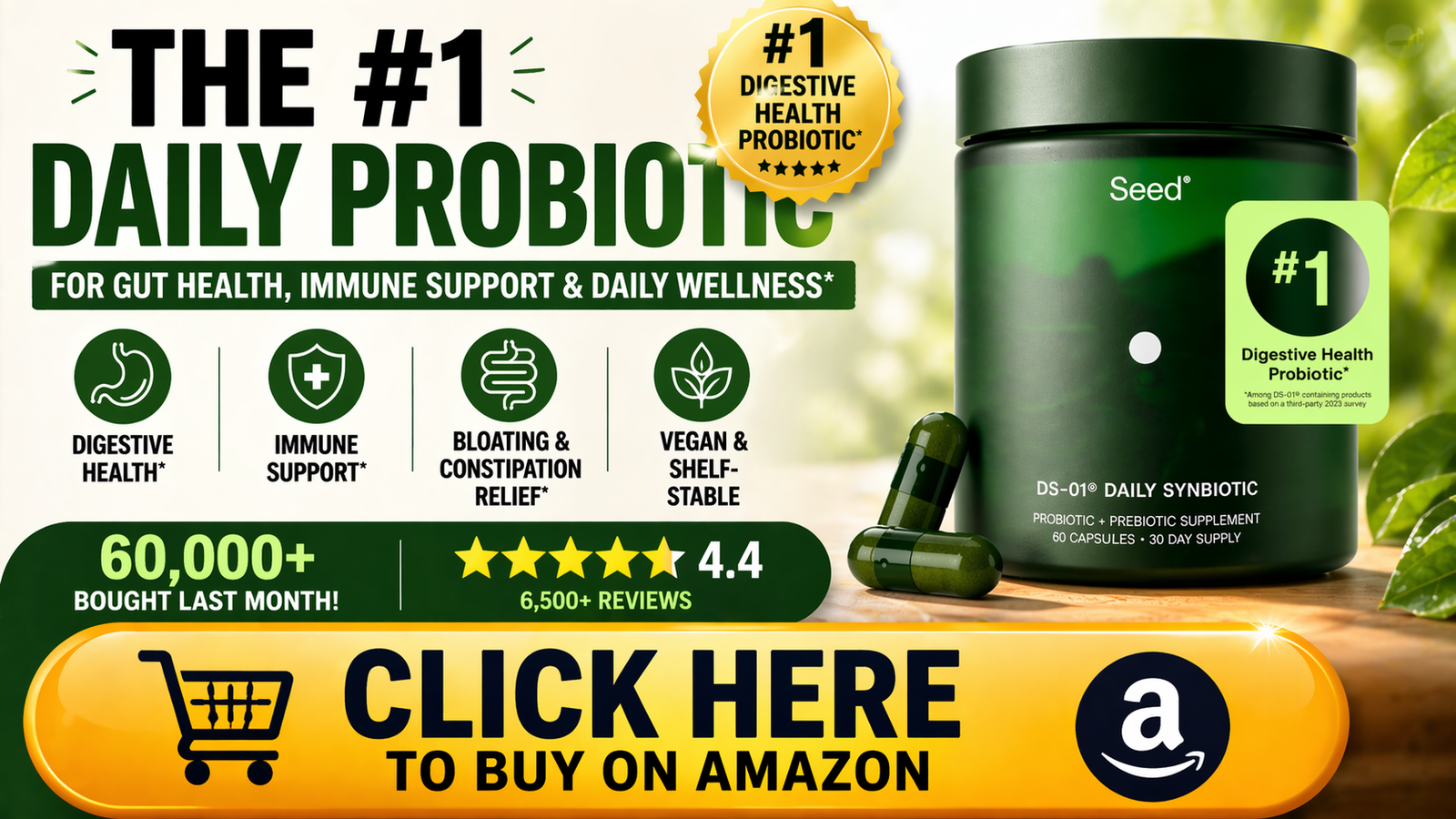
Seed DS-01 uses a two-in-one capsule system. The outer capsule is made from prebiotic plant fiber. As it breaks down, it feeds the probiotic strains inside the inner capsule. It’s a smarter delivery system than most basic probiotic pills that just dump bacteria into your stomach acid and hope for the best.
| Feature | Seed DS-01 | Standard Probiotic |
|---|---|---|
| Includes Prebiotic | Yes | Usually No |
| Acid-Resistant Capsule | Yes | Varies |
| Clinically Studied Strains | 24 strains | Few or none |
| Refrigeration Required | No | Often yes |
| Subscription Model | Monthly refills | Buy as needed |
The 24 Strains — Why That Number Matters
Here’s something most probiotic brands don’t want to talk about: having a high CFU count doesn’t automatically mean a product works well. What matters more is which strains are in there and whether they’ve actually been studied in humans.

Seed includes 24 strains, each selected based on published clinical and preclinical research. They’re not just throwing random bacteria in a capsule and calling it a day. The strains are chosen to cover digestive health, skin health, heart health, and immune function — and they publish all their sourcing transparently on their website.
Most grocery store probiotics have 1–3 strains. Some have more, but they’re often unstudied proprietary blends with no published research backing them up.
| Strain Category | What It Supports |
|---|---|
| Lactobacillus strains | Digestion, bloating, diarrhea relief |
| Bifidobacterium strains | Gut lining integrity, constipation |
| Gut-immune axis strains | Immune modulation |
| Skin-gut axis strains | Skin clarity, inflammation |
| Cardiovascular strains | Cholesterol support |
What I Actually Noticed (Week by Week)
I want to be honest here because I’ve read too many probiotic reviews that sound like the person was paid to write them. So here’s what actually happened.
Week 1: Nothing dramatic. Slight increase in gas for the first few days — which Seed warns you about and is totally normal as your gut adjusts. By day 5 or 6 that settled down.
Week 2: This is when I started noticing the bloating was… less. Not gone, but noticeably less by end of day. I used to be pretty uncomfortable after lunch. That started to ease up.
Week 3–4: More consistent bathroom schedule. I know that sounds boring but for anyone dealing with irregular digestion, you know exactly why that matters. Things moved more predictably and comfortably.
Month 2–3: The bloating improvement held. I also noticed my digestion after heavier meals felt less sluggish. Energy was steadier — though honestly it’s hard to isolate that to just the probiotic since I was eating better overall.
| Timeline | What to Expect |
|---|---|
| Days 1–7 | Possible adjustment gas — totally normal |
| Week 2 | Bloating may start to reduce |
| Week 3–4 | More regularity, less post-meal discomfort |
| Month 2+ | Sustained improvement, immune support builds |
| Month 3+ | Full gut microbiome shift underway |
Who Should Try Seed DS-01?
Seed isn’t for everyone — and I’ll be upfront about that. If you eat a perfect whole-food diet, never deal with bloating or irregularity, and your gut feels great, you probably don’t need it.
But if you recognize yourself in any of these, it’s worth a serious look:
- You deal with bloating regularly, especially after meals
- Your digestion is unpredictable — sometimes constipated, sometimes loose
- You’ve recently taken antibiotics and want to restore your gut bacteria
- You struggle with skin issues that might be gut-related
- You get sick often and want to support your immune system from the inside
- You eat a mostly processed diet and know your gut bacteria are probably suffering for it
| Best Candidate For Seed | May Not Need Seed |
|---|---|
| Chronic bloating sufferers | People with no digestive issues |
| Post-antibiotic recovery | Those already eating high-fermented food diets |
| IBS-D or IBS-C users | People on a tight budget with minor symptoms |
| Anyone wanting gut + immune support | Those who prefer food-based probiotic sources only |
Seed DS-01 vs. The Competition
I get asked this a lot — how does Seed compare to cheaper options? Here’s the honest breakdown.
| Product | Price/Month | Strains | Prebiotic | Clinically Studied | Shelf Stable |
|---|---|---|---|---|---|
| Seed DS-01 | ~$50 | 24 | Yes | Yes | Yes |
| Garden of Life Raw | ~$35 | 34 | No | Partial | No |
| Culturelle Pro Strength | ~$25 | 1 | Yes | (LGG only) | Yes |
| Align Probiotic | ~$30 | 1 | No | (B. infantis) | Yes |
| Renew Life Ultimate Flora | ~$30 | 12 | No | Partial | No |
Culturelle and Align are both solid single-strain probiotics — they’re well-researched for specific conditions. But they’re not trying to do what Seed does. They’re more like a targeted treatment. Seed is more like a comprehensive daily gut health system.
Garden of Life has more strains by count but requires refrigeration and doesn’t include a prebiotic. For travel or consistency, that’s a real inconvenience.
The Price Question — Is $50 a Month Worth It?
This is the thing people wrestle with most. And I won’t sugarcoat it — $50 a month is real money.
Here’s how I think about it: if you’re spending money on bloating relief products, antacids, fiber supplements, and other gut stuff piecemeal, you might already be close to that number anyway. Seed consolidates a lot of that into one thing that actually works on the root cause rather than the symptoms.
Also — and this is worth saying — gut health affects way more than your stomach. Your immune system, your skin, your mental health, your energy. If you’re investing in your health at all, this is one of the highest-leverage places to do it. The possible relationship between digestive health and emotional wellbeing is explored in How gut health affects anxiety and depression.
That said, if $50 is genuinely tight, Culturelle is still a decent, clinically studied option for a fraction of the cost. But if you can swing it and you’re serious about improving your gut, Seed is in a different league.
| Seed DS-01 Pros | Seed DS-01 Cons |
|---|---|
| 24 clinically studied strains | $50/month subscription cost |
| Built-in prebiotic delivery system | Subscription model (must remember to cancel) |
| No refrigeration needed | Results take 2–4 weeks to feel |
| Vegan and clean ingredients | Not available in stores — online only |
| Transparent research backing | Some people experience initial gas adjustment |
| Covers gut, skin, immune, heart health | Pricier than most drugstore options |
How to Take It for Best Results
A few things I learned that made a difference:
Take it with your first meal of the day. The food buffers stomach acid and gives the strains a better chance of surviving the trip to your intestines. Readers considering this timing while using appetite medications can compare it with probiotic timing during GLP-1 treatment.
Be consistent. This isn’t a take-when-you-remember supplement. The benefits compound over time. Missing days slows your progress.
Drink enough water. Probiotics work better in a well-hydrated gut. If you’re chronically under-drinking, that’s worth fixing alongside starting any probiotic.
Don’t panic in week one. The adjustment gas is real and temporary. Most people push through it by day 5–7 and it resolves on its own.
| Tip | Why It Matters |
|---|---|
| Take with food | Protects strains from stomach acid |
| Same time daily | Builds consistent gut microbiome rhythm |
| Stay hydrated | Gut motility and bacterial environment |
| Pair with fiber-rich foods | Feeds the probiotic strains naturally |
| Give it 30–60 days minimum | Real microbiome change takes time |
Frequently Asked Questions
Does Seed DS-01 help with bloating?
Yes — this is one of the most commonly reported benefits. Most people notice a reduction in bloating within 2–4 weeks of consistent use. The prebiotic + probiotic combination addresses the root cause of gas and bloating rather than just masking symptoms. Readers comparing options can see how Seed fits into our ranking of best probiotics for bloating relief.
Is Seed DS-01 good for IBS?
Many people with IBS-C and IBS-D report improvement with Seed. While it’s not marketed specifically as an IBS treatment, several of the included strains have clinical research supporting their use for irregular bowel habits, cramping, and gut sensitivity. Readers comparing options by symptom pattern can use The right probiotic for your specific IBS type as a next step.
How long does it take to work?
Most people feel something within 2–4 weeks. Full gut microbiome improvements take closer to 60–90 days of consistent daily use. Don’t quit after two weeks if you’re not blown away yet. If your probiotic routine began after antibiotics, post-antibiotic probiotic timeline provides a recovery-specific timeline and explains why consistency matters.
Can I take Seed if I’m on medication?
Check with your doctor, especially if you’re immunocompromised or on specific prescriptions. For most healthy adults taking standard medications, it’s fine — but always a smart question to ask your healthcare provider.
Does Seed need to be refrigerated?
No. This is one of Seed’s standout features. The capsule technology keeps the strains viable at room temperature, making it easy to travel with and store.
Is there a money-back guarantee?
Seed offers a satisfaction guarantee on your first order. Check their website for current terms since these can change.
Final Verdict
If you’re serious about your gut health and you’ve been dealing with bloating, irregularity, or just a general feeling that your digestion isn’t right — Seed DS-01 is genuinely one of the best products in this space. It’s not cheap, and it’s not magic. But it’s thoughtfully made, backed by real research, and it works better than anything else I’ve tried at this price range.
The 24-strain formula, the built-in prebiotic, the shelf-stable design — these aren’t just marketing buzzwords. They reflect a product that was built by people who actually understand gut health science rather than just slapping a “probiotic” label on a generic capsule.
If the price is genuinely a barrier, Culturelle is a solid budget alternative. But if you can make it work in your budget, Seed is worth every penny.

Check the current price of Seed DS-01 on Amazon
About the Author
Rachel Donnelly is a certified nutritional health coach and self-described “gut health obsessive” who spent years struggling with IBS and bloating before turning her personal journey into a passion for helping others understand digestive wellness. After completing her certification through the Institute for Integrative Nutrition, she began writing about gut health, probiotics, and natural digestion support in plain language that real people can actually use. When she’s not researching the latest in microbiome science, Rachel is in her kitchen fermenting something, chasing her two kids around, or trying to convince her husband that kombucha is actually delicious. She writes regularly for TummyCure, where her goal is simple: cut through the noise and tell you what actually works.
As an Amazon Associate we earn from qualifying purchases through some links in our articles.