Tired of bloating every day? These are the best probiotics for bloating relief — ranked by strain research, delivery system, and real results.
Let’s Be Honest — Bloating Is Miserable
You wake up feeling fine. By noon your stomach looks like you swallowed a basketball. You’re uncomfortable, self-conscious, and nothing in your wardrobe fits right by dinnertime. Sound familiar?
Bloating is one of the most common digestive complaints out there — and one of the most frustrating because it can have so many different causes. But one of the most overlooked solutions is also one of the simplest: getting your gut bacteria back in balance with the right probiotic.
Not all probiotics are created equal though. The one sitting on the drugstore shelf for $12 is not the same as what we’re going to talk about here. Let’s break down exactly what to look for — and which products are actually worth your money.
| Quick Picks | Best For |
|---|---|
| Seed DS-01 | Best overall for bloating + gut health |
| Culturelle Pro Strength | Best budget pick |
| Garden of Life Raw | Best for high CFU count |
Why Does Bloating Happen in the First Place?
Before we talk products, it helps to understand what’s actually going on inside your gut when you bloat.
Your digestive tract is home to trillions of bacteria — some helpful, some not. When the balance tips toward the wrong bacteria (too much gas-producing bacteria, not enough of the good guys), you end up with excess fermentation in your intestines. That fermentation produces gas. That gas causes bloating, pressure, and that uncomfortable full feeling that has nothing to do with how much you actually ate.
Probiotics work by replenishing and supporting your beneficial bacteria — which in turn helps regulate that fermentation process and reduce gas production. The key is using strains that have actually been studied for this specific purpose.
| Bloating Cause | How Probiotics Help |
|---|---|
| Imbalanced gut bacteria | Replenishes beneficial strains to restore balance |
| Excess gas production | Reduces fermentation activity from bad bacteria |
| Slow gut motility | Certain strains help speed up digestive transit |
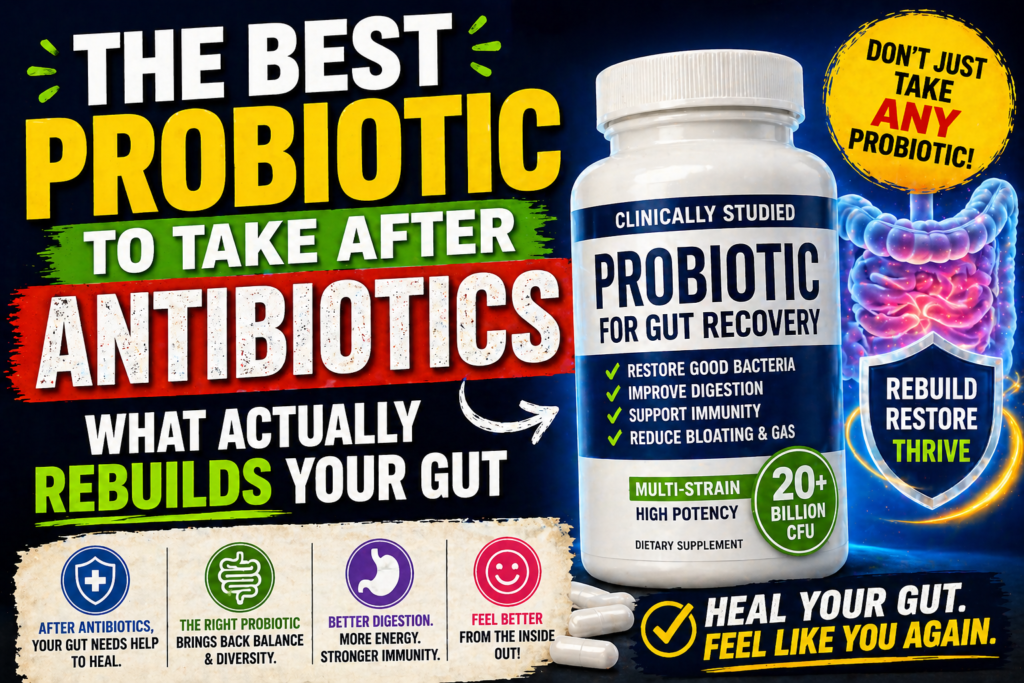
| Post-antibiotic disruption | Restores wiped-out bacteria populations |
| IBS-related bloating | Specific strains target IBS-D and IBS-C symptoms |



What to Look for in a Probiotic for Bloating
This is where most people go wrong. They grab whatever has the highest CFU number on the label and assume that means it’s the best. CFU count matters — but it’s not the whole story.
Here’s what actually matters when choosing a probiotic specifically for bloating:
Clinically studied strains. The specific strains of bacteria matter far more than the total count. Look for Lactobacillus acidophilus, Bifidobacterium longum, and Lactobacillus rhamnosus — these have the most research behind them for bloating and digestive discomfort.
A prebiotic component. Probiotics need food to survive and thrive. Products that include a prebiotic (fiber that feeds beneficial bacteria) give the strains a much better chance of actually colonizing your gut rather than just passing through.
Acid-resistant delivery. Most of your probiotic bacteria will die in stomach acid before they ever reach your intestines — unless the capsule is designed to protect them. Look for enteric-coated or specially designed delivery systems.
Shelf stability. If a probiotic requires refrigeration and you’re not religious about it, you’re probably taking dead bacteria. Shelf-stable formulas are more practical and often more reliable.
| Feature | Why It Matters for Bloating |
|---|---|
| Clinically studied strains | Proven to reduce gas and bloating in humans |
| Prebiotic included | Feeds bacteria so they actually survive and work |
| Acid-resistant capsule | Gets bacteria past stomach acid to your intestines |
| Shelf stable | Bacteria stay alive without refrigeration |
| Multiple strains | Covers more root causes of bloating simultaneously |
Best Probiotic for Bloating: Our Top Picks
#1 — Seed DS-01 Daily Synbiotic
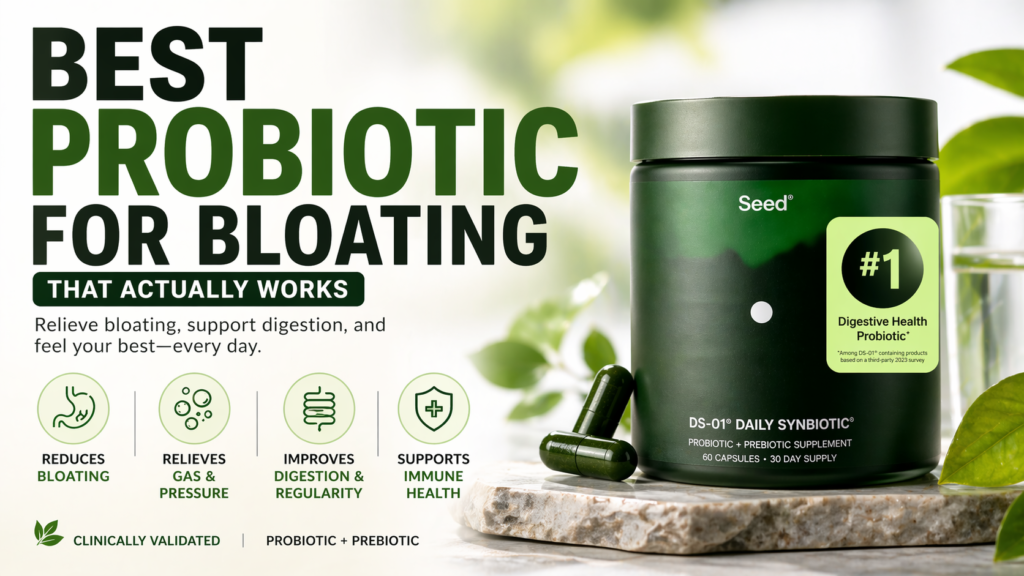
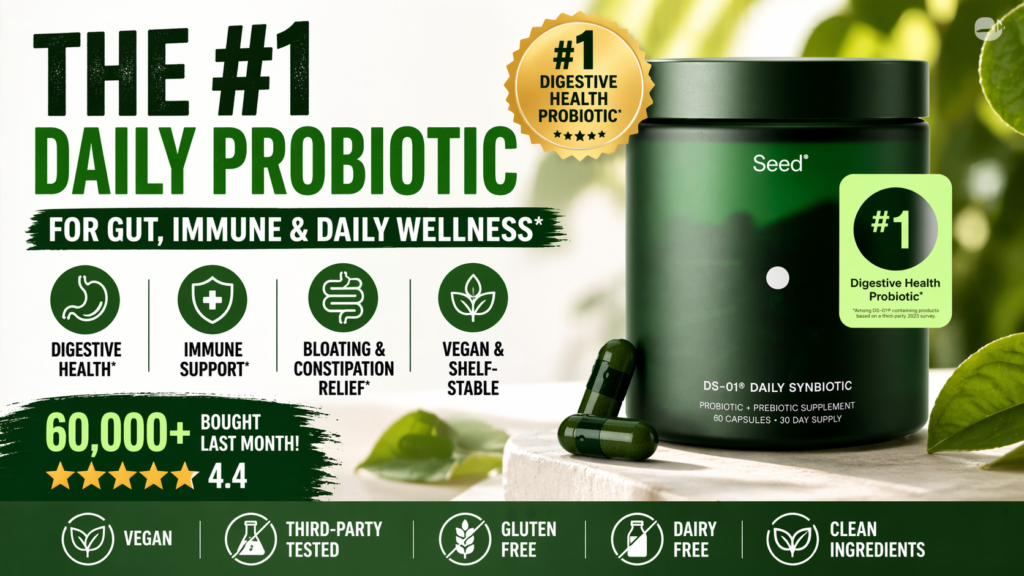
If you’re serious about fixing bloating for the long term, Seed DS-01 is the best probiotic on the market right now. It’s not the cheapest option, but nothing else at this price point comes close in terms of what you’re actually getting.
Seed uses 24 clinically studied strains in a two-in-one capsule design — the outer layer is a prebiotic made from plant fiber, and the inner capsule delivers the probiotic strains protected from stomach acid. It’s shelf stable, vegan, and the research behind each strain is fully transparent and published.
For bloating specifically, multiple strains in the DS-01 formula have been studied for their ability to reduce intestinal gas, improve gut motility, and restore the bacterial balance that causes bloating in the first place. Most people notice a real difference within 2–4 weeks.
We did a full deep-dive review on Seed DS-01 if you want to read the whole breakdown: Seed DS-01 Review — Is It Worth $50 a Month?
Check the current price of Seed DS-01 on Amazon
| Seed DS-01 Pros | Seed DS-01 Cons |
|---|---|
| 24 clinically studied strains | ~$50/month |
| Built-in prebiotic | Subscription model |
| Acid-resistant capsule | Takes 2–4 weeks to feel results |
| Shelf stable | Online only |
#2 — Culturelle Pro Strength Daily Probiotic
If budget is a concern, Culturelle is the most research-backed affordable option available. It uses Lactobacillus rhamnosus GG — one of the most studied probiotic strains in the world — and has solid clinical evidence for reducing bloating, gas, and diarrhea.
It only has one strain, which means it’s more targeted than comprehensive. But for straightforward bloating that isn’t tied to a complex gut issue, it works well and won’t break the bank.
Check the current price of Culturelle on Amazon
#3 — Garden of Life Raw Probiotics

Garden of Life Raw delivers 100 billion CFU across 34 strains — an impressive number. It also includes digestive enzymes which can help with bloating caused by poor digestion of certain foods. The downside is it requires refrigeration and doesn’t include a prebiotic, which limits its overall effectiveness compared to Seed. Readers weighing enzyme support against probiotic support can use digestive enzymes for poor digestion to compare the different approaches to bloating relief.
It’s a solid mid-range option if you’re consistent about refrigeration and want a high-CFU formula.
Check the current price of Garden of Life on Amazon
| Product | Price | Strains | Prebiotic | Best For |
|---|---|---|---|---|
| Seed DS-01 | ~$50/mo | 24 | Yes | Best overall |
| Culturelle Pro | ~$25/mo | 1 | Yes | Budget pick |
| Garden of Life | ~$35/mo | 34 | No | High CFU |
How Long Until You See Results?
This is the question everyone asks — and the honest answer is: it depends on your gut and how consistently you take it.
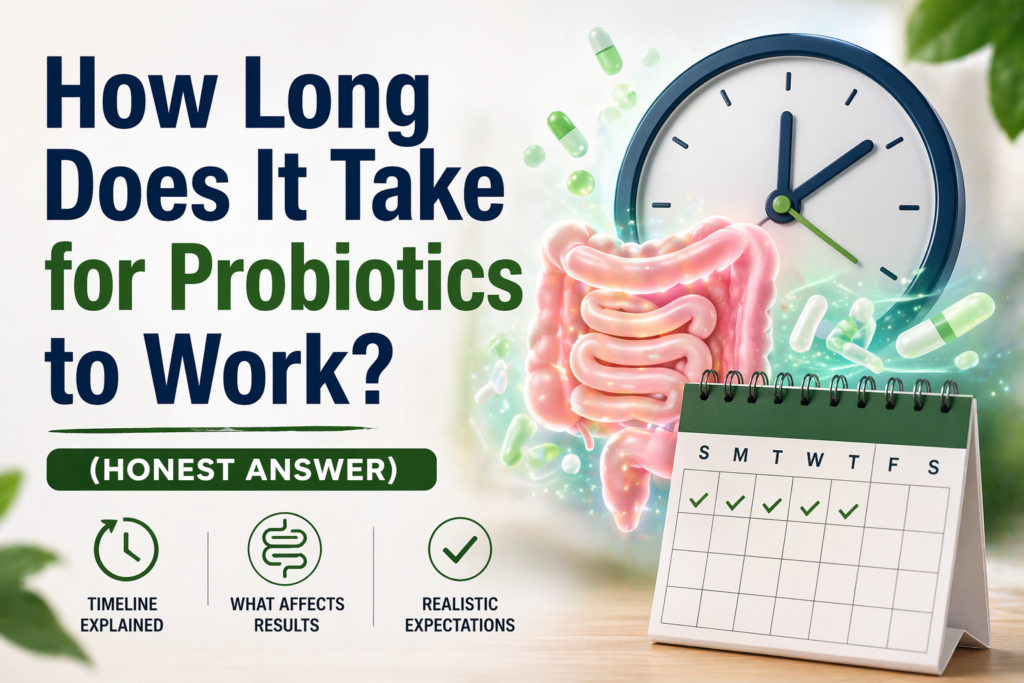
Most people notice something within 1–2 weeks. Real, sustained bloating relief usually kicks in around the 3–4 week mark. For deeper gut microbiome changes, you’re looking at 60–90 days of daily use. For a broader breakdown of The honest timeline for probiotic results, including what to expect during the adjustment phase, see the full timeline.
The mistake most people make is quitting after two weeks because they don’t feel a dramatic difference. Give it a full month minimum before you decide if it’s working.
| Timeframe | What’s Happening |
|---|---|
| Days 1–7 | Gut adjusting — possible temporary gas increase |
| Week 2 | Beneficial bacteria beginning to establish |
| Week 3–4 | Noticeable reduction in bloating for most people |
| Month 2–3 | Sustained improvement, microbiome rebalancing |
Tips to Reduce Bloating Faster
Probiotics work best when you support them with a few simple habits. These won’t cost you anything but can dramatically speed up your results.
Cut back on sugar and processed carbs. Bad bacteria feed on sugar. Less sugar means less fermentation, less gas, less bloating.
Eat more fiber — but slowly. Fiber feeds your good bacteria but too much too fast can temporarily make bloating worse. Increase it gradually.
Chew your food properly. Sounds basic, but swallowing air and large food chunks is a major bloating trigger. Slow down.
Avoid carbonated drinks. Obvious once you think about it — you’re literally swallowing gas.
Take your probiotic with food. Food buffers stomach acid and protects the bacterial strains on their journey to your intestines.
Frequently Asked Questions
Can probiotics make bloating worse at first?
Yes — and it’s completely normal. When you introduce new bacteria to your gut, there’s an adjustment period where gas production can temporarily increase. This usually resolves within 5–7 days. Push through it.
How long should I take a probiotic for bloating?
Most experts recommend taking probiotics daily and indefinitely if they’re working for you. Your gut microbiome is constantly changing based on diet, stress, and environment — ongoing support helps maintain the balance you’ve built.
Is Seed DS-01 the best probiotic for bloating?
Based on formulation, strain research, and real-world results, yes — it’s our top pick. The combination of 24 clinically studied strains plus a built-in prebiotic makes it more comprehensive than anything else in its price range. Read our full Seed DS-01 review here.
What foods should I avoid if I’m bloated?
The biggest offenders are beans and legumes, cruciferous vegetables (broccoli, cauliflower, cabbage), dairy, carbonated drinks, and high-fructose foods. A probiotic helps your gut process these better over time.
Can I take a probiotic with other supplements?
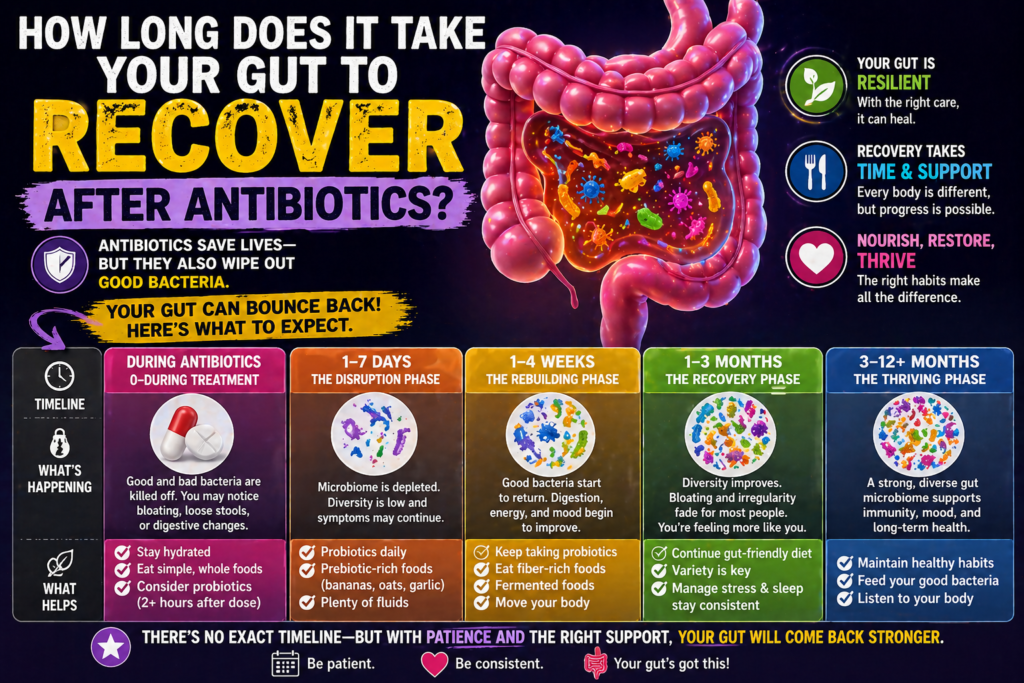
Generally yes. Just avoid taking probiotics at the same time as antibiotics — space them at least 2 hours apart so the antibiotic doesn’t kill the probiotic bacteria before they can establish.
Bottom Line
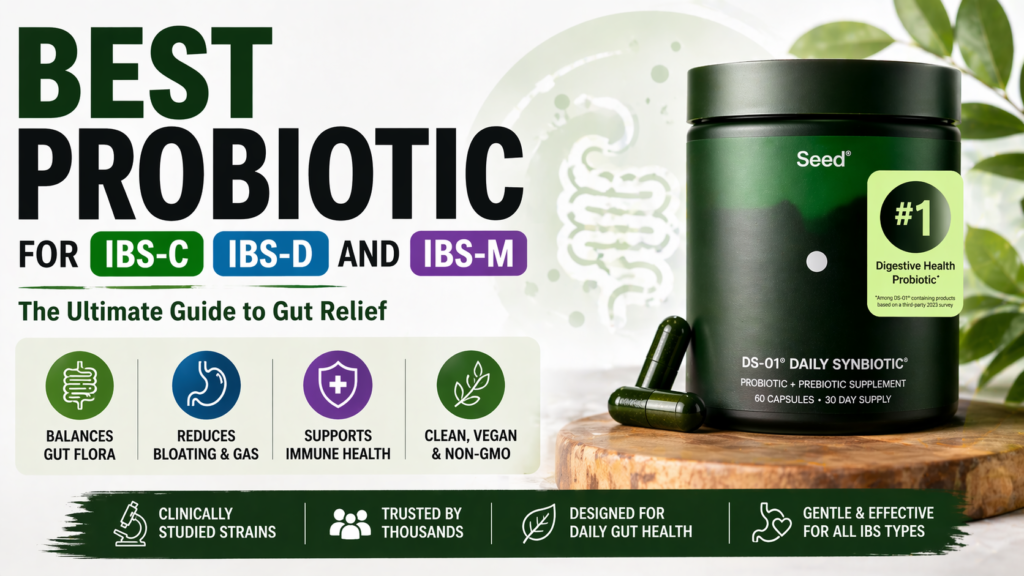
If bloating is a daily problem for you, a high-quality probiotic is one of the most effective things you can do about it. The key is choosing one with clinically studied strains, a prebiotic component, and a delivery system that actually survives your stomach acid. When daily bloating occurs alongside IBS symptoms, Understanding which probiotic is best for your type of IBS can help narrow the choice.
Seed DS-01 checks every box and is our top recommendation by a clear margin. If the price is a barrier, Culturelle is a solid runner-up. Either way — stop suffering through it and give your gut the support it needs.
Try Seed DS-01 on Amazon — our top pick for bloating relief.
Want to understand more about how probiotics work in your body? Check out our related reads:
- Seed DS-01 Full Review
- How to Restore Gut Bacteria After Antibiotics
- 10 Fermented Foods That Changed My Digestion
About the Author
Rachel Donnelly is a certified nutritional health coach and gut health writer who spent years struggling with IBS and bloating before making digestive wellness her specialty. She writes for TummyCure with one goal: cut through the noise and tell you what actually works. When she’s not deep in microbiome research, she’s fermenting things in her kitchen and losing arguments with her husband about whether kombucha counts as a dessert.
As an Amazon Associate we earn from qualifying purchases through some links in our articles.