Bloating after every meal isn’t normal. Here are the best digestive enzyme supplements for gas and bloating relief — ranked and honestly reviewed.
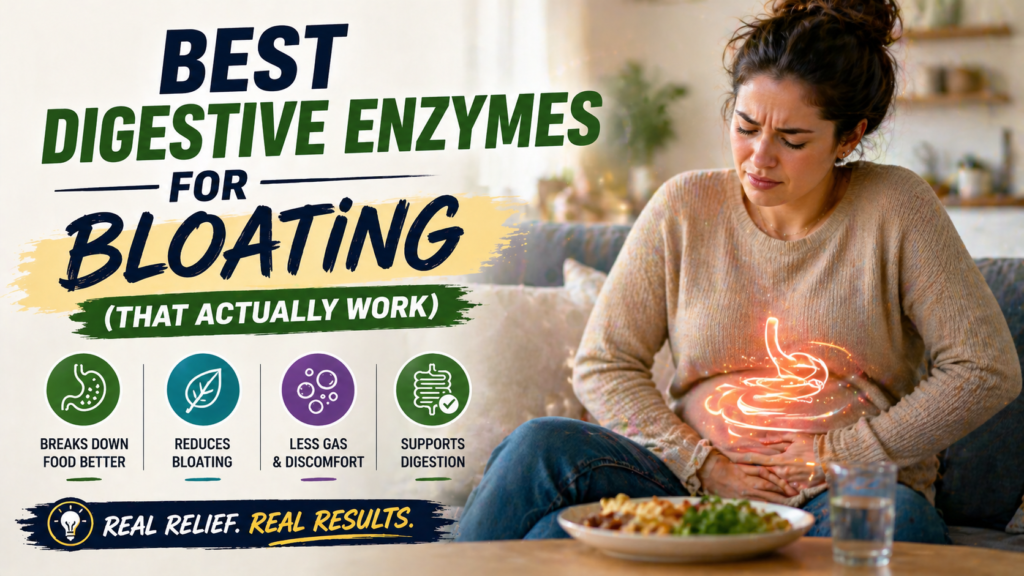
Bloating After Every Meal Is Not Normal — Even If It Feels That Way
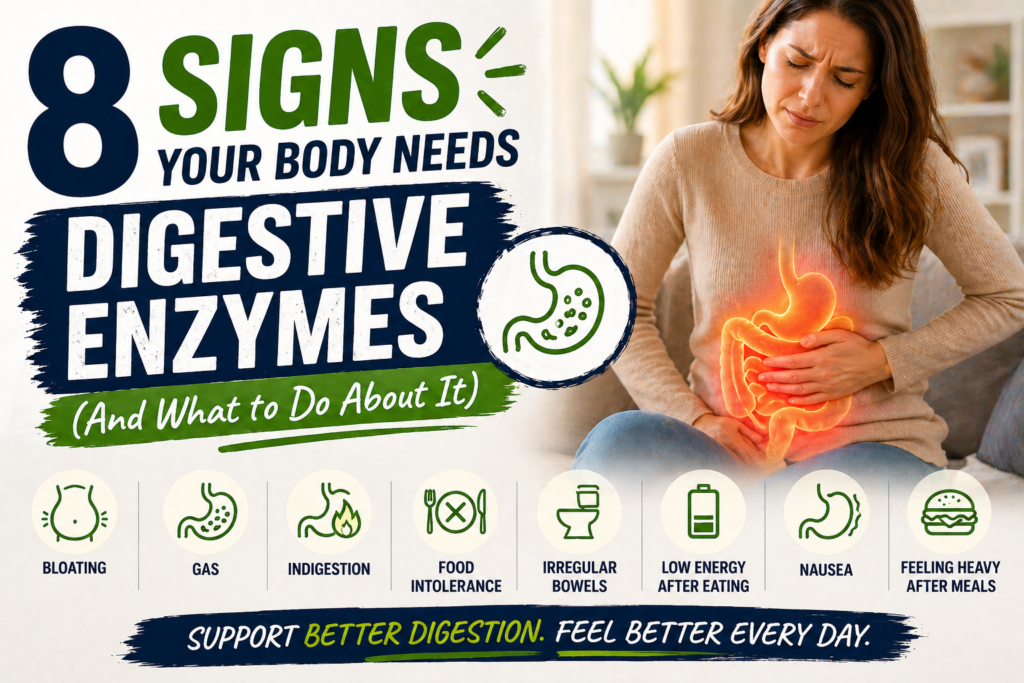
If you’ve gotten so used to feeling bloated after eating that it just feels like “how your body works” — I need to stop you right there. Chronic post-meal bloating is not your destiny. It’s a signal. And for a lot of people, the missing piece isn’t a diet overhaul or an elimination protocol. It’s something much simpler: your body isn’t breaking down food properly. Persistent bloating can be one of several signs of digestive enzyme insufficiency, especially when it appears alongside food sensitivities or post-meal fatigue.
That’s where digestive enzymes come in. Not as a magic fix — but as targeted support for a very specific problem. When your body doesn’t produce enough enzymes to fully digest what you eat, food ferments in your gut. Fermentation produces gas. Gas causes bloating, pressure, and that uncomfortable stuffed feeling that has nothing to do with how much you actually ate.
The right digestive enzyme supplement can change that. Here’s what to look for — and which ones are actually worth your money.
| Quick Picks | Best For |
|---|---|
| Zenwise Digestive Enzymes | Best overall — enzymes + probiotic + prebiotic |
| Enzymedica Digest Gold | Best high-potency option |
| NOW Super Enzymes | Best budget pick |
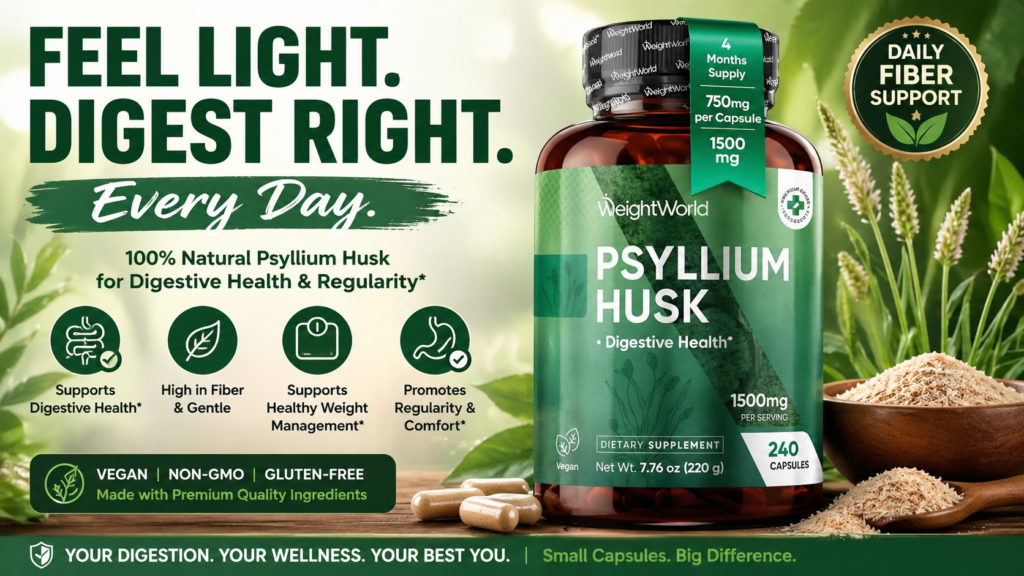

Why Your Body May Not Be Making Enough Digestive Enzymes
Most people assume their digestive system just works — that it automatically produces everything it needs to break food down properly. And for some people, that’s true. But for a lot of us, enzyme production is compromised in ways we never think about.
Age is the biggest factor. Enzyme production naturally declines as we get older. If you’re over 40 and your digestion has gotten worse over the years, this is likely part of why.
Chronic stress disrupts enzyme production. Your digestive system shuts down partially when you’re in fight-or-flight mode. If you’re eating while stressed — which, let’s be honest, most of us do regularly — your enzyme output is lower than it should be.
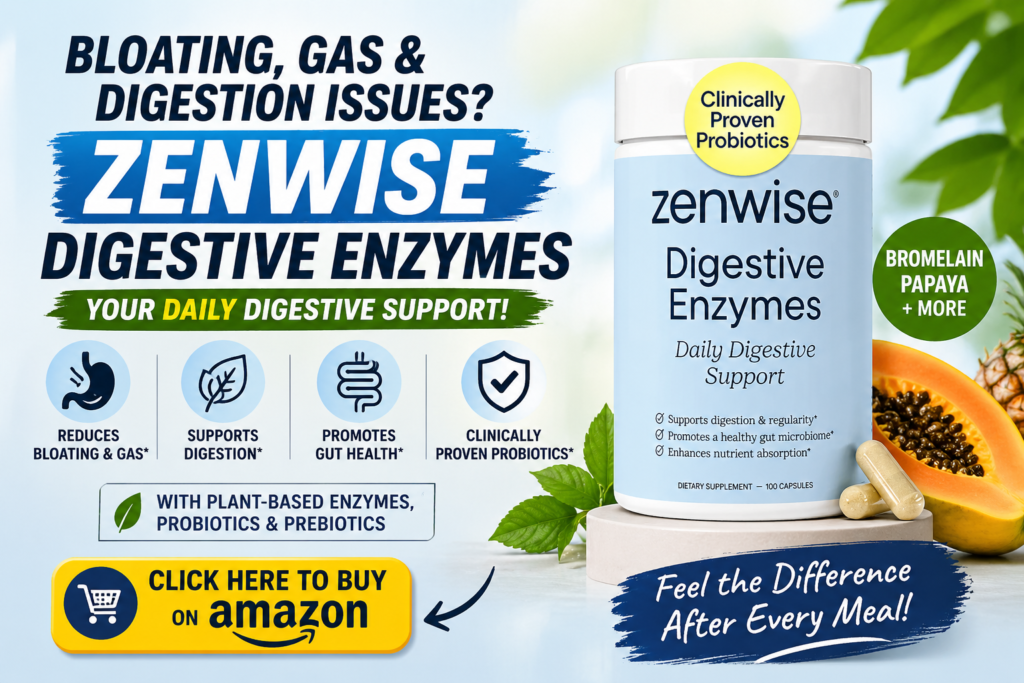
Processed food and low-fiber diets. A diet heavy in ultra-processed foods doesn’t support healthy digestive function. Your gut becomes less efficient over time.
Gut conditions like IBS, SIBO, and leaky gut all impair enzyme production and digestive efficiency. If you have any of these, enzyme support is especially relevant.
| Cause of Low Enzymes | How It Affects Digestion |
|---|---|
| Aging | Natural decline in enzyme output over time |
| Chronic stress | Suppresses digestive function during stress response |
| Processed diet | Reduces overall digestive efficiency |
| IBS or SIBO | Directly impairs enzyme production and absorption |
| Pancreatic insufficiency | Severe reduction in digestive enzyme output |

What to Look for in a Digestive Enzyme for Bloating
Not all enzyme supplements are built the same. Here’s what actually matters when you’re choosing one specifically for bloating relief.
A broad multi-enzyme blend. You need enzymes that cover all three macronutrients — amylase for carbs, protease for protein, lipase for fat. A single-enzyme product won’t address the full picture.
Lactase. If dairy triggers your bloating, lactase is non-negotiable. It breaks down lactose — the sugar in dairy that most people have trouble digesting after childhood.
Bromelain and papain. These plant-derived enzymes from pineapple and papaya have anti-inflammatory properties alongside their digestive benefits. They’re a meaningful addition to any enzyme formula.
A probiotic component. The best enzyme supplements include a probiotic strain to support gut health alongside the enzymatic support. This addresses both the immediate digestion problem and the underlying bacterial balance issue that often contributes to bloating.
| Enzyme | Breaks Down | Bloating Benefit |
|---|---|---|
| Amylase | Carbohydrates | Reduces carb fermentation and gas |
| Protease | Proteins | Less heaviness after protein-heavy meals |
| Lipase | Fats | Reduces sluggishness after fatty foods |
| Lactase | Dairy lactose | Helps dairy-sensitive people digest milk products |
| Bromelain | Proteins | Anti-inflammatory, soothes gut lining |
| Papain | Proteins | Soothes digestive tract, reduces discomfort |
Best Digestive Enzymes for Bloating
#1 — Zenwise Health Digestive Enzymes
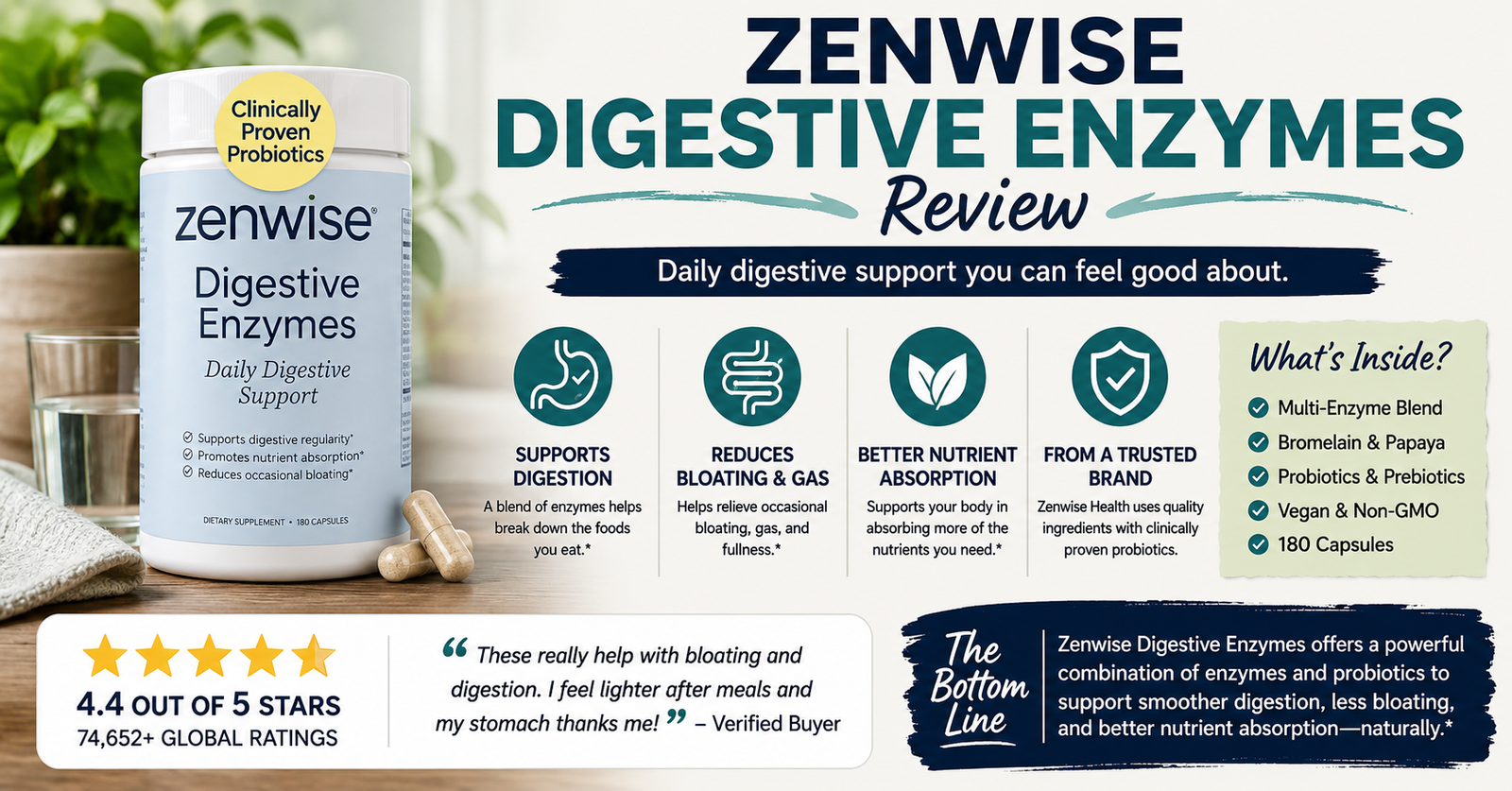
Zenwise is our top pick for bloating relief — and it’s not particularly close. What separates it from most enzyme supplements is that it doesn’t just give you enzymes. It combines a comprehensive multi-enzyme blend with DE111 probiotic and inulin prebiotic in one vegetarian capsule.
That triple-action approach matters. Enzymes break down the food before it can ferment. The probiotic supports the bacterial balance that regulates gas production. The prebiotic feeds those beneficial bacteria so they actually stick around and do their job.
For bloating specifically — whether it’s after carb-heavy meals, dairy, protein, or just general everyday gut discomfort — Zenwise covers all the bases at a price point that makes sense for daily use.
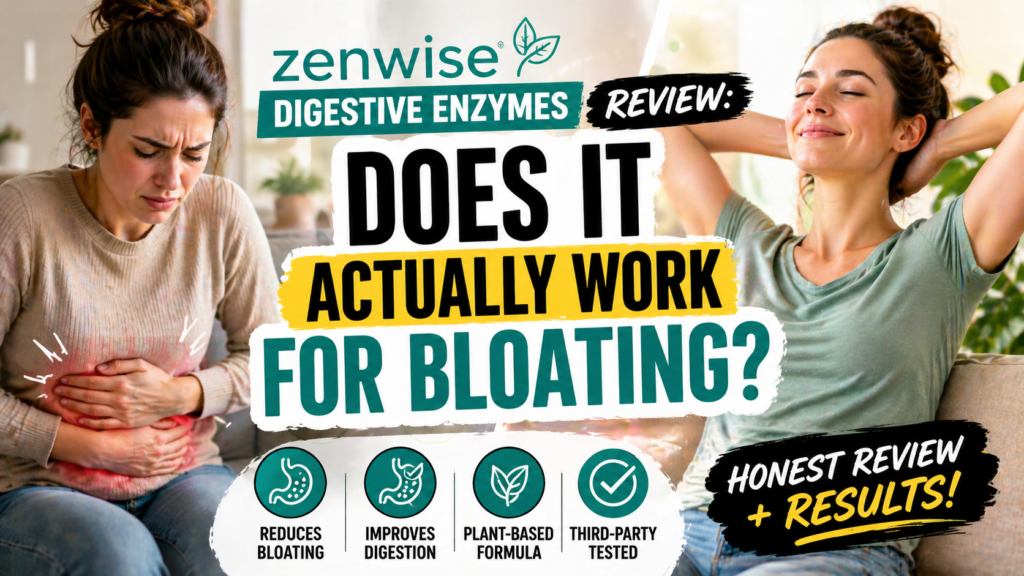
We tested it ourselves for 60 days and wrote a full breakdown: Zenwise Digestive Enzymes Review — Does It Actually Work?
Check the current price of Zenwise on Amazon
| Zenwise Pros | Zenwise Cons |
|---|---|
| Multi-enzyme + probiotic + prebiotic | Must remember to take with meals |
| Bromelain and papain included | DE111 is limited vs a full probiotic supplement |
| 100 capsules — great value | Takes 1–2 weeks for full effect |
| Vegetarian capsule |
#2 — Enzymedica Digest Gold
If you want the highest potency enzyme formula available, Enzymedica Digest Gold is it. The enzyme concentrations are significantly higher than most competitors, making it a good option for people with more severe digestive issues or those who eat very large, heavy meals. It’s pricier and doesn’t include a probiotic, but the raw enzyme power is hard to beat.
#3 — NOW Super Enzymes
NOW Super Enzymes is a solid budget option for people who want basic multi-enzyme support without extras. It covers the core enzymes — protease, lipase, amylase — at a very affordable price. No probiotic, no prebiotic, no bromelain. Simple and functional.
| Product | Probiotic | Prebiotic | Bromelain/Papain | Price |
|---|---|---|---|---|
| Zenwise | DE111 | Inulin | Yes | ~$30 |
| Enzymedica Digest Gold | No | No | No | ~$45 |
| NOW Super Enzymes | No | No | No | ~$20 |


Digestive Enzymes vs Probiotics for Bloating — Which Do You Need?
This is one of the most common questions we get — and the honest answer is they do different things, and for many people the best results come from using both.
Digestive enzymes work at the meal level. They break food down before it has a chance to ferment and cause gas. The relief can be noticeable within days.
Probiotics work at the microbiome level. They rebalance the bacterial communities in your gut that regulate gas production, motility, and inflammation. Results take longer — weeks to months — but they address the root cause more deeply.
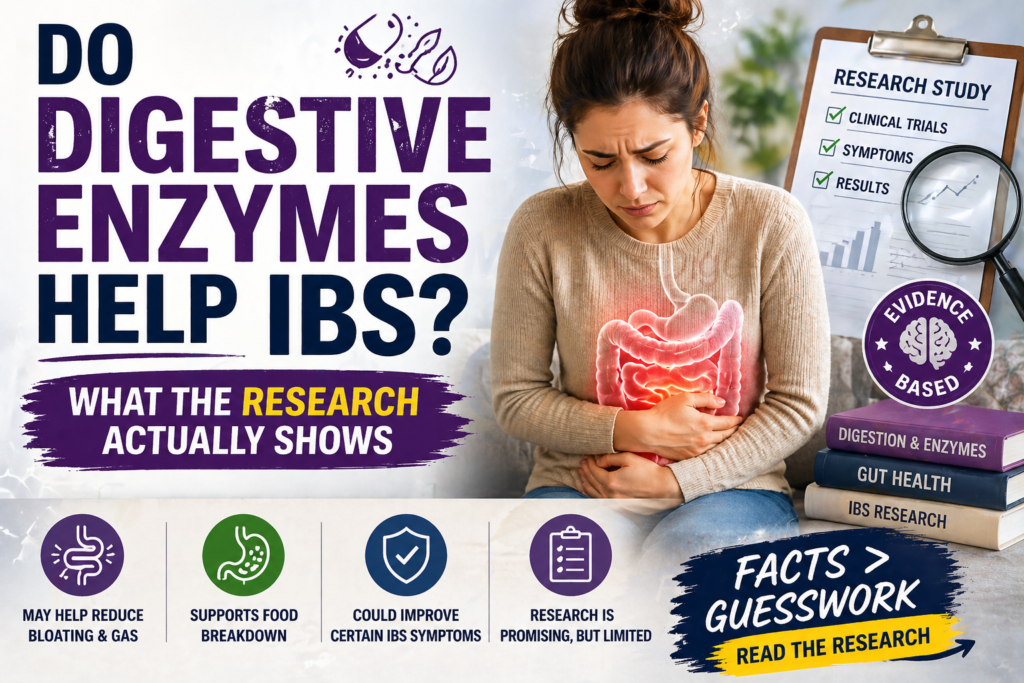
If your bloating is primarily triggered by specific meals or food types, start with enzymes. If your bloating is constant regardless of what you eat, a probiotic is the more important first step. If you want comprehensive coverage — enzymes before meals, a full probiotic daily — that’s the most effective combination. Readers whose meal-related bloating occurs alongside IBS symptoms can compare the evidence in enzymes and IBS-related bloating.
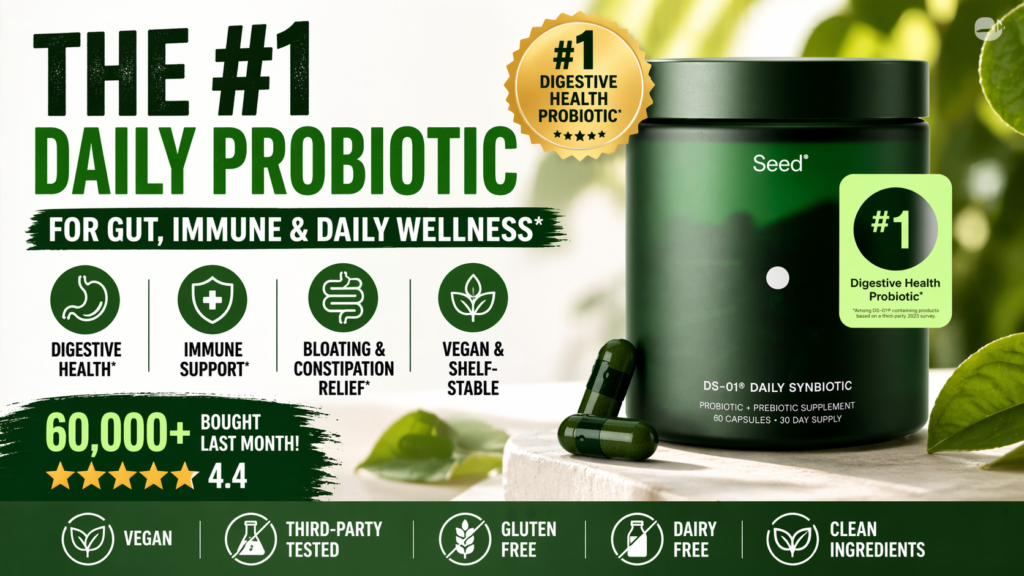
For a full probiotic to pair with Zenwise, our top recommendation is Seed DS-01 — read our full review to see why.
| Supplement | How It Helps Bloating | Time to Work |
|---|---|---|
| Digestive Enzymes | Breaks food down before it ferments | Days to 1 week |
| Probiotics | Rebalances gut bacteria driving gas production | 2–8 weeks |
| Both combined | Comprehensive approach — fastest and most complete | 1–4 weeks |
How to Take Digestive Enzymes for Best Results
Always take with food — right at the start of your meal. Enzymes need to be present in your stomach when food arrives. Taking them before or on an empty stomach wastes them.
Start with one capsule before your biggest meal of the day, then work up to taking one before every main meal once you see how your body responds.
Give it two weeks minimum before deciding if it’s working. Some people feel a difference within days. Others need a couple of weeks for the full benefit to become obvious.
Frequently Asked Questions
Do digestive enzymes help with gas and bloating?
Yes — specifically for bloating caused by incomplete food digestion. When your body doesn’t fully break down carbs, proteins, or fats, they ferment in your gut and cause gas. Enzymes stop that process before it starts.
Are digestive enzymes safe to take every day?
Yes. Daily use is safe for most healthy adults and is actually recommended for people with consistent digestive issues. Unlike some supplements, enzymes don’t cause dependency or reduce your body’s natural production.
What’s the best digestive enzyme for bloating after eating?
Zenwise Health Digestive Enzymes is our top recommendation — it combines a multi-enzyme blend with a probiotic and prebiotic for comprehensive bloating relief. Read our full Zenwise review here.
Can I take digestive enzymes with a probiotic?
Absolutely — and we recommend it. Enzymes address the immediate digestion problem; probiotics address the underlying bacterial imbalance. Together they’re more effective than either alone.
How long do digestive enzymes take to work?
Many people notice less post-meal heaviness within the first few days. Sustained bloating relief usually becomes clear within 1–2 weeks of consistent use.
Stop Accepting Bloating as Your Normal
Bloating after meals is common — but common doesn’t mean inevitable. If your digestion has been making you miserable, digestive enzymes are one of the most direct, fast-acting solutions available. Combined with a quality probiotic for long-term gut health, you’re addressing the problem from every angle.
Start with Zenwise. Give it two weeks. Your gut will tell you whether it’s working — and for most people, it will.
Try Zenwise Digestive Enzymes on Amazon — our top pick for bloating relief.
More from TummyCure:
- Zenwise Digestive Enzymes — Full Review
- Best Probiotic for Bloating That Actually Works
- Seed DS-01 Review — Best Probiotic for Gut Health
- Why Does My Stomach Hurt After Running?
About the Author
Rachel Donnelly is a certified nutritional health coach and gut health writer who spent years struggling with IBS and bloating before making digestive wellness her specialty. She writes for TummyCure with one goal: cut through the noise and tell you what actually works. When she’s not deep in microbiome research, she’s fermenting things in her kitchen and losing arguments with her husband about whether kombucha counts as a dessert.
As an Amazon Associate we earn from qualifying purchases through some links in our articles.