IBS isn’t just a bacteria problem — poor food breakdown plays a huge role. Here’s how digestive enzymes help IBS symptoms and which one to take.
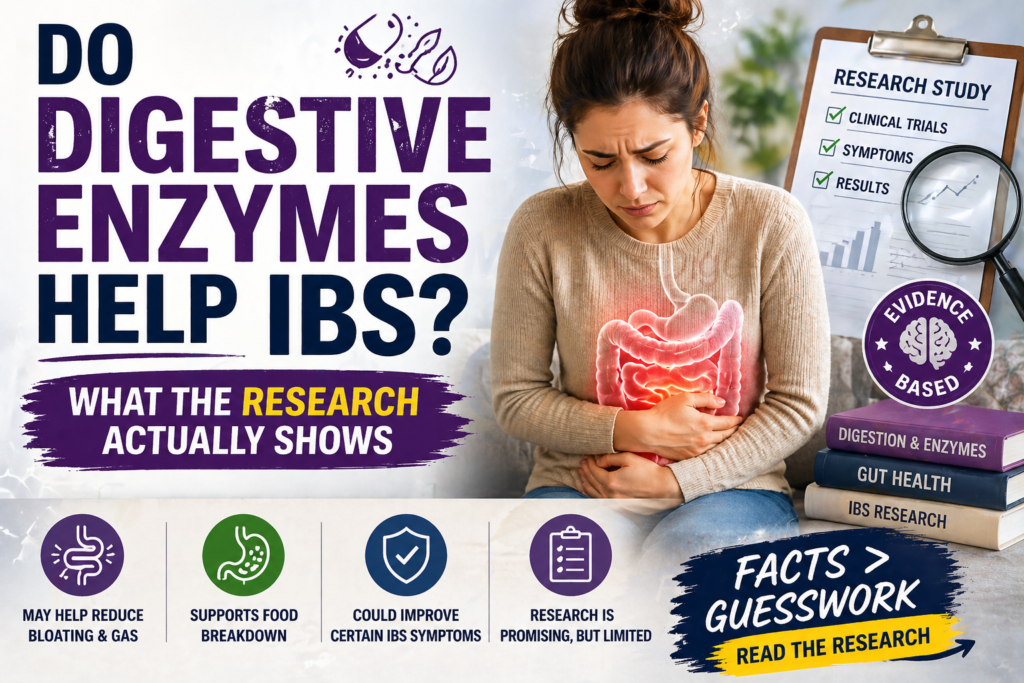
If You Have IBS, You’ve Probably Been Missing Half the Picture
Most people with IBS focus almost entirely on probiotics and diet changes. Both are smart moves. But there’s a piece of the puzzle that gets overlooked more often than it should — and that’s digestive enzyme support.
Here’s the thing about IBS: it’s not just a bacterial problem. For a lot of people, it’s also a digestion problem. Food that isn’t broken down properly doesn’t just disappear. It ends up in your large intestine where bacteria ferment it — producing gas, bloating, cramping, and the kind of unpredictable bowel behavior that makes IBS so exhausting to live with. The complete guide to gut health explains how digestion, enzymes, and the microbiome fit together in a broader repair plan.
Digestive enzymes step in before that happens. They break food down at the source — in your stomach and small intestine — so there’s less undigested material reaching your large intestine, less fermentation, and significantly less of the miserable downstream effects.
This article is going to cover everything you need to know: how enzymes work for IBS, which types matter most, what the research says, and which supplement we actually recommend after testing several of them.
| IBS Type | How Enzymes Help | Key Enzyme |
|---|---|---|
| IBS-C (constipation) | Improves breakdown, reduces sluggish digestion | Amylase, Lipase |
| IBS-D (diarrhea) | Less undigested food reaching colon = less urgency | Protease, Amylase |
| IBS-M (mixed) | Multi-enzyme approach supports overall digestive balance | Full multi-enzyme blend |
| IBS with bloating | Reduces fermentation that produces gas | Amylase, Bromelain, Papain |
The Connection Between IBS and Digestive Enzyme Deficiency
Research has been building for years on the link between IBS and impaired digestive enzyme function. A 2020 study published in the journal Gut found that a significant portion of IBS patients showed measurably reduced levels of specific digestive enzymes compared to healthy controls. Other research has pointed to impaired pancreatic enzyme secretion in IBS patients — meaning the gut literally isn’t producing enough of the proteins needed to break food down properly.
This matters because it reframes what’s happening in IBS. It’s not just about bad bacteria or a sensitive gut. For many people, part of what’s driving the symptoms is that food is arriving in the large intestine in a partially digested state — and that partially digested food is a feast for gas-producing bacteria.
When those bacteria get to work fermenting undigested carbohydrates, proteins, and fats, you get the classic IBS symptom stack: bloating, gas, cramping, urgency, and alternating constipation and diarrhea. Digestive enzymes interrupt that chain reaction at the very first step — proper breakdown of food in the small intestine before it ever reaches the bacteria.
| What Happens Without Enough Enzymes | IBS Symptom It Causes |
|---|---|
| Undigested carbs reach the colon | Gas, bloating, cramping |
| Partially broken down proteins ferment | Foul-smelling gas, loose stools |
| Undigested fats pass through | Urgency, oily stools, diarrhea |
| Lactose not broken down | Severe bloating and diarrhea after dairy |
| Gut inflammation from fermentation | Cramping, gut sensitivity, pain |
Which Digestive Enzymes Matter Most for IBS
Not every enzyme is equally important for IBS. Here’s a breakdown of the ones that make the biggest difference and why.
Amylase breaks down carbohydrates and starches. For IBS sufferers, this is critical — undigested carbs are the primary fuel source for gas-producing bacteria in the colon. More amylase means less carb fermentation means less gas and bloating.
Protease breaks down proteins. Partially digested protein in the colon creates its own set of problems — foul-smelling gas, loose stools, and additional gut irritation. Protease ensures protein gets properly handled in the small intestine.
Lipase breaks down dietary fats. For IBS-D sufferers especially, undigested fat is a major urgency trigger. Adequate lipase means fats are absorbed properly in the small intestine rather than rushing through to the colon.
Lactase breaks down lactose in dairy. A huge number of IBS sufferers have some degree of lactose intolerance — even if they’ve never been formally diagnosed. Lactase supplementation can dramatically reduce dairy-triggered symptoms.
Bromelain and Papain are plant-derived enzymes from pineapple and papaya respectively. Beyond their digestive benefits, both have anti-inflammatory properties that can help calm the gut lining irritation that makes IBS symptoms worse.
Alpha-Galactosidase is the enzyme that breaks down the complex sugars in beans, lentils, and cruciferous vegetables — the classic gas-producing foods. If these foods are a major trigger for you, look for a formula that includes this enzyme.
| Enzyme | What It Breaks Down | Why It Matters for IBS |
|---|---|---|
| Amylase | Carbohydrates and starches | Reduces carb fermentation and gas |
| Protease | Proteins | Prevents protein fermentation and loose stools |
| Lipase | Dietary fats | Reduces urgency and diarrhea triggered by fat |
| Lactase | Dairy lactose | Eliminates dairy-triggered bloating and diarrhea |
| Bromelain | Proteins | Anti-inflammatory, soothes irritated gut lining |
| Papain | Proteins | Calms digestive tract, reduces discomfort |
| Alpha-Galactosidase | Complex sugars in beans/vegetables | Reduces gas from classic IBS trigger foods |
Our Top Pick: Zenwise Health Digestive Enzymes
After testing several enzyme supplements with IBS in mind, Zenwise Health Digestive Enzymes is our top recommendation — and the reasoning goes beyond just the enzyme blend.
What makes Zenwise stand out for IBS specifically is the three-layer approach. You get a comprehensive multi-enzyme formula covering amylase, protease, lipase, lactase, bromelain, and papain. You get DE111 — a clinically studied Bacillus subtilis probiotic strain — to support the bacterial side of gut health. And you get inulin prebiotic to feed those beneficial bacteria.
For IBS, that combination is meaningful. Enzymes tackle the immediate digestion problem — stopping undigested food from reaching the colon. The probiotic works on the bacterial imbalance that drives IBS symptoms long-term. The prebiotic supports both.
It’s not a cure for IBS. Nothing is. But for people whose IBS is driven or worsened by poor food digestion — which is more common than most realize — it can make a significant and noticeable difference.
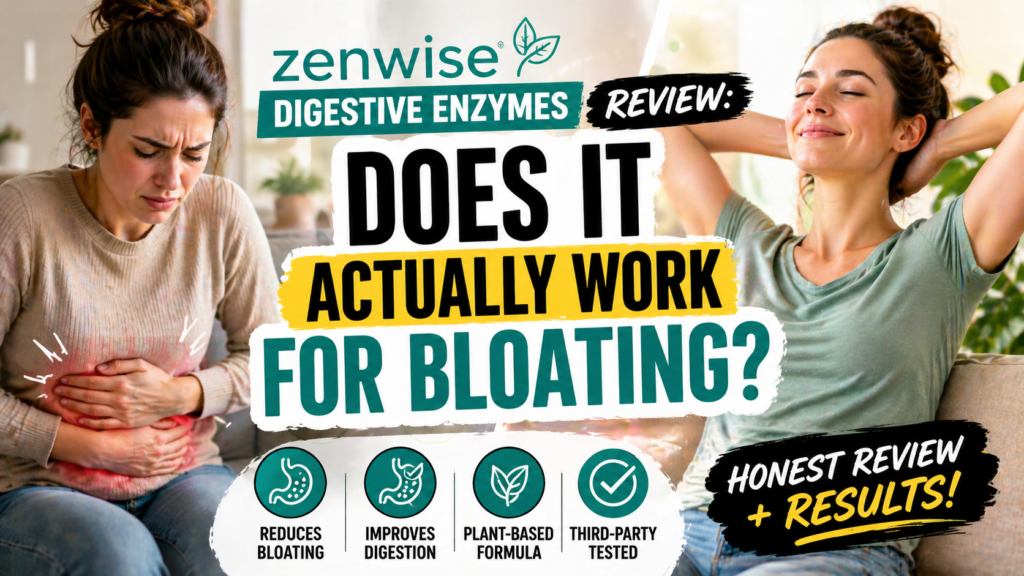
Read the full breakdown here: Zenwise Digestive Enzymes Review — Does It Actually Work?
Check the current price of Zenwise on Amazon
| Zenwise Feature | Why It Matters for IBS |
|---|---|
| Multi-enzyme blend | Covers all food types that trigger IBS symptoms |
| DE111 probiotic | Supports gut bacteria rebalancing alongside enzyme support |
| Inulin prebiotic | Feeds beneficial bacteria for longer-lasting gut balance |
| Bromelain and papain | Anti-inflammatory support for irritated IBS gut lining |
| Vegetarian capsule | Clean formula without unnecessary additives |
| 100 capsules per bottle | Affordable for ongoing daily use with IBS |
Should You Use Enzymes Alone or Pair Them With a Probiotic?
For IBS, the honest answer is: both will give you better results than either alone.
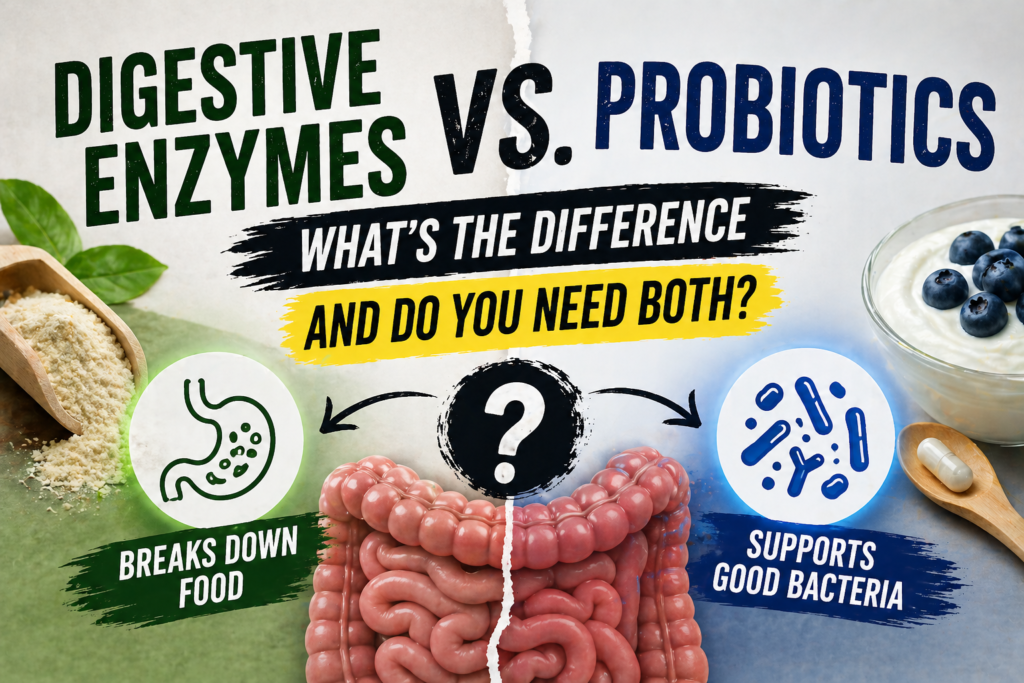
Here’s why. Digestive enzymes address the input side of the problem — making sure food gets broken down before it reaches the bacteria in your colon. But they don’t fix the underlying bacterial imbalance that makes IBS a chronic condition. That’s what a full-spectrum probiotic does. The comparison of the different jobs of enzymes and probiotics shows how the two approaches can complement each other.
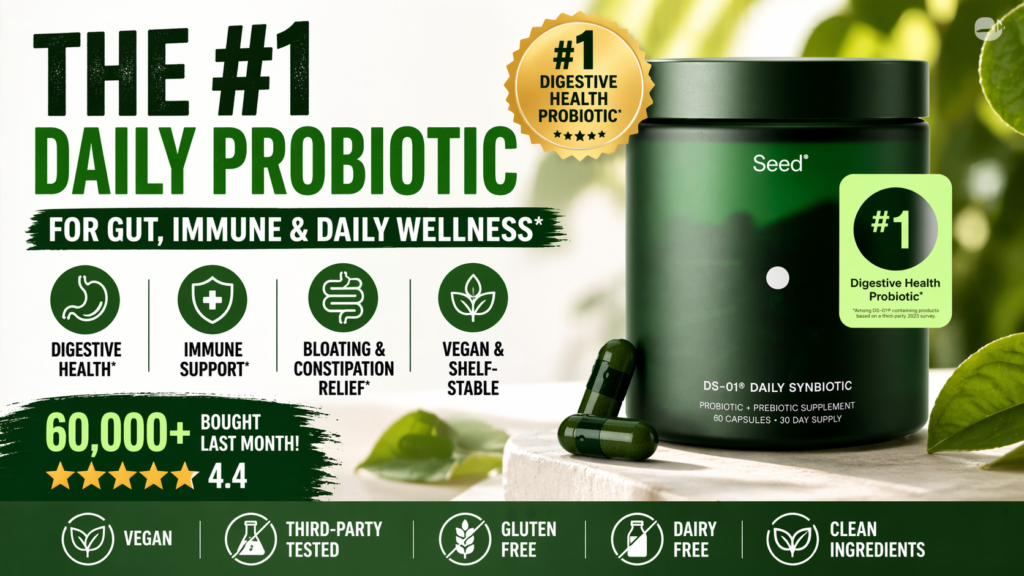
Zenwise includes DE111 probiotic — which is a solid start. But if your IBS is significant, pairing Zenwise with a dedicated multi-strain probiotic like Seed DS-01 gives you comprehensive coverage on both fronts. Enzymes before every meal, Seed DS-01 daily. That’s the most complete approach to IBS management through supplementation.
| Approach | What It Addresses | Best For |
|---|---|---|
| Enzymes only | Food breakdown, immediate symptom relief | Mild IBS, food-triggered symptoms |
| Probiotic only | Bacterial rebalancing, long-term gut health | Bacterial-driven IBS |
| Enzymes + Probiotic | Full spectrum — digestion and bacteria | Moderate to severe IBS |
Dietary Changes That Make Enzymes Work Better for IBS
Enzymes are not a license to eat anything you want without consequences. They’re a support system — and they work best when combined with smart dietary choices. Here are the habits that make the biggest difference alongside enzyme supplementation.
Reduce high-FODMAP foods gradually. FODMAPs are fermentable carbohydrates that are a major IBS trigger for many people. Onions, garlic, beans, wheat, and certain fruits are common culprits. You don’t have to eliminate everything — but identifying and reducing your personal trigger foods while using enzymes can dramatically improve your results.
Eat smaller, more frequent meals. Large meals overwhelm your digestive system regardless of how many enzymes you take. Spreading your food intake across 4–5 smaller meals gives your digestive system a more manageable workload.
Chew your food thoroughly. Digestion starts in the mouth. Mechanical breakdown from chewing takes a significant load off your stomach and enzymes. People who eat quickly and swallow large pieces of food put enormous strain on their digestive system — enzyme supplements help, but chewing properly helps more than most people realize.
Stay well hydrated. Digestive enzymes work in a fluid environment. Chronic dehydration slows the entire digestive process and makes enzyme activity less effective. Aim for adequate water throughout the day, especially around meals.
Limit alcohol and caffeine. Both irritate the gut lining and disrupt digestive function. They’re particularly problematic for IBS sufferers because they can trigger or worsen symptoms independently of food choices.
| Dietary Habit | Why It Helps With IBS and Enzymes |
|---|---|
| Reduce high-FODMAP foods | Less fermentable material for gut bacteria to work on |
| Smaller, more frequent meals | Less digestive demand at any one time |
| Chew food thoroughly | Mechanical breakdown supports enzyme efficiency |
| Stay hydrated | Enzymes require fluid environment to work properly |
| Limit alcohol and caffeine | Reduces independent gut irritation and IBS triggers |
How Long Before You See Results for IBS
One of the advantages of digestive enzymes over probiotics is speed. Because enzymes act directly on food during digestion, many people notice a reduction in post-meal bloating and heaviness within the first few days of use. You’re not waiting for a bacterial population shift — you’re just giving the digestive process immediate support.
That said, for the full range of IBS benefits — reduced cramping, more predictable bowel movements, less overall gut sensitivity — consistent daily use over 3–4 weeks gives you a much clearer picture of what enzymes are doing for your specific situation.
The combination of enzymes for immediate meal-by-meal relief plus a probiotic for deeper microbiome rebalancing is the most complete approach. Enzymes give you faster relief. The probiotic builds the longer-term foundation.
| Timeline | What IBS Sufferers Typically Notice |
|---|---|
| Days 1–3 | Less heaviness and bloating after meals |
| Week 1–2 | Reduced gas and post-meal discomfort |
| Week 3–4 | More consistent bowel movements, less cramping |
| Month 2+ | Sustained improvement, better tolerance of trigger foods |
Signs That Enzyme Deficiency May Be Driving Your IBS
Not everyone with IBS has an enzyme deficiency — but these signs suggest it may be a significant factor in yours.
- Your symptoms are consistently worse after certain types of food — especially carbs, dairy, or fatty meals
- You feel bloated and uncomfortable within 30–60 minutes of eating
- You notice undigested food in your stool — a classic sign of poor digestion
- Dairy causes predictable, severe symptoms even in small amounts
- You’re over 40 and your digestion has gotten gradually worse over the years
- You’ve taken antibiotics recently — these disrupt both gut bacteria and digestive function
- You feel tired and foggy after meals — poor nutrient absorption from incomplete digestion affects energy levels
If several of these describe your experience, a digestive enzyme supplement is worth trying before more invasive interventions. It’s low risk, relatively low cost, and for many people delivers noticeable relief faster than almost anything else.
Frequently Asked Questions
Can digestive enzymes cure IBS?
No — IBS doesn’t have a cure, and enzymes aren’t one. But they can significantly reduce symptoms for many IBS sufferers, particularly those with food-triggered bloating, gas, and digestive discomfort. Think of them as management support, not a fix.
Are digestive enzymes safe for IBS?
Yes — digestive enzyme supplements are generally considered safe for people with IBS. They’re not absorbed into the bloodstream; they work locally in your digestive tract. As always, check with your doctor if you’re on medications or have other health conditions.
Which digestive enzyme is best for IBS?
A broad multi-enzyme blend that includes amylase, protease, lipase, lactase, bromelain, and papain covers the most ground. Zenwise Health Digestive Enzymes is our top recommendation — it also includes a probiotic and prebiotic. Read our full Zenwise review here.
Should I take digestive enzymes with every meal for IBS?
Ideally yes, especially with your larger meals. If you can only take one dose a day, take it before your biggest or most trigger-prone meal.
Can I take digestive enzymes and a probiotic at the same time?
Yes — and for IBS, we actively recommend it. Take enzymes with meals and your probiotic once daily. The two work on different aspects of the problem and complement each other well.
How do digestive enzymes help IBS-D specifically?
For IBS-D, lipase and amylase are most important. Undigested fats and carbs reaching the colon are major urgency and diarrhea triggers. Better breakdown of these in the small intestine means less material reaching the colon to trigger that response.
Do digestive enzymes help with IBS bloating?
Yes — this is one of the most consistently reported benefits. Less undigested food reaching gut bacteria means less fermentation, less gas, and significantly less bloating. Most people notice this benefit within the first week of use.
Your IBS Doesn’t Have to Run Your Life
IBS is exhausting. The unpredictability. The food anxiety. The bloating that makes you avoid clothes you used to love. The urgency that makes every trip somewhere new feel like a risk assessment.
Digestive enzymes aren’t a silver bullet — but for a lot of people, they’re a missing piece that makes a real, daily difference. Combined with a quality probiotic and some strategic dietary adjustments, you have a genuinely powerful toolkit for managing IBS symptoms without relying on medications with significant side effects.
Start with Zenwise. Pair it with Seed DS-01 if your IBS is more significant. Give it a solid 30 days. Your gut has been asking for this kind of support for a long time.
Try Zenwise Digestive Enzymes on Amazon
More from TummyCure:
- Zenwise Digestive Enzymes — Full Review
- Best Digestive Enzymes for Bloating That Actually Work
- Best Probiotic for IBS-C, IBS-D and IBS-M
- Seed DS-01 Review — Best Probiotic for Gut Health
- IBS-M Relief: Balancing Constipation and Diarrhea Daily
- Living With IBS-D: Managing Symptoms and Quality of Life
About the Author
Rachel Donnelly is a certified nutritional health coach and gut health writer who spent years struggling with IBS and bloating before making digestive wellness her specialty. She writes for TummyCure with one goal: cut through the noise and tell you what actually works. When she’s not deep in microbiome research, she’s fermenting things in her kitchen and losing arguments with her husband about whether kombucha counts as a dessert.
As an Amazon Associate we earn from qualifying purchases through some links in our articles.