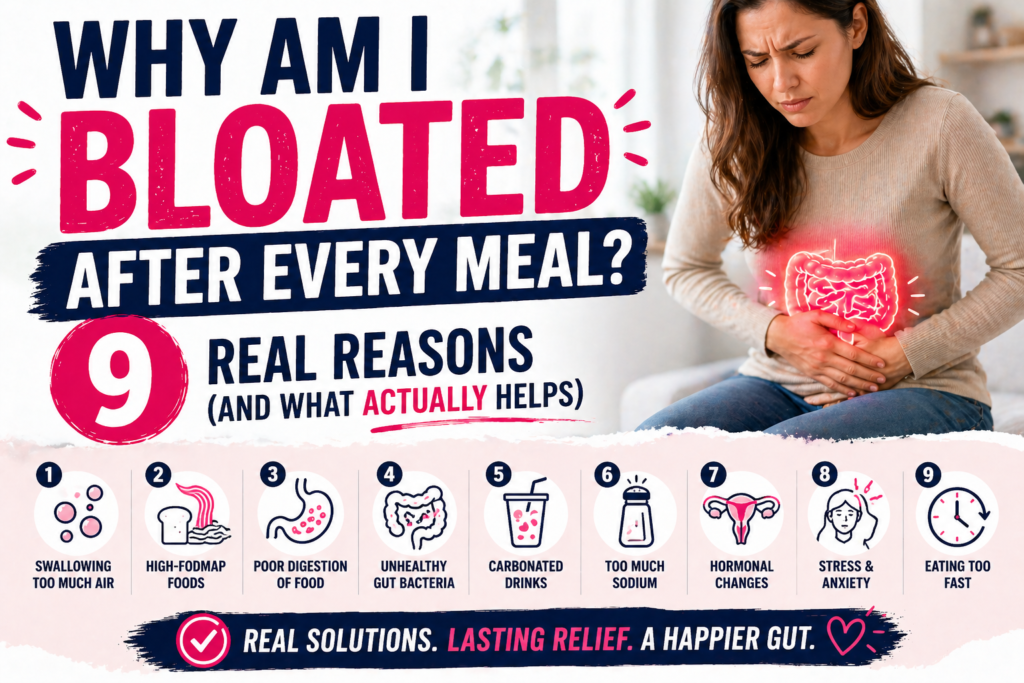
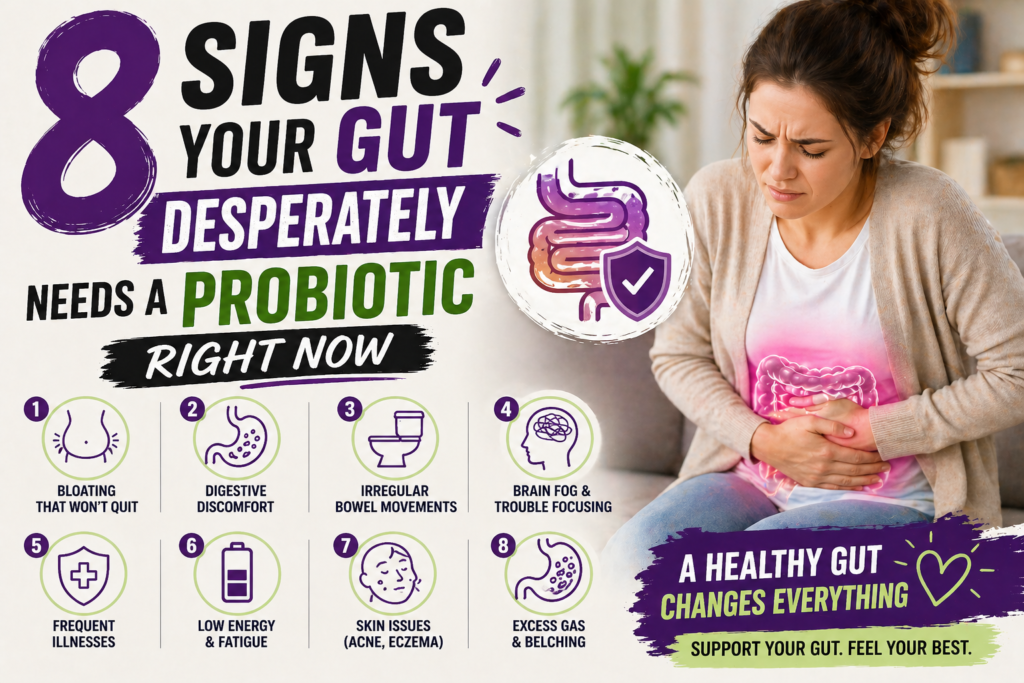
Bloating, brain fog, bad skin, getting sick constantly — your gut might be behind all of it. Here are 8 signs it’s time to start a probiotic.
Your Gut Has Been Trying to Tell You Something
Your digestive system is remarkably good at communicating. The problem is most of us have gotten so used to feeling “off” that we don’t recognize the signals anymore. Bloating after meals feels normal. Being irregular feels normal. Feeling tired and foggy feels normal.
None of it is normal. And a lot of it traces back to one thing — an imbalanced gut microbiome.
Here are the most common signs your gut is begging for better bacterial support — and what you can do about it.
| Sign | Gut Connection |
|---|---|
| Chronic bloating | Bacterial imbalance causing excess fermentation |
| Irregular bowel movements | Disrupted gut motility from low beneficial bacteria |
| Getting sick frequently | 70%+ of immune system lives in the gut |
| Skin breakouts or irritation | Gut-skin axis — inflammation shows on your face |
| Persistent fatigue | Gut bacteria affect nutrient absorption and energy |
| Brain fog | Gut-brain axis — microbiome affects cognitive clarity |
| Recent antibiotics | Antibiotics wipe out good and bad bacteria alike |

1. You’re Bloated All the Time
Not occasionally bloated after a big meal — we’re talking regular, predictable bloating that shows up most days. You finish lunch and within an hour you’re uncomfortable. Your clothes fit differently by evening than they did in the morning.
This kind of chronic bloating is almost always a bacterial balance issue. Too many gas-producing bacteria in your gut means too much fermentation, which means too much gas. A probiotic with clinically studied strains helps restore the balance and reduce that fermentation activity over time.
Most people with chronic bloating notice improvement within 2–4 weeks of starting a quality probiotic.

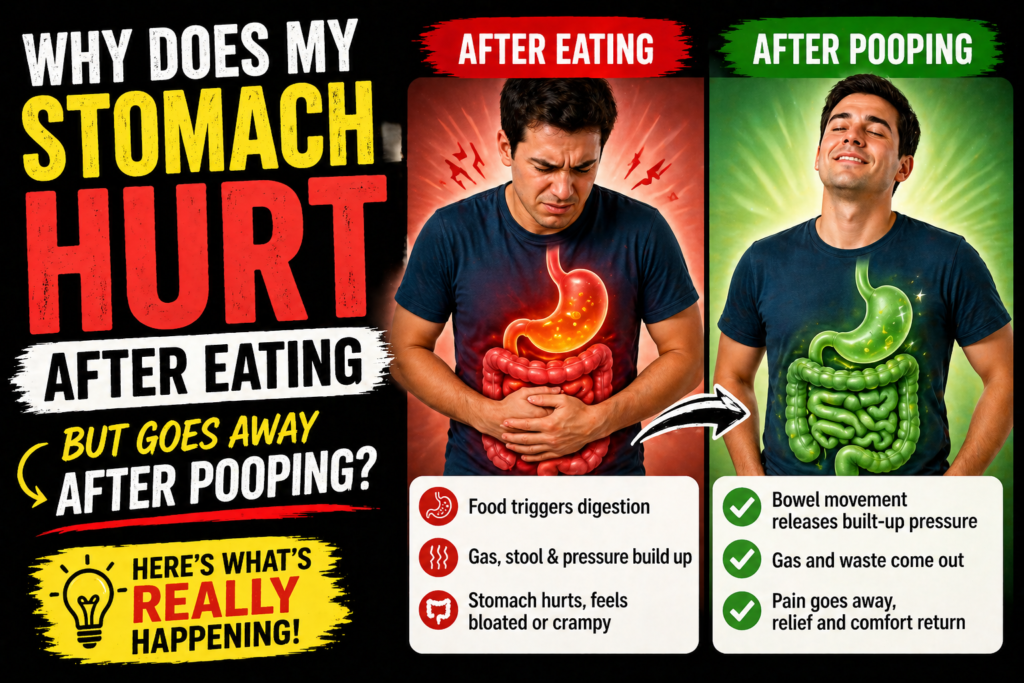
2. Your Bowel Movements Are All Over the Place
Three times a day one week, nothing for four days the next. Or loose and urgent in the morning, fine by afternoon. Irregular, unpredictable digestion is a hallmark of a disrupted gut microbiome.
Beneficial bacteria play a direct role in regulating gut motility — how fast or slow things move through your digestive system. When the balance tips the wrong way, that regulation breaks down. Bifidobacterium strains in particular have the most research behind them for improving regularity in both constipation and diarrhea-dominant patterns.
3. You Just Finished a Round of Antibiotics
This one isn’t subtle — antibiotics are the nuclear option for your gut. They kill the infection, but they don’t discriminate between harmful bacteria and the beneficial bacteria you actually need. A single course of antibiotics can disrupt your gut microbiome for weeks or months.
Starting a probiotic during or immediately after antibiotic treatment is one of the most evidence-backed uses of probiotics that exists. If you’ve taken antibiotics recently and haven’t done anything to restore your gut bacteria, your microbiome is probably still recovering.
Read more: How to Restore Gut Bacteria After Antibiotics — What Actually Works
4. You Get Sick More Often Than You Should
Most people don’t realize that over 70% of your immune system lives in your gut. The bacterial communities in your intestines communicate directly with your immune cells, helping regulate how your body responds to threats. This connection between the gut microbiome and immune function is central to understanding how digestive health influences immunity.
When your gut microbiome is depleted or imbalanced, your immune response suffers. If you seem to catch every cold that goes around, or you take longer to recover than you’d expect, your gut health is worth looking at seriously.
Read more: Over 70% of Your Immune System Lives in Your Gut
5. Your Skin Is Breaking Out or Acting Up
The gut-skin axis is real and well-documented. Inflammation in the gut doesn’t stay in the gut — it shows up on your skin as acne, eczema, rosacea, or just general dullness and irritation. If you’ve tried everything for your skin and nothing works long-term, your gut might be the missing piece.
Several probiotic strains have been specifically studied for their impact on skin health through the gut-skin connection. Seed DS-01 includes strains selected for this purpose alongside its core digestive strains.

Read more: 7 Signs Your Gut Health Is Affecting Your Skin
6. You Feel Foggy, Tired, or Low Most of the Time
The gut-brain axis is one of the most fascinating areas of microbiome research right now. Your gut bacteria produce neurotransmitters — including a significant portion of your body’s serotonin — and communicate directly with your brain through the vagus nerve.
Persistent brain fog, low mood, and unexplained fatigue are all increasingly linked to gut microbiome disruption. This doesn’t mean a probiotic is a cure for depression or chronic fatigue — but for many people, improving gut health leads to noticeable improvements in mental clarity and energy levels.
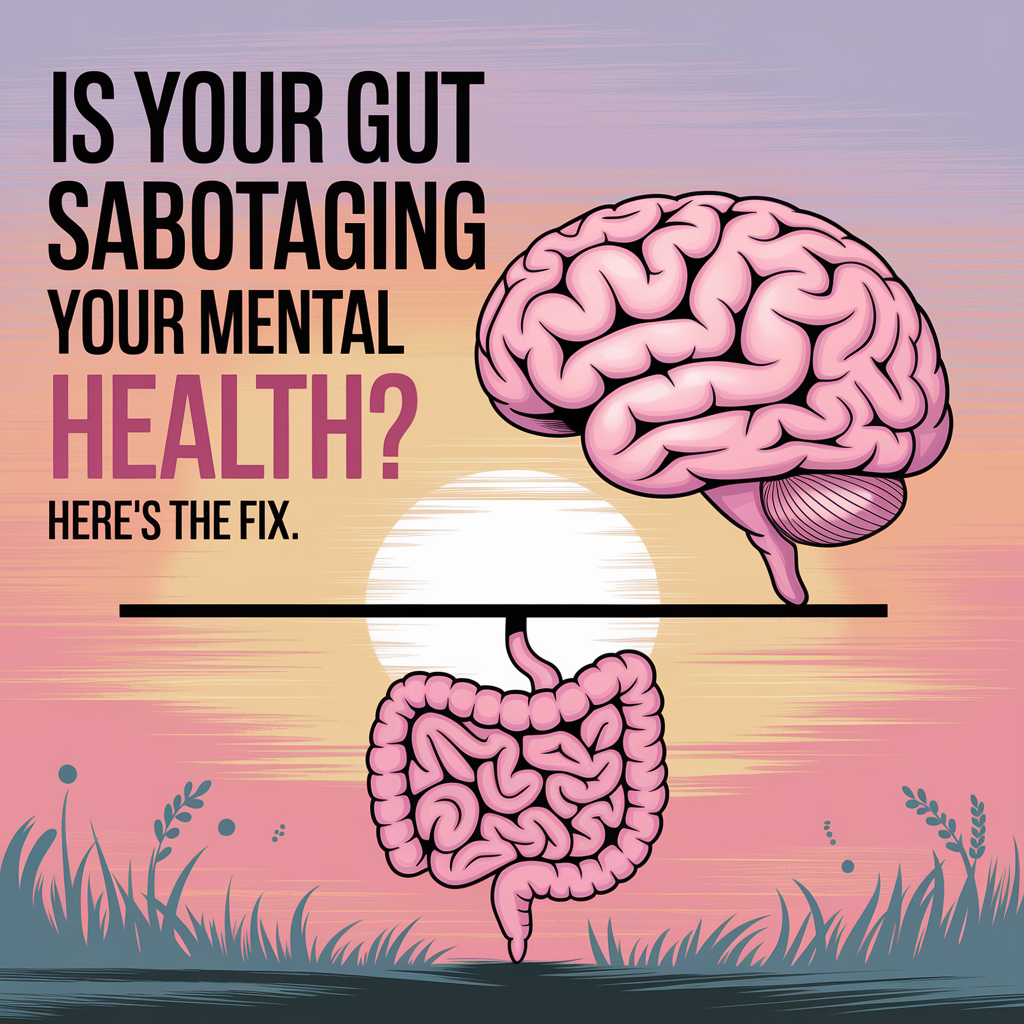
Read more: Is Your Gut Sabotaging Your Mental Health?
7. You Eat a Mostly Processed Diet
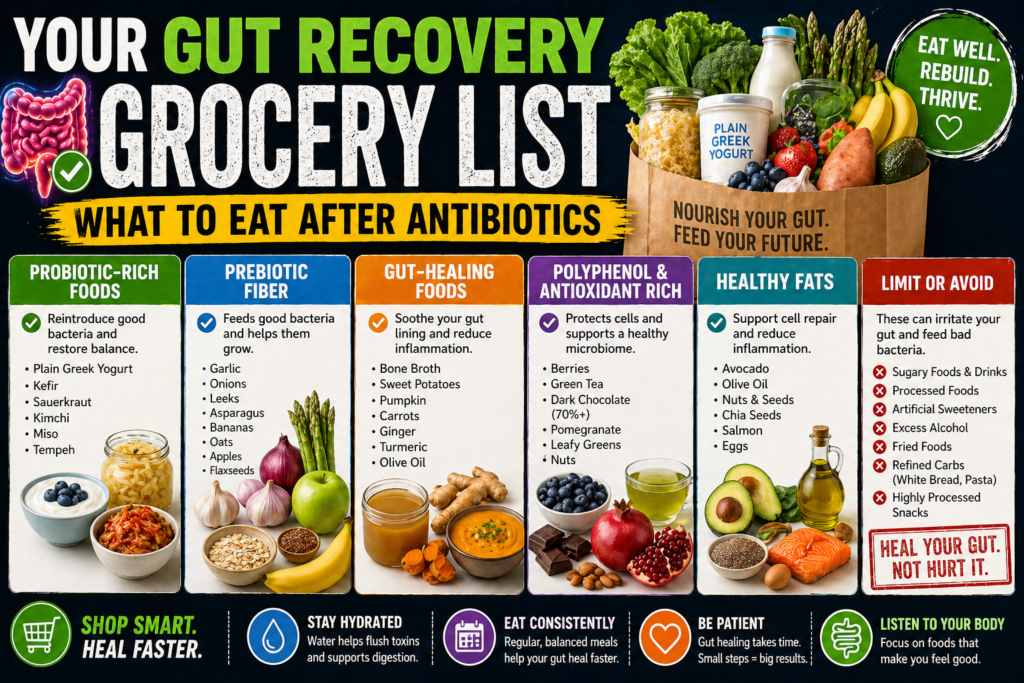
Ultra-processed foods are devastating for your gut microbiome. They’re low in fiber (which feeds beneficial bacteria), high in sugar (which feeds harmful bacteria), and often contain additives that disrupt bacterial communities directly.
If your diet is heavy on packaged foods, fast food, or anything that comes out of a bag or box — your gut bacteria are almost certainly suffering for it. A probiotic won’t undo a bad diet, but it can help offset some of the damage and maintain a better bacterial balance even when your eating isn’t perfect.
| Diet Factor | Effect on Gut Bacteria |
|---|---|
| High sugar intake | Feeds harmful bacteria, suppresses beneficial strains |
| Low fiber intake | Starves beneficial bacteria of their main food source |
| Processed food additives | Directly disrupt bacterial communities |
| Alcohol | Reduces microbial diversity over time |
| High fermented food diet | Naturally supports and diversifies gut microbiome |


8. You’re Under a Lot of Stress
Chronic stress is one of the most underappreciated gut disruptors. The gut-brain connection works both ways — just as gut health affects your mood and mental clarity, stress directly affects your gut microbiome. Cortisol (the stress hormone) alters gut motility, increases intestinal permeability, and reduces beneficial bacterial populations.
If you’ve noticed your digestion gets worse during stressful periods — more bloating, more urgency, more discomfort — that’s the gut-brain axis in action. Supporting your gut microbiome with a quality probiotic during high-stress periods is one of the more impactful things you can do.
So What Should You Take?
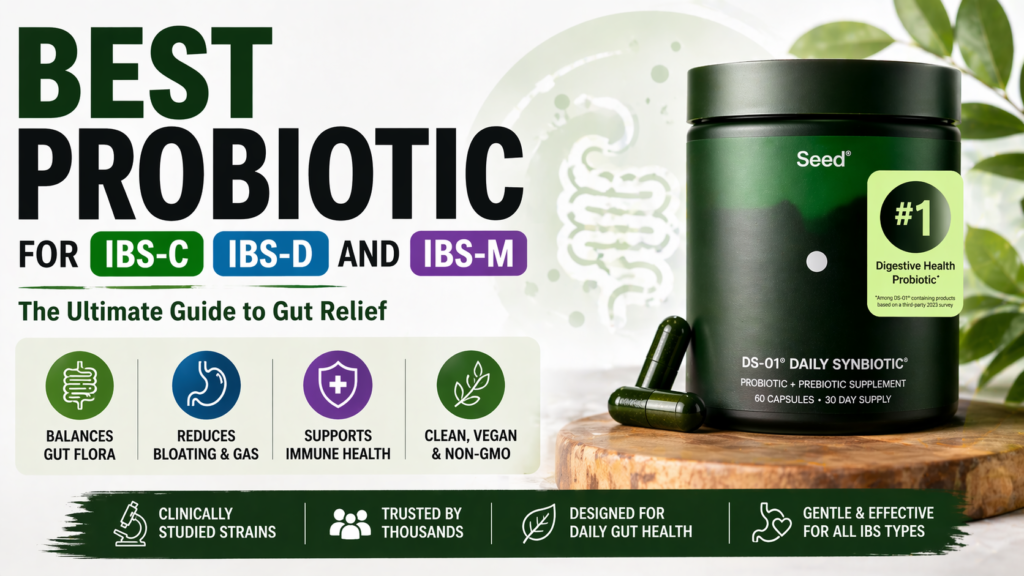
If you recognize yourself in several of these signs, a synbiotic — a probiotic combined with prebiotic fiber — is the most comprehensive approach. The best option we’ve tested and reviewed is Seed DS-01.
It combines 24 clinically studied probiotic strains with a prebiotic outer capsule, delivered in an acid-resistant design that actually gets the bacteria to your intestines. It covers digestion, immunity, skin health, and the gut-brain axis — all in one daily capsule.
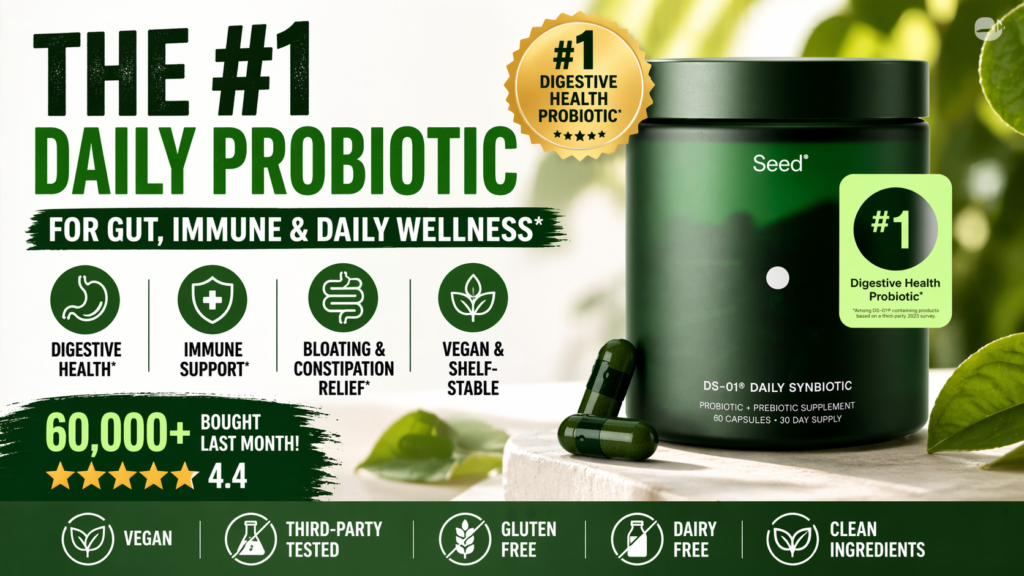
Read our full review: Seed DS-01 — Is It Worth $50 a Month?
Check the current price of Seed DS-01 on Amazon
Frequently Asked Questions
How do I know if my gut bacteria are off?
Chronic bloating, irregular bowels, frequent illness, skin issues, fatigue, and brain fog are all common indicators. The more of these you experience regularly, the more likely your gut microbiome needs support.
Can I improve gut bacteria with food alone?
Yes — fermented foods like yogurt, kefir, kimchi, and sauerkraut add natural probiotics, and high-fiber foods feed your beneficial bacteria. But for people with significant gut disruption, a quality probiotic supplement accelerates results considerably.
How quickly will I feel better after starting a probiotic?
Most people notice something within 2–4 weeks. Full gut microbiome improvements take 60–90 days of daily consistent use. Don’t quit after two weeks.
Is it safe to take a probiotic every day?
Yes — daily probiotic use is safe and recommended for most healthy adults. Your gut microbiome is constantly being disrupted by diet, stress, and environment. Daily supplementation helps maintain the balance you’re building.
Your Gut Is Talking — Start Listening
Most digestive issues that people chalk up to “just how I am” aren’t inevitable. They’re signs of a microbiome that’s out of balance and needs support. The good news is that gut health is remarkably responsive to the right intervention — and a quality probiotic is one of the most direct ways to start turning things around.
If you recognized yourself in this list, don’t wait. Your gut has been patient enough.
Try Seed DS-01 on Amazon — our top-rated pick for comprehensive gut health support.
More from TummyCure:
- Seed DS-01 Full Review
- How to Restore Gut Bacteria After Antibiotics
- Is Your Gut Sabotaging Your Mental Health?
- 7 Signs Your Gut Health Is Affecting Your Skin
About the Author
Rachel Donnelly is a certified nutritional health coach and gut health writer who spent years struggling with IBS and bloating before making digestive wellness her specialty. She writes for TummyCure with one goal: cut through the noise and tell you what actually works. When she’s not deep in microbiome research, she’s fermenting things in her kitchen and losing arguments with her husband about whether kombucha counts as a dessert.
As an Amazon Associate we earn from qualifying purchases through some links in our articles.