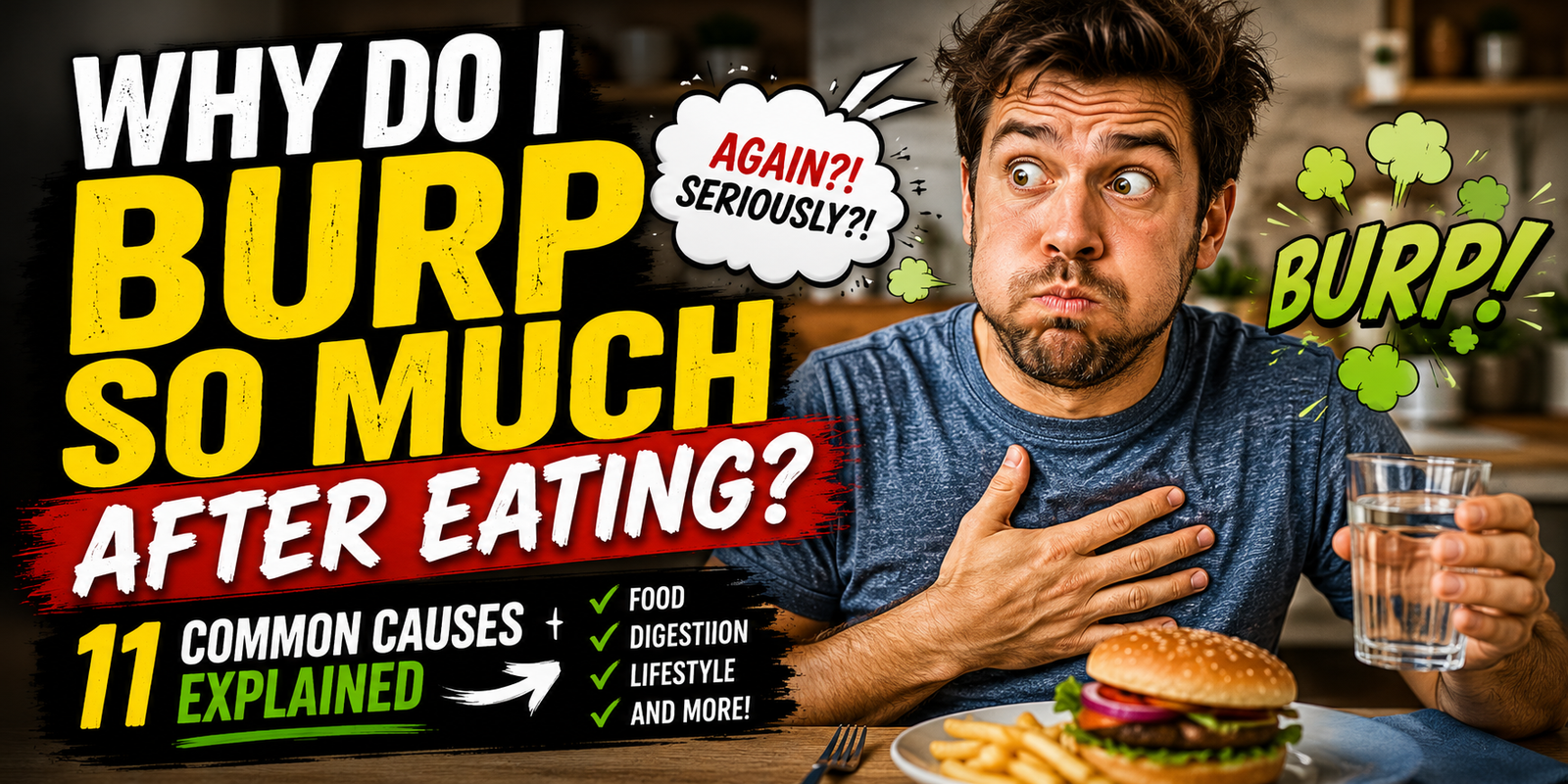
I’ll admit it. Burping wasn’t something I ever thought much about until it started happening after almost every meal. At first, I blamed eating too fast or drinking a soda with dinner. But after weeks of feeling like I couldn’t finish a meal without constantly burping, I started wondering if something more was going on.
What surprised me most was learning that frequent burping isn’t a condition by itself. It’s usually your digestive system responding to something else. Sometimes it’s completely harmless, while other times it can be an early clue that your stomach or esophagus isn’t happy.
If you’ve been asking yourself, “Why do I burp so much after eating?” you’re definitely not alone. Millions of people search for this exact question every year because it can be frustrating, embarrassing, and sometimes even painful.
The good news is that most causes are treatable once you figure out what’s triggering them.
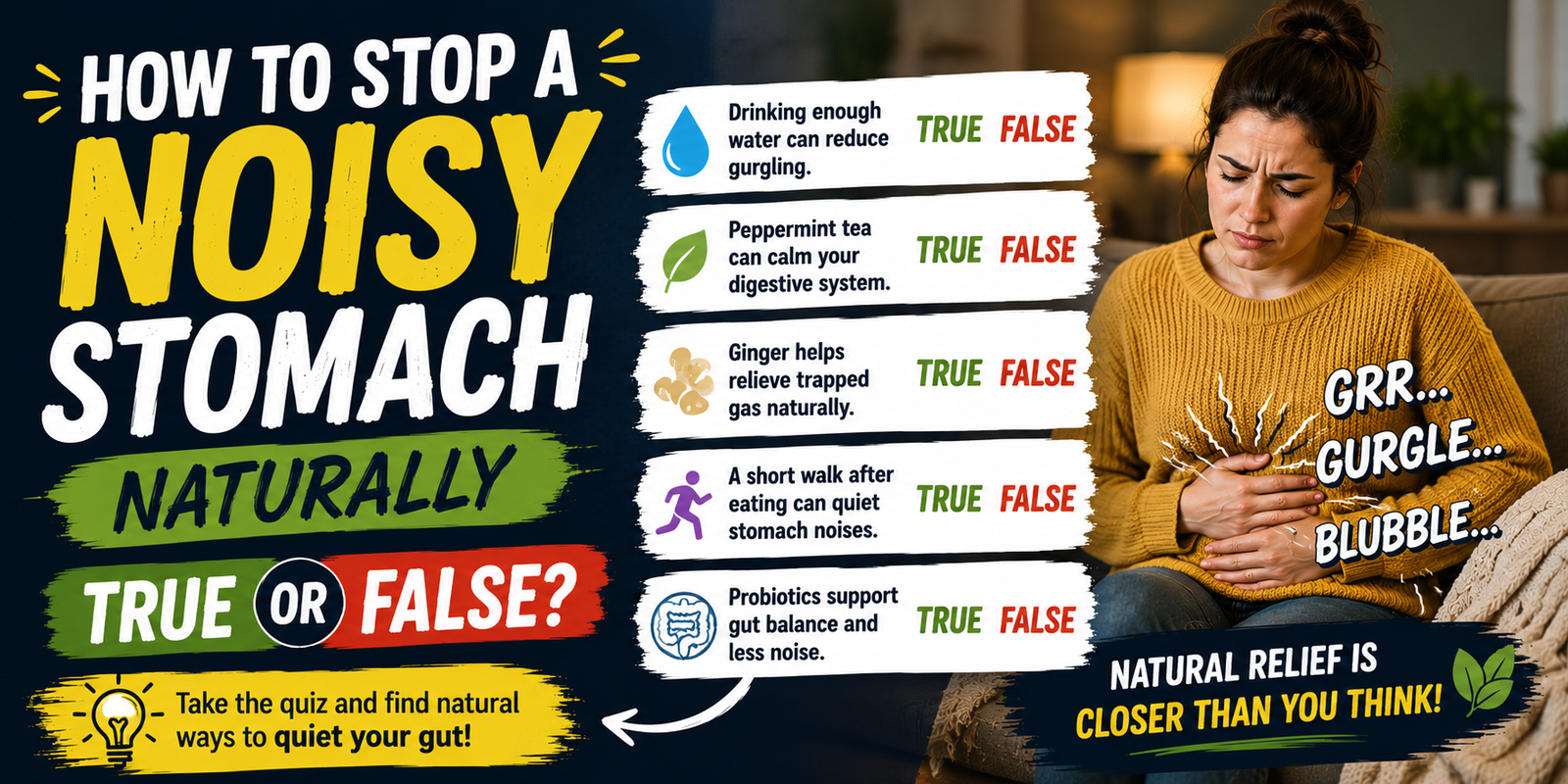
Is Burping After Eating Normal?
Absolutely.
Everyone swallows a little air while eating and drinking. Your stomach has to get rid of that air somehow, and burping is the easiest way.
Most healthy adults burp several times each day without even noticing.
The difference is frequency.
If you’re burping once or twice after finishing lunch, that’s usually nothing to worry about.
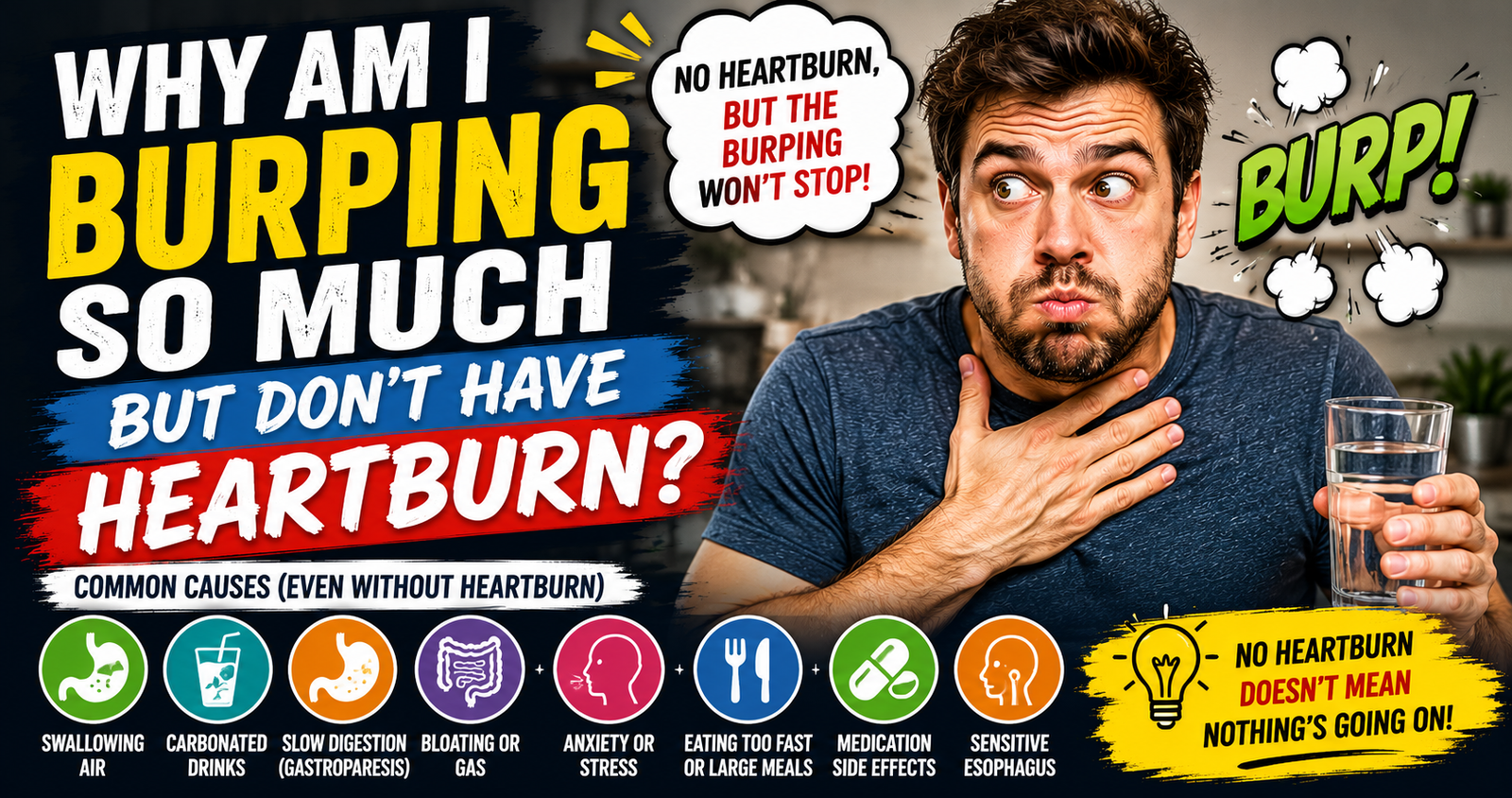
If you’re burping ten or twenty times after nearly every meal, or your burping is accompanied by stomach pain, bloating, nausea, or heartburn, it’s worth taking a closer look. When frequent burping occurs without the usual burning sensation, Why Am I Burping So darn much? explores what may be behind it.
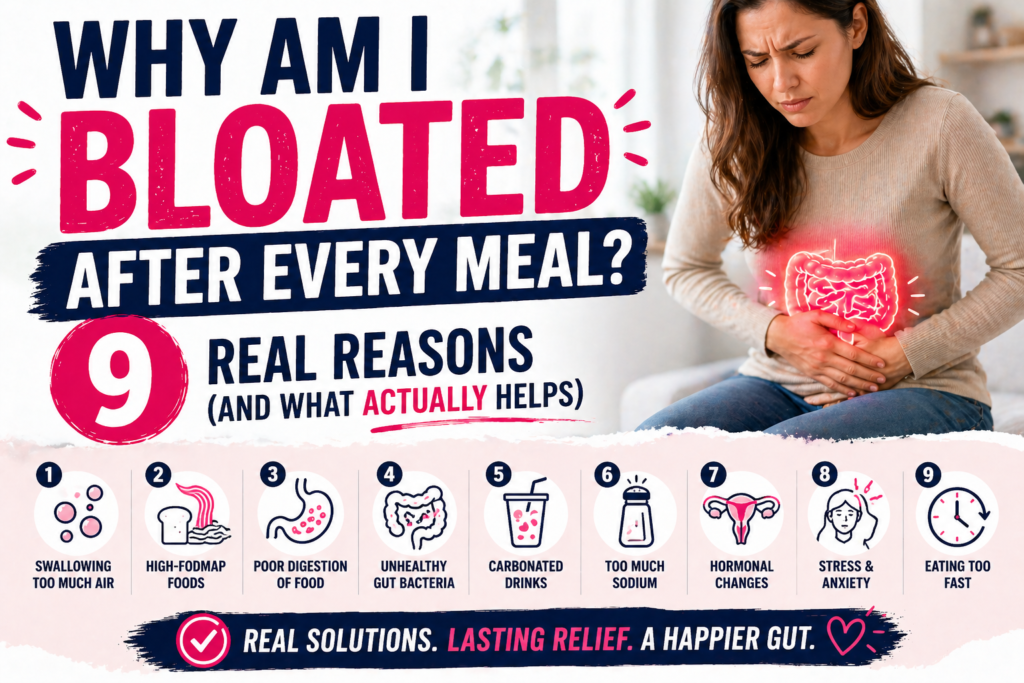
I also learned that excessive burping is rarely the only symptom. Once I started paying attention, I noticed many digestive problems tend to show up together. For example, people dealing with frequent burping often also experience bloating. If that sounds familiar, you may also want to read my guide on why am I bloated after every meal? 9 real reasons and what actually helps because many of the same digestive conditions can cause both symptoms.
What Actually Causes Burping?
Burping happens when excess air or gas builds up inside your upper digestive tract.
That gas can come from two different places.
The first is swallowed air.
Every time you take a bite, sip a drink, chew gum, or even talk while eating, you swallow a small amount of air. Normally your stomach releases that air through a burp.
The second source is gas produced during digestion.
As bacteria break down certain foods inside your intestines, they naturally create gases like carbon dioxide, hydrogen, and methane. Some of that gas travels downward, while some can work its way back up and leave through burping.
Understanding which type of gas you’re dealing with often makes it much easier to figure out the underlying cause.


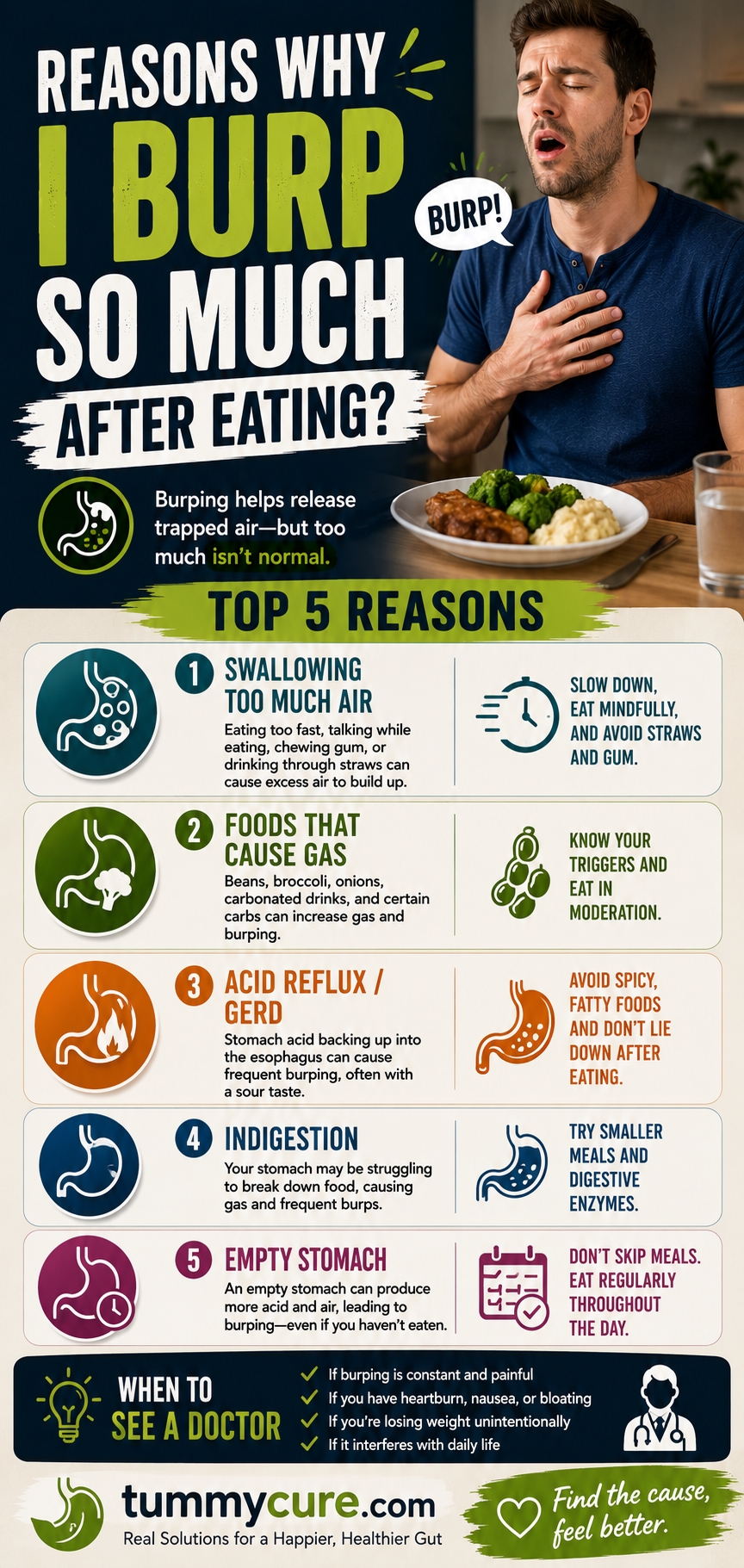
1. You’re Swallowing More Air Than You Realize
This is probably the most common cause, and honestly, it was the one I overlooked the longest.
I never realized how much air I swallowed simply because I ate too quickly.
A few habits that increase swallowed air include:
- Eating too fast
- Talking while chewing
- Drinking through a straw
- Chewing gum
- Smoking
- Drinking carbonated beverages
- Wearing loose dentures that don’t fit well
Even something as simple as rushing through lunch at work can leave your stomach filled with extra air.
Once I started slowing down, chewing more thoroughly, and putting my fork down between bites, I noticed a difference within a few days.
2. Acid Reflux Is Often the Hidden Culprit
One thing that surprised me during my research is how often excessive burping is linked to acid reflux.
Most people think GERD always causes intense heartburn, but that’s not necessarily true.
Some people mainly experience:
- Frequent burping
- A sour taste in their mouth
- Mild chest discomfort
- Chronic throat clearing
- Hoarseness
- A cough that won’t go away
Burping can actually be one of the earliest symptoms because acid irritation changes how your stomach and esophagus work together after meals.
If you frequently notice burping along with burning in your chest or a sour taste after eating, it’s worth reading my detailed guide on living with acid reflux causes and effective solutions for long-term relief. Understanding whether reflux is contributing to your symptoms can make choosing the right treatment much easier.

3. You’re Simply Eating Too Much
I think almost everyone has experienced this after Thanksgiving dinner.
Your stomach is designed to stretch as you eat.
The more it stretches, the greater the pressure inside it.
That pressure makes it easier for trapped air to escape through repeated burping.
Large meals also stay in your stomach longer, which gives digestion more time to produce additional gas.
For me, eating slightly smaller meals throughout the day worked much better than having one huge lunch followed by a massive dinner.
Even reducing portion sizes by 20 or 30 percent noticeably decreased how often I burped afterward.
4. Certain Foods Naturally Produce More Gas
Some foods simply create more digestive gas than others.
That doesn’t mean they’re unhealthy.
In fact, many are incredibly nutritious.
Foods that commonly increase gas production include:
- Beans
- Lentils
- Broccoli
- Brussels sprouts
- Cabbage
- Onions
- Carbonated drinks
- Artificial sweeteners
- High-fiber cereals
If your burping tends to happen after eating these foods, it’s not necessarily a sign you should avoid them forever.
Instead, try introducing them more gradually or eating smaller portions until your digestive system adjusts.
One thing I learned is that frequent burping isn’t always about the food itself. Sometimes it’s a sign that your digestive system is having trouble breaking that food down efficiently, which we’ll get into later when we talk about digestive enzymes.

5. Food Intolerances Can Make Burping Much Worse
One thing I didn’t realize until I started paying closer attention was that certain foods triggered my burping almost every single time. It wasn’t because those foods were unhealthy. My body simply wasn’t digesting them very well.
Food intolerances are different from food allergies. Instead of causing an immune reaction, they usually make digestion more difficult, leading to gas, bloating, stomach discomfort, and frequent burping.
Some of the most common food triggers include:
- Dairy products
- Wheat or gluten-containing foods
- High-fat meals
- Artificial sweeteners
- Certain fruits high in fructose
- Onions and garlic
- Highly processed foods
The tricky part is that symptoms don’t always happen immediately. Sometimes they don’t show up until an hour or two after eating, making it difficult to identify the culprit.
What helped me was keeping a simple notebook for a couple of weeks. I’d write down what I ate, when I ate it, and how I felt afterward. Before long, patterns started showing up that I never would have noticed otherwise.
6. Indigestion Can Leave Gas Trapped in Your Stomach
Sometimes the problem isn’t too much air.
It’s that your stomach isn’t emptying food as smoothly as it should.
Indigestion, also called dyspepsia, often causes food to sit in the stomach longer than normal. While that food is waiting to move into the small intestine, pressure builds and burping becomes much more frequent.
Along with burping, you might notice:
- Feeling overly full after eating only a small amount
- Mild burning in your upper abdomen
- Bloating
- Nausea
- Mild stomach discomfort
I found that eating smaller meals and avoiding lying down right after eating made a noticeable difference.
If you regularly feel stuffed after just a few bites, you might also enjoy reading Why Do I Feel Full So Fast When Eating? because early fullness and frequent burping often occur together.

7. A Hiatal Hernia Can Cause Burping After Nearly Every Meal
This was something I knew almost nothing about until I started researching digestive conditions.
A hiatal hernia happens when part of the stomach pushes upward through the diaphragm. That small change in anatomy can make it easier for stomach contents and trapped air to move upward.
Many people with a hiatal hernia notice:
- Burping after eating
- Frequent heartburn
- Acid reflux
- Chest discomfort
- Feeling overly full
- Regurgitation after meals
Not everyone with a hiatal hernia has symptoms, but if burping seems to happen with almost every meal and you also struggle with reflux, it’s something worth discussing with your healthcare provider.
If you’ve already been diagnosed with one, my guide on Hiatal Hernia Diet: What to Eat and Avoid Starting Todaymay help you identify foods that are less likely to trigger symptoms.
8. IBS Doesn’t Just Affect Your Bowels
Most people think of irritable bowel syndrome as causing constipation or diarrhea.
While that’s certainly true, IBS often affects the entire digestive tract.
Many people also experience:
- Frequent burping
- Bloating
- Trapped gas
- Cramping
- Stomach noises
- Feeling like food sits in the stomach
I found it interesting that many people with IBS say their symptoms become much worse after eating, especially after larger meals or foods that trigger fermentation inside the intestines.
If you’re also dealing with changes in bowel habits, my article on Best Probiotic for IBS-C, IBS-D and IBS-M explains why restoring gut bacteria may help some people better manage recurring digestive symptoms.
9. Stress and Anxiety Really Can Affect Your Digestion
This was probably the biggest surprise for me.
I always thought stress stayed in your head.
I didn’t realize how much it could affect your stomach.
When you’re anxious, you often breathe differently without realizing it. That faster, shallower breathing can cause you to swallow more air throughout the day.
Stress also changes how quickly your stomach empties and how your digestive muscles contract.
The result can be:
- More burping
- More bloating
- Increased stomach discomfort
- Nausea
- Acid reflux flare-ups
I noticed my burping was much worse during particularly stressful weeks, even when I hadn’t changed my diet at all.
10. Your Body May Not Be Breaking Food Down Efficiently
Sometimes the issue isn’t the amount of food you’re eating.
It’s how well you’re digesting it.
Digestive enzymes are proteins your body naturally produces to break down carbohydrates, proteins, and fats. If digestion slows or certain foods aren’t broken down efficiently, gas can build up and leave you burping long after the meal is over.
This seems especially common after meals that are:
- High in fat
- High in protein
- Large portions
- Rich restaurant meals

While digestive enzyme supplements aren’t necessary for everyone, I spent quite a bit of time researching them because they kept coming up in conversations about bloating and burping. If you’re curious about whether they might be worth trying, check out my review of Zenwise Digestive Enzymes and whether they actually work for bloating. I also put together a guide covering the best digestive enzymes for bloating that actually work if you’re comparing different options.
11. Sometimes Burping Is a Sign of Another Medical Condition
Thankfully, this is much less common.
Still, it’s important to know that excessive burping can occasionally be associated with conditions such as:
- Gastritis
- Peptic ulcers
- Helicobacter pylori (H. pylori) infection
- Gastroparesis
- Gallbladder disease
- Celiac disease
These conditions usually cause more than just burping.
You may also experience persistent stomach pain, vomiting, unexplained weight loss, black stools, or difficulty swallowing.
Those symptoms should always be evaluated by a healthcare professional rather than treated at home.
Certain Foods May Be Making Your Burping Worse
One thing I discovered was that it wasn’t always the act of eating that caused my burping. Sometimes it was specific foods that kept showing up in my meals.
Coffee, carbonated drinks, bread, fried foods, onions, garlic, and even some healthy vegetables caused my digestive system to react very differently than lighter meals.
Instead of assuming every food affects you the same way, it’s worth paying attention to patterns. Keeping a simple food journal for a couple of weeks can make it much easier to identify repeat triggers.
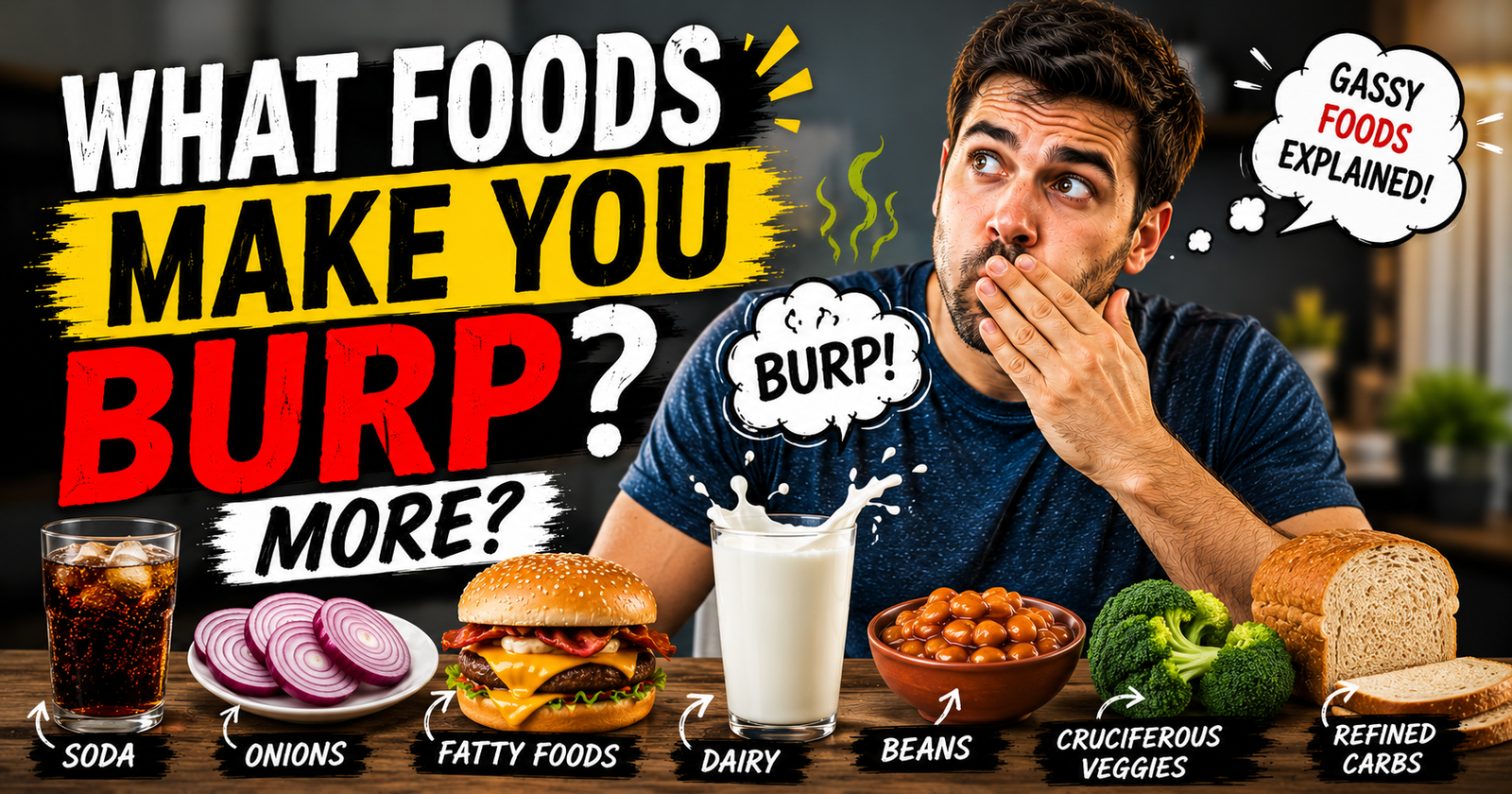
If you’re wondering which foods commonly lead to extra burping, I put together a guide on What Foods Make You Burp More? that explains the foods most often associated with excess burping and why they affect some people more than others.
What Helped Me Burp Less After Meals
I’ll be honest, I was hoping there would be one magic fix.
Instead, I found that several small changes made a much bigger difference than one drastic change.
The first thing I did was slow down while eating. I didn’t realize how often I rushed through lunch or ate dinner while distracted. Simply chewing my food more thoroughly and taking smaller bites noticeably reduced how much air I swallowed.
I also stopped drinking carbonated beverages with meals. That alone cut down on the pressure building in my stomach after eating.
Another thing that surprised me was how much walking helped. Even a slow 10 to 15 minute walk after dinner often eased that bloated, overly full feeling that usually led to constant burping.
Finally, I started paying attention to patterns instead of isolated incidents. If I burped after one pizza night, that didn’t tell me much. But if I burped after every greasy meal for two weeks, that was a clue worth investigating. A similar tracking approach can help if you notice pork-related stomach symptoms after fatty meals.
Foods That Commonly Trigger Burping
Not everyone reacts to the same foods, but certain foods are much more likely to increase gas production or slow digestion.
Some of the biggest offenders include:
- Carbonated beverages
- Beer
- Fried foods
- Very fatty meals
- Onions
- Garlic
- Broccoli
- Cabbage
- Brussels sprouts
- Beans
- Lentils
- Artificial sweeteners
- Sugar alcohols found in many “diet” products
That doesn’t mean you have to eliminate these foods forever.
Instead, try removing one suspected trigger for a week or two to see if your symptoms improve before cutting out multiple foods at once.
Could Your Gut Bacteria Be Part of the Problem?
This is something I never thought about until I started reading more about the gut microbiome.
Your digestive tract is home to trillions of bacteria that help break down food. When those bacteria are balanced, digestion usually runs more smoothly.
When they’re out of balance, excess gas, bloating, burping, and changes in bowel habits can become much more common.
That imbalance can happen after:
- Taking antibiotics
- A stomach infection
- Long periods of poor eating habits
- Certain digestive disorders
- Ongoing stress
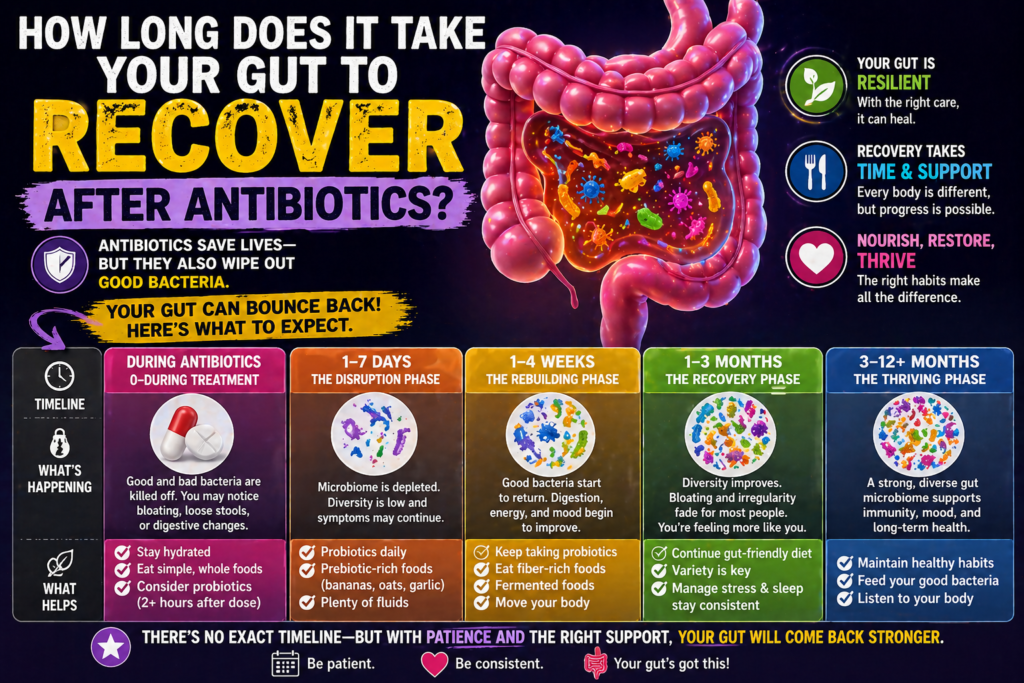
If your burping seemed to start after taking antibiotics, I’d encourage you to read How Long Does It Take Your Gut to Recover After Antibiotics?. It explains what gut recovery actually looks like and why some people continue having digestive symptoms for weeks or even months afterward.

I also put together a guide on The Best Probiotic to Take After Antibiotics if you’re trying to rebuild healthy gut bacteria after a course of antibiotics.
Can Probiotics Help Excessive Burping?
The answer depends on what’s causing your burping.
If you’re swallowing excess air while eating, a probiotic probably won’t change much.
However, if your burping is connected to IBS, gut bacteria imbalance, or excessive fermentation in your digestive tract, some probiotic strains may help reduce gas production over time.
One thing I learned is that probiotics aren’t all the same. Different strains have been studied for different digestive problems, which is why choosing one at random isn’t always the best approach.
If you’re trying to decide whether they’re worth trying, I compared the research in my article Best Probiotic for Bloating That Actually Works. I also explain the differences between probiotics and synbiotics in Probiotic vs. Synbiotic: What’s the Difference and Which Is Better?.
When Burping Might Be an Emergency
Burping by itself is rarely dangerous.
However, if it’s happening alongside certain symptoms, don’t ignore it.
Seek immediate medical attention if your burping is accompanied by:
- Severe or worsening chest pain
- Difficulty swallowing
- Vomiting blood
- Black, tar-like stools
- Severe abdominal pain
- Unexplained weight loss
- Persistent vomiting
- Difficulty keeping food down
- High fever
While these symptoms are usually caused by something other than burping itself, they can point to serious digestive conditions that shouldn’t be treated at home.
When Simple Lifestyle Changes Aren’t Enough
For me, the biggest improvements came from slowing down while eating, avoiding carbonated drinks, and paying closer attention to my eating habits.
However, some people continue burping even after making those changes.
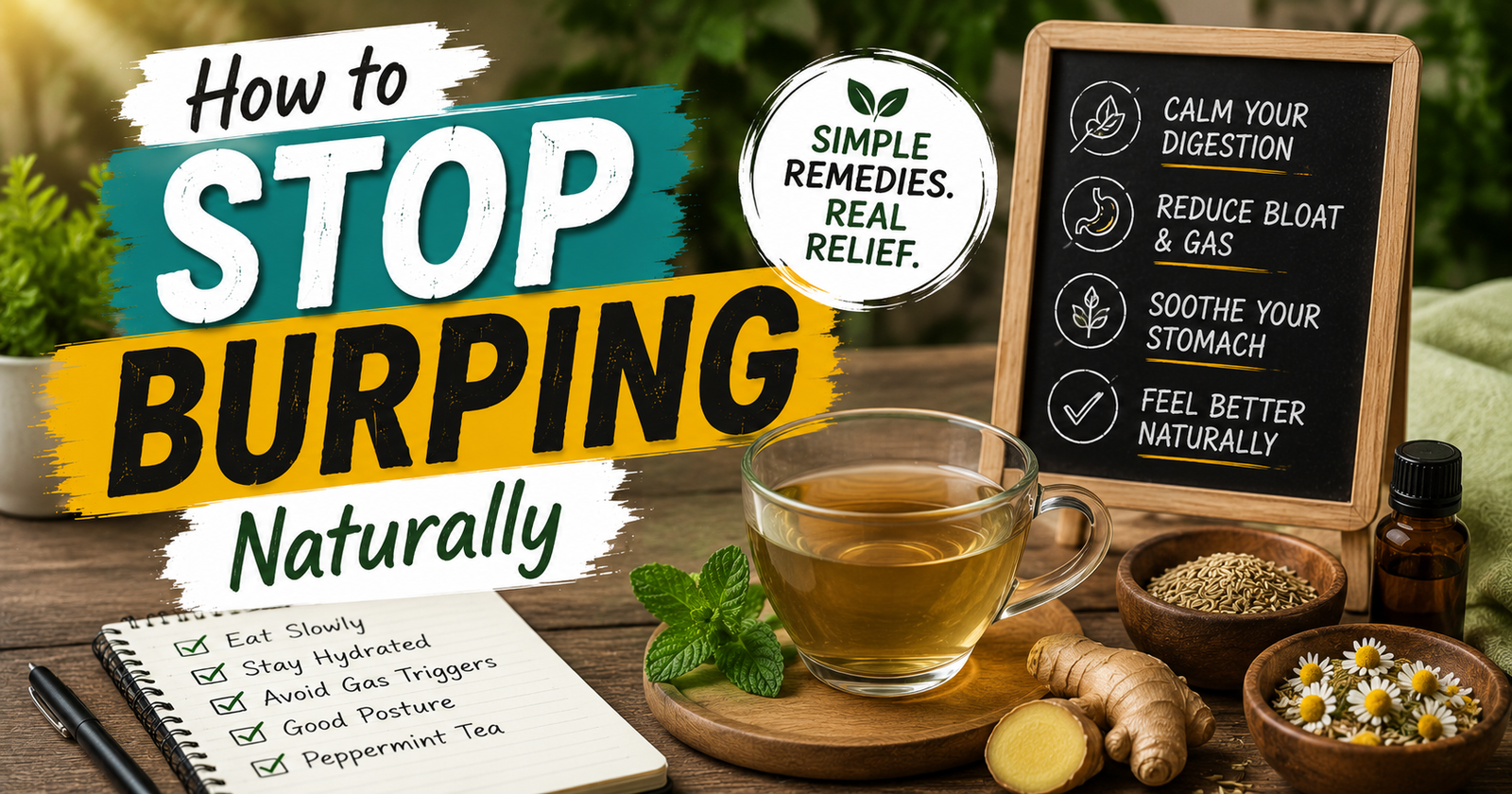
If you’ve already tried adjusting your diet and meal habits, How to Stop Burping Naturally covers several practical strategies that may help reduce frequent burping without immediately turning to medication.
Frequently Asked Questions
Why do I burp immediately after eating?
Most often, this happens because you’ve swallowed air while eating. It can also be triggered by acid reflux, carbonated drinks, or eating too quickly.
Is burping after every meal normal?
Occasional burping after meals is completely normal. Burping excessively after nearly every meal, especially if it’s becoming more frequent or comes with other digestive symptoms, is worth discussing with a healthcare provider.
Why do I burp so much but don’t have heartburn?
Heartburn isn’t required for acid reflux. Some people have what’s called “silent reflux,” while others may have burping caused by swallowed air, food intolerances, indigestion, or digestive disorders unrelated to reflux.
Can digestive enzymes reduce burping?
They may help if your burping is related to difficulty digesting certain foods, especially large, fatty, or protein-rich meals. They won’t help if the primary cause is swallowing excess air.
Can anxiety really make me burp more?
Yes. Anxiety can change your breathing pattern, increase the amount of air you swallow, and affect how your digestive system moves food, all of which may contribute to more frequent burping.
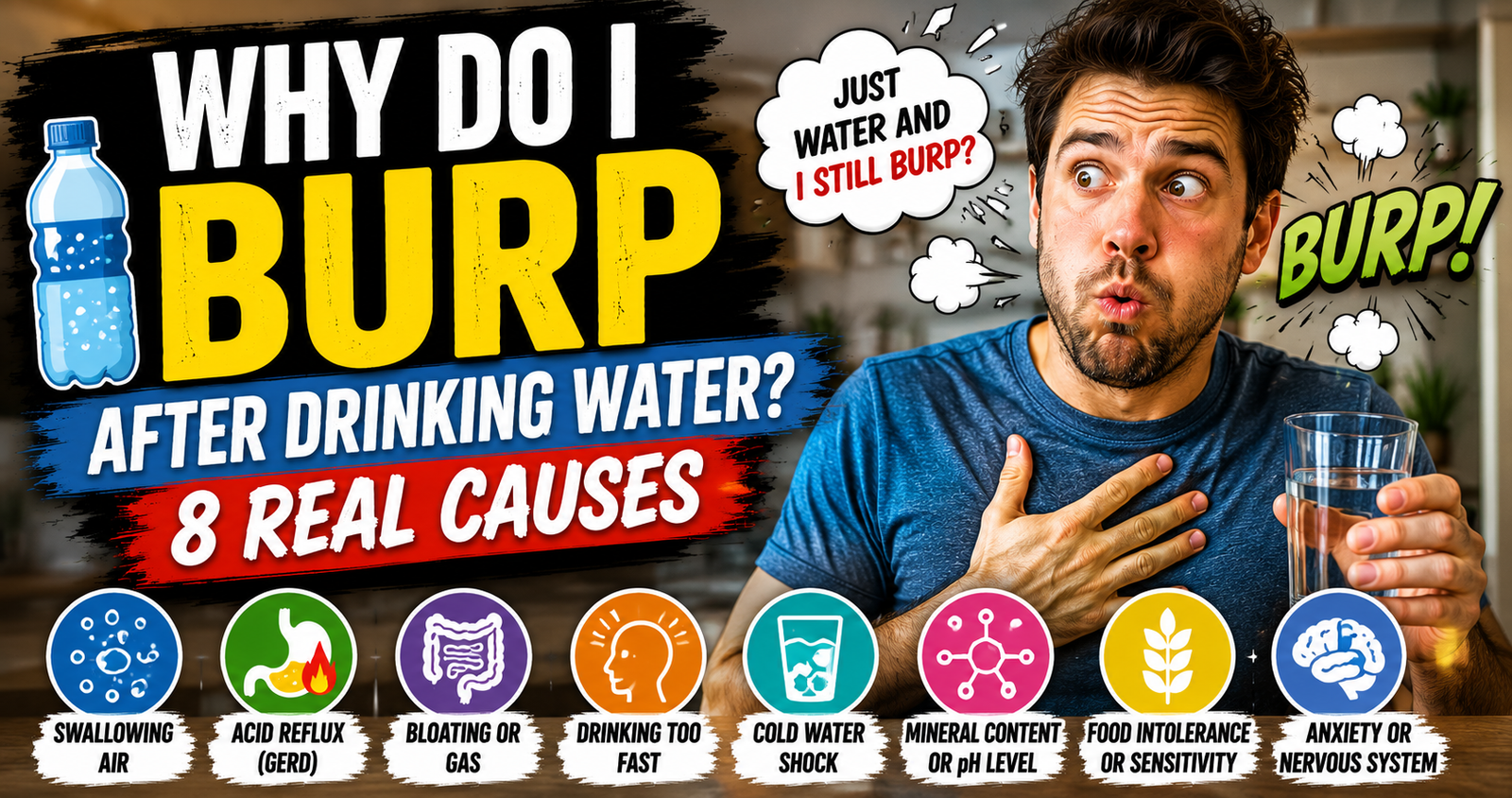
Why do I burp more after drinking water?
Many people unknowingly swallow extra air when drinking quickly, especially from large bottles or through a straw. Carbonated water is even more likely to increase burping because of the dissolved carbon dioxide.
Does burping mean I have stomach cancer?
Almost never. Burping alone is extremely common and usually harmless. However, if it’s accompanied by symptoms such as unexplained weight loss, persistent vomiting, black stools, severe pain, or difficulty swallowing, you should seek prompt medical evaluation.
Author: Natalie Mercer
Natalie Mercer is a digestive health writer who enjoys helping people better understand everyday stomach symptoms without overwhelming them with medical jargon. She focuses on evidence-based digestive health, practical lifestyle changes, and helping readers recognize when common digestive issues can be managed at home and when it’s time to seek professional medical care.
As an Amazon Associate we earn from qualifying purchases through some links in our articles.