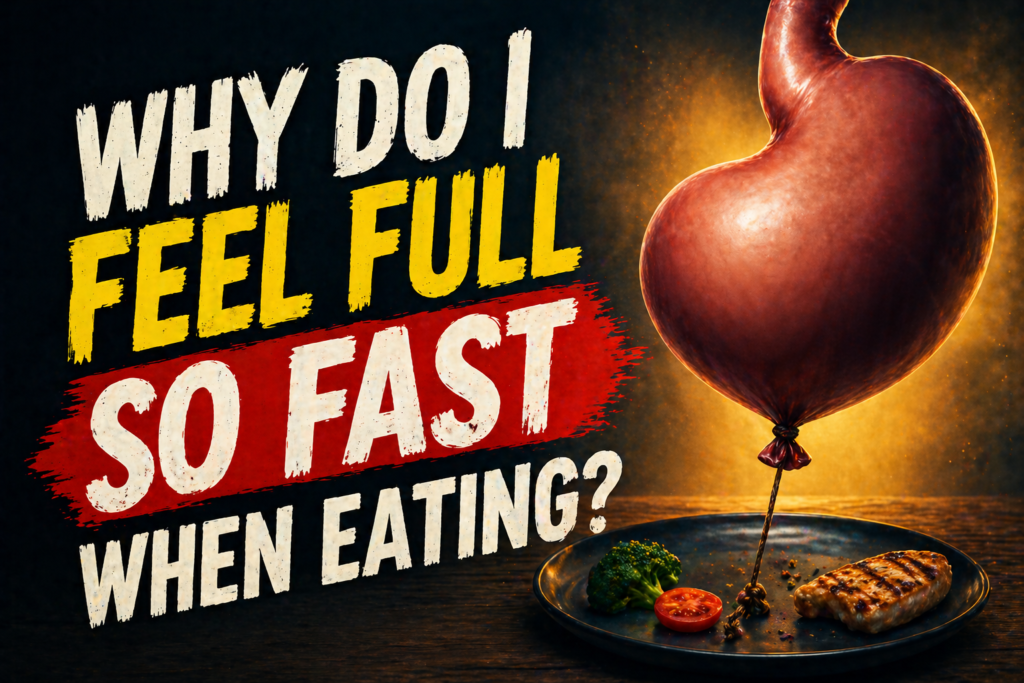
Feeling stuffed after just a few bites isn’t normal — it’s called early satiety and it has specific causes. Here’s what’s driving it and what actually helps.
Three Bites In and You’re Already Done — That’s Not Normal
You sit down to eat a normal meal. After just a few bites — or even before you’ve barely started — you feel completely full. Not comfortably satisfied. Stuffed. Sometimes uncomfortably so. You haven’t eaten nearly enough but your body is telling you you’re done.
This feeling is called early satiety — and while occasional fullness after a small amount of food is normal, feeling full after just a few bites consistently is a signal that something specific is happening in your digestive system. It’s also one of the more frustrating gut symptoms because it can affect your ability to eat enough to maintain energy and nutrition.
Here’s what’s actually causing it — and what you can do about it.

What Early Satiety Actually Means
Satiety — the feeling of fullness — is normally triggered by a combination of stomach stretch receptors signaling that the stomach has expanded with food, hormonal signals from the gut telling the brain that enough has been consumed, and the gradual slowing of gastric emptying as food is processed.
When any of these signals fires too early or too strongly — before an adequate amount of food has actually been consumed — you get early satiety. The feeling is real and physical, not psychological. Your gut is genuinely telling your brain you’re full even though the amount of food eaten doesn’t warrant it.


Cause 1: Delayed Gastric Emptying (Gastroparesis)
This is the most common medical cause of persistent early satiety and the one most worth knowing about. Gastroparesis is a condition where the stomach muscles don’t contract efficiently enough to move food into the small intestine at a normal rate. Food sits in your stomach far longer than it should — and because the stomach is still processing your previous meal when the next one arrives, you feel full almost immediately.
Full gastroparesis is a diagnosed medical condition most commonly associated with diabetes — where high blood sugar damages the vagus nerve that controls stomach muscle function — and with certain neurological conditions. But subclinical delayed gastric emptying, where the stomach empties more slowly than optimal without meeting the formal diagnostic threshold, is significantly more common and produces the same early satiety at a lower intensity.
Signs that delayed gastric emptying is driving your early satiety include feeling full hours after eating, nausea after meals, bloating that lasts well into the evening from a meal eaten at lunch, and visible abdominal distension that takes a long time to resolve. If your early satiety is severe — you genuinely cannot eat more than a few bites without feeling uncomfortably full — this needs medical evaluation rather than self-treatment.
Cause 2: Visceral Hypersensitivity
This is the most common functional cause of early satiety — and the one most directly connected to gut health interventions.
Visceral hypersensitivity means the nerve endings in your gut wall are more sensitive than they should be — they fire pain and fullness signals at lower levels of stomach stretch than normal. The same amount of food that produces comfortable fullness in someone with normal gut sensitivity produces an overwhelming fullness sensation in someone with hypersensitivity.
This isn’t a structural problem with your stomach — nothing is wrong with the stomach wall itself. The nerve sensitivity is turned up too high. And it’s directly linked to gut bacterial imbalance — a disrupted microbiome produces inflammatory compounds that sensitize the gut’s nerve endings, lowering the threshold at which fullness signals are triggered.
This is why addressing gut bacterial balance with a quality synbiotic consistently improves early satiety in people with functional gut disorders. Reducing the inflammation and nerve sensitization that comes from an imbalanced microbiome raises the threshold at which your stretch receptors fire — so a normal amount of food produces normal fullness rather than immediate overwhelming satiety.
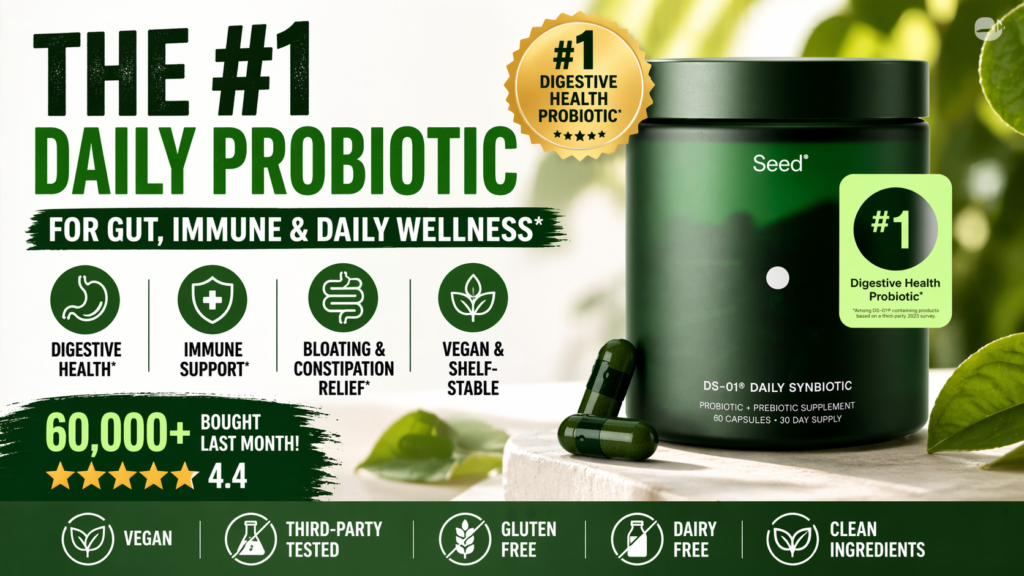
Our top recommendation is Seed DS-01 Daily Synbiotic — 24 clinically studied strains in an acid-resistant nested capsule with prebiotic included. Give it 60–90 days of consistent daily use. Check the current price on Amazon.

Cause 3: Functional Dyspepsia
Functional dyspepsia is one of the most common gut diagnoses worldwide and early satiety is one of its defining features. It’s characterized by chronic upper abdominal discomfort, bloating, and early satiety without any structural abnormality identifiable on endoscopy or imaging.
The underlying mechanisms are visceral hypersensitivity and impaired accommodation — your stomach normally relaxes and expands to accommodate incoming food. In functional dyspepsia this accommodation reflex is impaired, so the stomach doesn’t expand properly and fullness signals are triggered far too early.
If your early satiety is accompanied by upper abdominal discomfort, bloating, and has been happening consistently for months — functional dyspepsia is the most likely clinical explanation. The comprehensive gut health approach that addresses IBS applies equally to functional dyspepsia — microbiome rebalancing, enzyme support, stress management, and dietary adjustments.
Cause 4: Poor Digestive Enzyme Production
When digestive enzyme production is insufficient, food sits in your stomach longer than it should while your body attempts to break it down. That prolonged stomach residence time means your stretch receptors are continuously signaling fullness — because the stomach genuinely is full, just not being emptied efficiently.
The practical result is that a small amount of food produces a disproportionate fullness sensation that lingers much longer than it should. You feel full after a small meal and stay full for hours afterward, making the next meal feel impossible even when adequate time has passed.

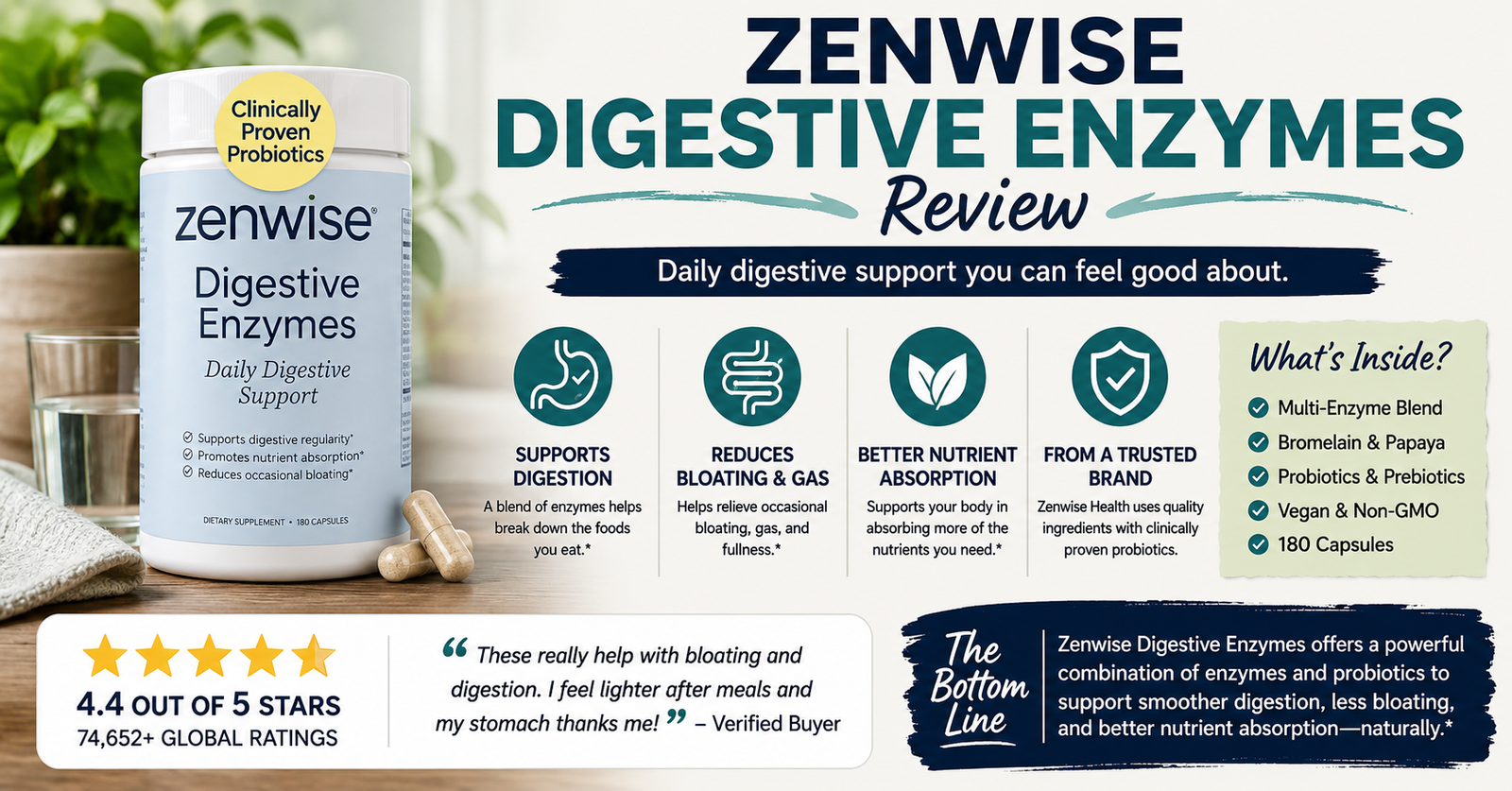
Enzyme supplementation addresses this directly — improving food breakdown efficiency, allowing the stomach to empty more normally, and reducing the prolonged fullness that comes from food sitting too long. Zenwise Health Digestive Enzymes taken at the start of every meal is our top recommendation for this. Check the current price on Amazon.
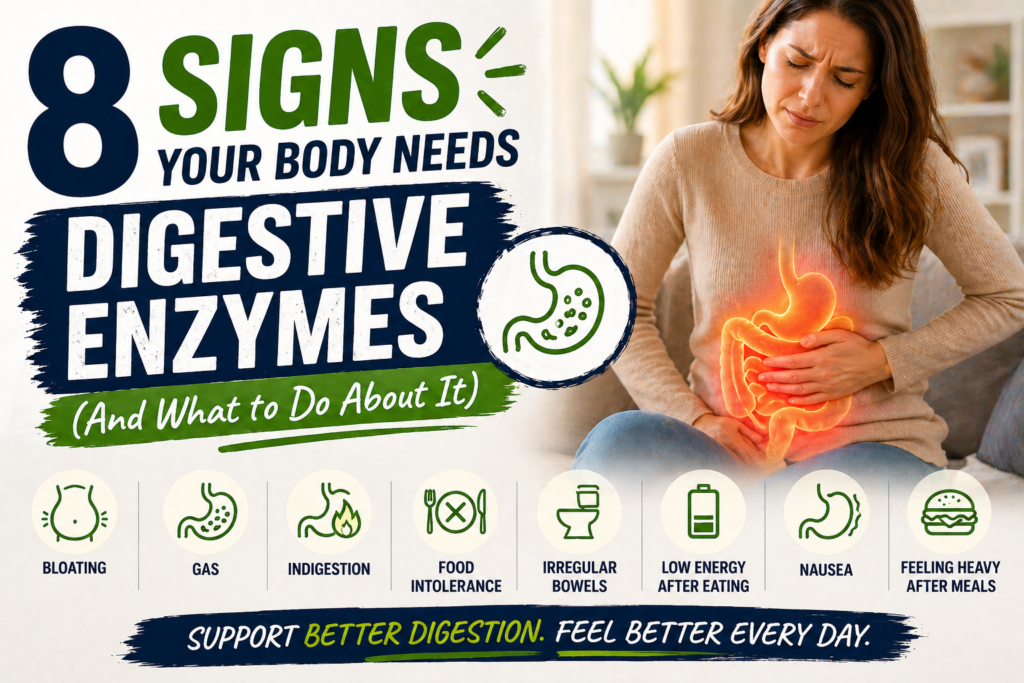
If you’re unsure whether enzyme deficiency is part of your picture, these 8 signs your body needs digestive enzymes give a clear checklist.
Cause 5: Stress and the Vagus Nerve
The vagus nerve is the main communication highway between your brain and your digestive system — it controls stomach muscle contractions, gastric acid secretion, and the accommodation reflex that allows your stomach to expand when food arrives. Chronic stress directly impairs vagus nerve function — reducing the efficiency of all these processes and contributing to both delayed gastric emptying and impaired stomach accommodation.
If your early satiety is consistently worse during stressful periods of life — busier at work, during relationship difficulty, during high-anxiety phases — vagus nerve impairment from stress is directly contributing. This is the gut-brain axis expressing itself as physical digestive limitation rather than just discomfort.
Vagal tone — the health and responsiveness of the vagus nerve — can be improved with specific practices: slow deep breathing, cold water on the face, humming, singing, and regular moderate exercise have all been shown to improve vagal tone. Beyond these specific practices, reducing chronic stress and improving sleep have the most meaningful long-term impact on vagus nerve function and digestive capacity. The connection between gut health and stress runs through the vagus nerve more directly than most people realize.
Cause 6: Eating Habits That Fool Your Fullness Signals
Several eating behaviors send premature fullness signals that have nothing to do with underlying gut conditions.
Eating too quickly is the biggest one. Your fullness hormones — particularly GLP-1 and PYY — take approximately 20 minutes to reach the brain after eating begins. If you eat quickly, you can consume a full meal and feel fine — then feel uncomfortably full 20 minutes later when the hormone signals catch up. But the reverse also happens: eating very quickly sends stretch receptor signals to the brain rapidly, which can trigger early satiety before the food has even properly settled.
Drinking large amounts of liquid with meals takes up stomach volume that food would otherwise occupy, triggering stretch receptors earlier than the food alone would. If you drink a large glass of water right before or at the start of a meal, the stomach is already partially full before a bite of food arrives.
Starting with very high-fiber or very dense foods expands in the stomach and triggers stretch receptors quickly. High-fiber vegetables, legumes, and whole grains take up significant volume relative to their caloric content. Eating these at the start of a meal before lighter foods can produce premature satiety.

When Early Satiety Needs Medical Evaluation
Early satiety that’s mild and intermittent is usually functional and manageable. But certain presentations warrant proper medical evaluation.
See your doctor if:
- Early satiety is severe — you genuinely cannot eat more than a few bites without becoming uncomfortably full
- You’re losing weight because you can’t eat enough
- Early satiety came on suddenly rather than gradually
- It’s accompanied by significant nausea or vomiting after meals
- You have diabetes and this is a new symptom — gastroparesis is common in diabetes and needs proper management
- You feel a lump or mass when you press on your abdomen
Severe or rapidly progressing early satiety can be a sign of conditions — including gastric outlet obstruction and rarely gastric cancer in older patients — that need proper diagnosis. For most people reading this the pattern is mild to moderate and functional, but the more severe presentations deserve proper evaluation.
Practical Strategies That Help
Start a quality synbiotic for microbiome and nerve sensitivity work. Reducing the visceral hypersensitivity driving early satiety is the most important long-term intervention for functional causes. Seed DS-01 daily — give it 60–90 days. Check the price on Amazon.
Take a digestive enzyme with every meal. Improving gastric emptying efficiency reduces the prolonged stomach fullness that makes early satiety worse. Zenwise Digestive Enzymes at the start of every meal. Check the price on Amazon.
Eat smaller portions more frequently. If you can’t comfortably eat a full meal, eating smaller portions four to five times per day maintains adequate nutrition without overwhelming a stomach that’s struggling to accommodate normal volumes. This is the most practical immediate dietary adjustment.
Slow down significantly when eating. Give your fullness hormones time to signal appropriately. Eating slowly — putting utensils down between bites, eating without distractions — allows the 20-minute hormone window to work correctly rather than outrunning it.
Drink liquids between meals rather than with them. Keeping the stomach free of liquid volume at the start of a meal gives food more room before stretch receptors are triggered.
Eat your most calorie-dense foods first. If early satiety is limiting how much you eat, front-loading protein and healthy fats — which are more calorie-dense per volume — ensures you get adequate nutrition even when you can’t finish a full-sized meal.
Practice vagal tone exercises. Slow diaphragmatic breathing for five minutes before meals, humming, and cold water on the face before eating all stimulate the vagus nerve and improve the stomach’s accommodation reflex. These sound unusual but are evidence-based and surprisingly effective.
Frequently Asked Questions
Why do I feel full after just a few bites?
The most common causes are visceral hypersensitivity — where stretch receptors in your stomach fire fullness signals too early — delayed gastric emptying where food from a previous meal hasn’t cleared, functional dyspepsia, poor digestive enzyme production, or vagus nerve impairment from chronic stress. The severity and accompanying symptoms help identify which cause is primary.
Is feeling full quickly a sign of something serious?
In most cases it’s functional — driven by gut sensitivity, microbiome issues, or enzyme deficiency. However severe or sudden early satiety, especially with weight loss or vomiting, warrants medical evaluation to rule out gastroparesis and other conditions that need specific treatment.
Can probiotics help with early satiety?
Yes — by reducing the visceral hypersensitivity and gut inflammation that cause stretch receptors to fire too early. This takes 60–90 days of consistent daily probiotic use to produce meaningful improvement. Our top recommendation is Seed DS-01.
Does stress make you feel full faster?
Yes — through vagus nerve impairment that reduces the stomach’s ability to accommodate incoming food and through hormonal changes that affect hunger and satiety signaling. Early satiety that’s consistently worse during stressful periods has a direct physiological explanation.
What’s the difference between early satiety and loss of appetite?
Loss of appetite means you don’t feel hungry or want to eat. Early satiety means you feel hungry and want to eat but become uncomfortably full after just a small amount of food. They can coexist but have different mechanisms and implications.
Can digestive enzymes help me feel less full after small amounts of food?
If delayed gastric emptying from poor enzyme production is contributing, yes. Better food breakdown means the stomach empties more efficiently, reducing the prolonged fullness from food sitting too long. Signs you need digestive enzyme support are worth reviewing.
Your Stomach Can Learn to Accommodate Again
Early satiety feels limiting in a very practical way — it affects how much you can eat, how much energy you have, and whether shared meals are comfortable or anxiety-inducing. But for most people with functional causes, the stomach’s accommodation capacity genuinely improves with the right interventions.
Microbiome rebalancing reduces the nerve hypersensitivity driving early fullness signals. Enzyme support improves gastric emptying efficiency. Vagal tone work restores the accommodation reflex. Dietary adjustments give your stomach the best possible conditions to function in the meantime.
It takes time — this isn’t a one-week fix. But the improvement is real and it builds consistently with the right approach.
More from TummyCure:
- Why Am I Bloated After Every Meal?
- Why Do I Feel Sick After Eating But Not Hungry?
- Stomach Pain After Eating That Goes Away on Its Own
- Zenwise Digestive Enzymes — Full Review
- Seed DS-01 — Full Review
- Digestive Enzymes vs Probiotics
- How to Get Rid of That Heavy Feeling in Your Stomach
- Is Your Gut Sabotaging Your Mental Health?
- The Complete Gut Health Guide
- 8 Signs Your Body Needs Digestive Enzymes
About the Author
Rachel Donnelly is a certified nutritional health coach and gut health writer who spent years struggling with IBS and bloating before making digestive wellness her specialty. She writes for TummyCure with one goal: cut through the noise and tell you what actually works. When she’s not deep in microbiome research, she’s fermenting things in her kitchen and losing arguments with her husband about whether kombucha counts as a dessert.
As an Amazon Associate we earn from qualifying purchases through some links in our articles.