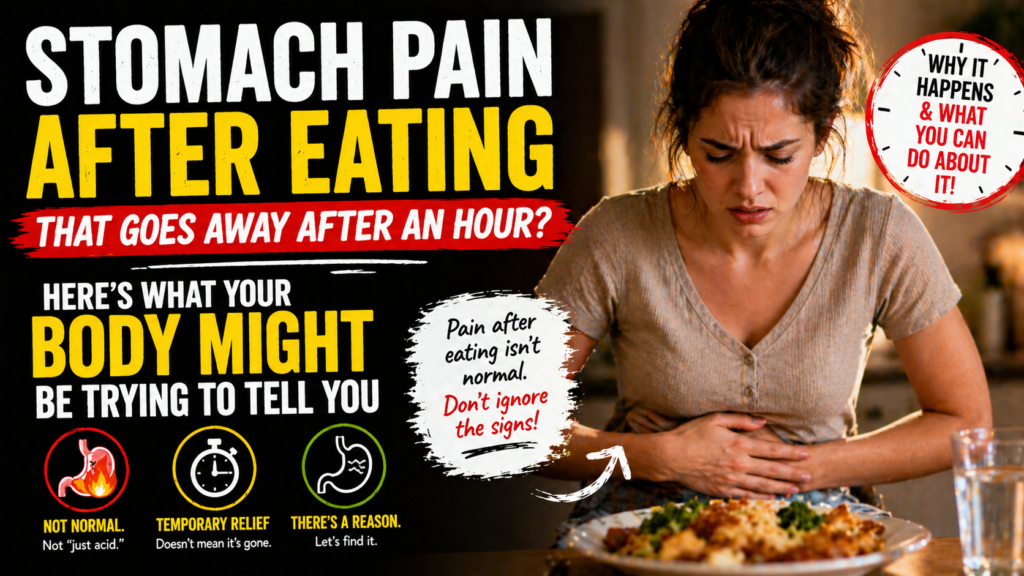
Stomach pain that arrives after every meal then disappears on its own isn’t random. Here are the specific reasons it keeps happening and what actually fixes it.
It Comes, It Hurts, Then It Disappears — What Is Your Gut Doing?
You eat a meal. Somewhere between 20 minutes and an hour later, your stomach starts hurting. Not emergency-level pain — but real, uncomfortable, impossible-to-ignore cramping or aching that makes you regret eating. And then, without doing anything in particular, it fades. An hour or so later you feel fine again.
This pattern — stomach pain that arrives predictably after eating then resolves on its own — is one of the most common digestive complaints people experience and one of the least satisfyingly explained. You know it’s connected to eating. You don’t know why. And it keeps happening.
Here’s what’s actually going on and what you can do about it.
Why Pain That Comes and Goes Is Usually a Digestive Process Issue
Pain that arrives after eating and then resolves without intervention is almost always tied to something happening during the digestion process itself rather than a structural problem. The timing is the clue — if it were something structurally wrong with your stomach or intestines, the pain would typically be more constant rather than linked specifically to the act of eating.
The pattern of post-meal pain that resolves within an hour or two points to one of several well-understood digestive mechanisms — all of which have in common that they produce temporary discomfort during an active phase of digestion that passes once that phase is complete. Comparing meal-related discomfort with symptoms that appear before breakfast can clarify the pattern, as discussed in Why Does My Stomach Hurt When I Wake Up?.


Cause 1: Incomplete Food Breakdown and Fermentation
When your body doesn’t produce enough digestive enzymes to properly break down what you eat, food sits in your stomach and small intestine incompletely processed. Your stomach has to work harder and longer than it should. The result is that cramping, pressure, and uncomfortable sensation that arrives 20–60 minutes after eating and represents your digestive system struggling with the workload.
As digestion eventually progresses — food moves from the stomach to the small intestine, partially digested material moves to the colon, the acute digestive activity winds down — the discomfort resolves. The pain going away doesn’t mean everything worked out fine. It means that particular digestive episode finished, with more undigested material reaching your colon than should have.
Enzyme deficiency worsens with age, is suppressed by chronic stress, and is impaired by gut conditions including IBS and SIBO. If your post-meal pain is worse after heavy, complex meals — particularly high-fat or high-protein dinners — enzyme insufficiency is very likely a significant factor.

A comprehensive digestive enzyme supplement taken at the start of every meal addresses this directly. Zenwise Health Digestive Enzymes covers the full enzyme spectrum — amylase, lipase, protease, lactase, bromelain, and papain — and many people notice post-meal pain reducing meaningfully within the first week of consistent use. 👉 Check the current price on Amazon.
Cause 2: The Stomach Stretching and Pressure Response
Your stomach expands to accommodate food — but that stretching activates stretch receptors in the stomach wall that send pain signals to the brain. In most people these signals register as comfortable fullness. In people with visceral hypersensitivity — a feature of IBS and other functional gut disorders — the same amount of stretch registers as pain.
This is called postprandial distension syndrome — medical language for “your stomach hurts when it fills with food.” The pain arrives as the stomach fills and distends, peaks during the active digestion phase when the stomach is working hardest, and resolves as gastric emptying progresses and the stomach returns toward its resting state.
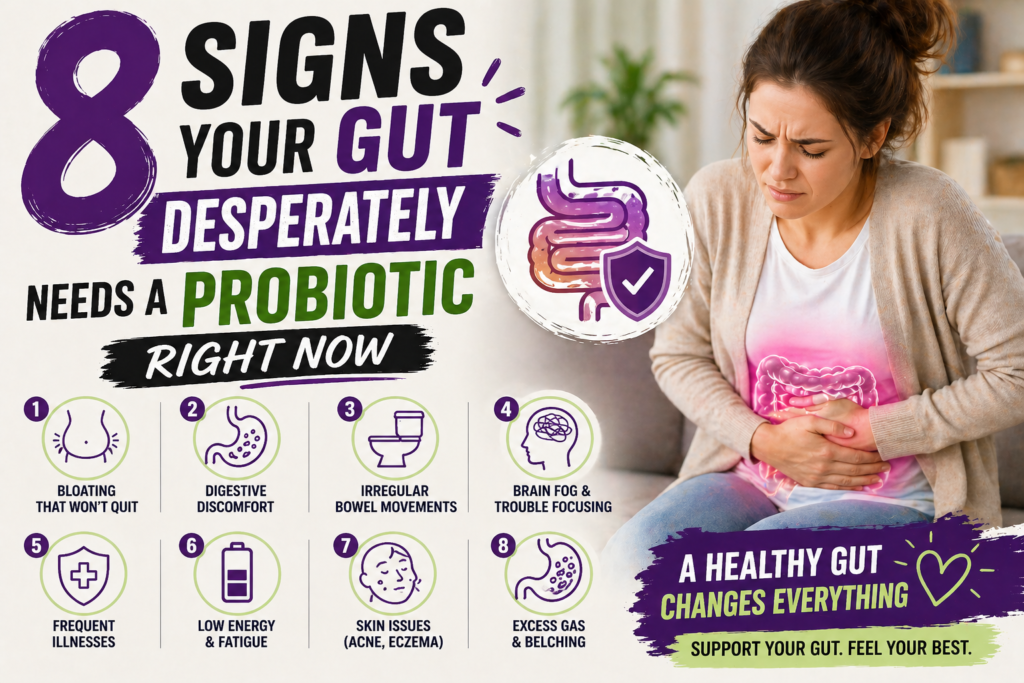
The pain isn’t imagined and there’s nothing structurally wrong with the stomach — the nerve sensitivity is genuinely turned up too high. Addressing the gut bacterial imbalance that underlies this hypersensitivity with a quality probiotic is one of the most effective long-term approaches. Signs your gut bacteria need rebalancing are worth reviewing if this pattern is persistent.


Cause 3: Slow Gastric Emptying
Your stomach empties its contents into the small intestine at a regulated pace — controlled by the pyloric valve that separates them. When gastric emptying is slower than optimal, food sits in your stomach longer than it should. That prolonged distension and digestive activity produces the cramping and discomfort that resolves once emptying finally completes and the stomach is no longer working as hard.
Slow gastric emptying is significantly worsened by high-fat meals — fat is the macronutrient that most powerfully slows gastric emptying. Large meal volumes slow it further. Eating quickly causes it. And chronic stress, hypothyroidism, and certain medications impair the stomach muscles that drive emptying.
If your post-meal pain is specifically worst after fatty or very large meals, lasts longer than an hour, and is accompanied by prolonged fullness and sometimes nausea, slow gastric emptying is a strong possibility.
Cause 4: Acid-Related Pain
Gastric acid production increases significantly during and after eating to facilitate protein digestion. In people with gastritis — inflammation of the stomach lining — or peptic ulcers, that increased acid production during and after meals irritates the already-vulnerable stomach lining, producing pain that arrives after eating and resolves once the acute digestive acid surge settles down.
Acid-related post-meal pain tends to have a burning or gnawing quality, is located in the upper center or upper left abdomen, and may be accompanied by burping, reflux, or a sour taste. It’s often worse after spicy food, acidic food, alcohol, and coffee — all of which stimulate additional acid production or directly irritate the stomach lining.
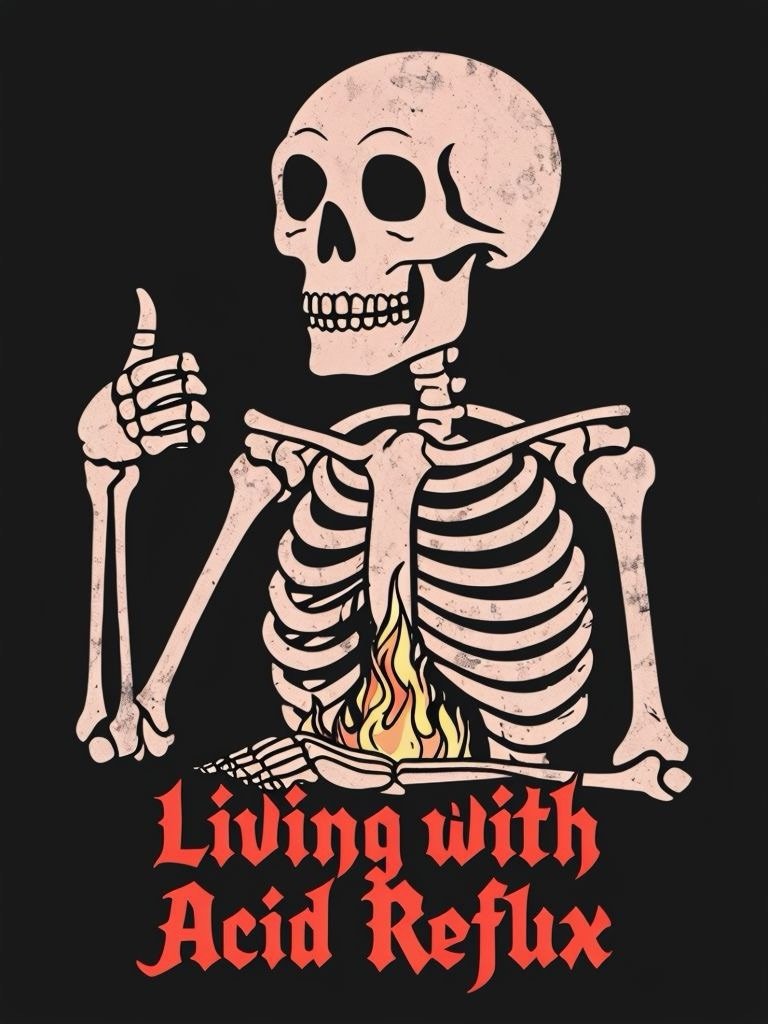
Understanding the real causes of acid reflux and gastric irritation matters here because the standard approach of indefinite antacid use doesn’t address the underlying issue and creates its own long-term gut health problems.
Cause 5: Food Intolerances Causing Delayed Gut Reaction
Food intolerances — particularly lactose intolerance and fructose malabsorption — produce post-meal pain through a slightly delayed mechanism. The offending food component reaches the large intestine where bacteria ferment it, producing gas and triggering contractions. This fermentation-driven pain typically arrives 30–90 minutes after eating the trigger food and resolves once the fermentation episode runs its course.
If your post-meal pain is specifically and consistently triggered by certain foods — dairy, wheat, beans, certain fruits — while other meals pass without incident, food intolerance is the most targeted explanation. Identifying and reducing your specific triggers is more useful than treating all post-meal pain the same way.
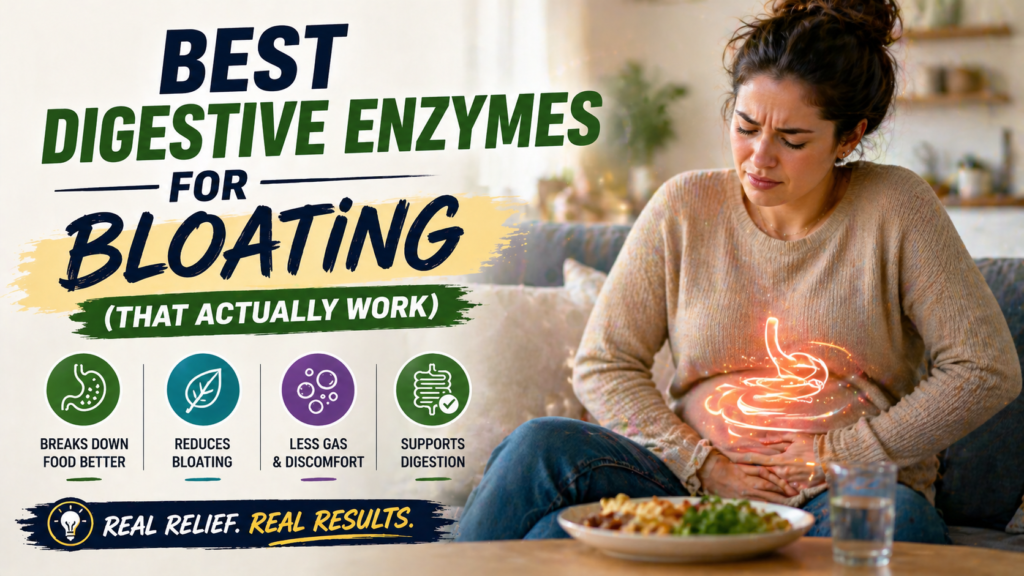
Digestive enzymes that include lactase help significantly with dairy intolerance. Alpha-galactosidase helps with beans and certain vegetables. A broad-spectrum enzyme supplement covers multiple intolerances simultaneously. The best digestive enzymes for this purpose cover what to look for in a formula.
Cause 6: IBS and Functional Dyspepsia
Functional dyspepsia — persistent discomfort centered in the upper abdomen that’s related to eating — is one of the most common gut diagnoses and one of the least satisfying because it essentially means “your digestion is uncomfortable and we can’t find a structural reason.” It’s real, it’s common, and it’s driven by the same visceral hypersensitivity and motility disruption that underlies IBS.
If post-meal pain has been happening consistently for months, is in the upper abdomen, and comes with bloating, early satiety, and occasional nausea — functional dyspepsia is the clinical category it most likely falls into. The gut health approach that addresses it is the same as for IBS — microbiome rebalancing, enzyme support, dietary adjustments, and stress management.

Using the Pain Pattern to Identify the Cause
The specific character of your post-meal pain gives useful clues about what’s driving it.
Burning or gnawing in the upper abdomen — more likely acid-related (gastritis, ulcer, reflux). Worse after spicy food, coffee, alcohol. Better with antacids temporarily.
Cramping or pressure in the mid or lower abdomen — more likely fermentation-driven (enzyme deficiency, food intolerance, bacterial imbalance). Worse after complex, high-FODMAP or high-fat meals.
Diffuse fullness and pressure starting quickly after eating — more likely slow gastric emptying or visceral hypersensitivity. Worse after large or fatty meals.
Specific trigger foods causing consistent reactions — food intolerance most likely. Pain pattern follows those specific foods rather than all meals.
What Actually Helps
Take a digestive enzyme with every meal. For enzyme-driven and food intolerance-driven post-meal pain this is the most direct and fast-acting intervention. Zenwise Digestive Enzymes at the start of every meal — one capsule, consistent daily use. 👉 Check the price on Amazon.
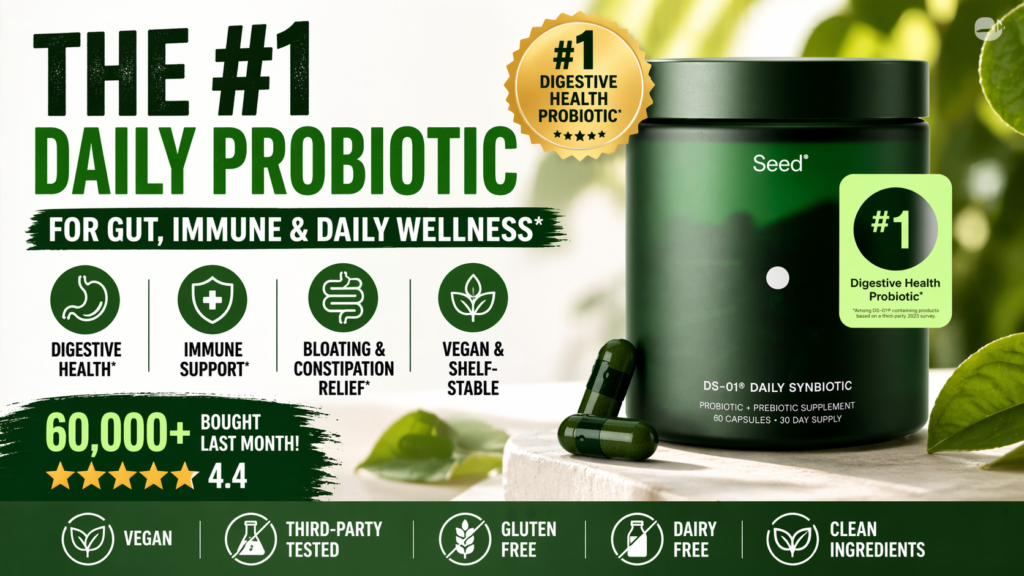
Start a quality synbiotic for long-term gut rebalancing. Whether the driving cause is visceral hypersensitivity, bacterial imbalance, or IBS — microbiome rebalancing with a product like Seed DS-01 addresses the root over 60–90 days of consistent daily use. 👉 Check the price on Amazon.
Eat smaller meals more slowly. Reducing meal volume decreases stomach stretch and slows the fermentation load hitting your colon at once. Eating more slowly reduces swallowed air and gives your enzyme system time to keep pace with incoming food.
Identify and reduce your personal trigger foods. Two weeks of food and symptom tracking almost always reveals patterns — specific foods or food types that consistently produce the worst reactions. Reduce those specifically rather than overhauling your entire diet.
Don’t eat under significant stress. The gut-brain axis means stress directly worsens post-meal pain through increased gut sensitivity and altered motility. Even a brief pause before meals — away from screens and work — makes a measurable difference.
For upper abdominal burning specifically — see your doctor. Persistent upper abdominal burning after meals that isn’t improving warrants evaluation for gastritis, H. pylori, and peptic ulcer. These respond well to targeted treatment once identified.
When to Get It Checked Out
Post-meal pain that resolves on its own is almost always functional — but these signs warrant medical evaluation regardless:
- Pain that’s severe or worsening rather than stable
- Blood in your stool or vomit
- Unexplained weight loss alongside the pain
- Pain that wakes you from sleep
- Difficulty swallowing alongside post-meal pain
- Upper right pain specifically after fatty meals — gallbladder
- New pattern in someone over 50 who previously had no gut issues
Frequently Asked Questions
Why does my stomach hurt after eating then stop?
Post-meal pain that resolves on its own typically reflects a digestive process challenge — enzyme insufficiency, gastric stretch sensitivity, slow emptying, acid activity, or food fermentation — that produces discomfort during its active phase and resolves once that phase completes. The pain stopping doesn’t mean everything worked correctly — it means that episode of digestion finished.
How long is normal for stomach pain after eating to last?
Mild discomfort during peak digestion — 30 to 90 minutes after eating — is within the functional range for many people. Pain lasting more than 2 hours after eating, or severe pain at any point, is worth investigating. Consistent post-meal pain that affects your quality of life regardless of duration is worth addressing even if it resolves on its own each time.
Can digestive enzymes stop post-meal stomach pain?
For enzyme-driven pain — where incomplete food breakdown is the cause — yes, often quickly. A comprehensive enzyme supplement taken at the start of meals is one of the most targeted and fast-acting interventions for this specific pattern. Read our full Zenwise review for the complete breakdown.
Is post-meal stomach pain a sign of IBS?
It can be — particularly if it’s accompanied by bloating, irregular bowel habits, and occurs consistently over months. Functional dyspepsia is the specific IBS-adjacent diagnosis for upper abdominal post-meal pain. Both respond to the same gut health approach.
What foods cause stomach pain after eating most often?
High-fat foods slow gastric emptying and trigger strong colonic reflexes. High-FODMAP foods — garlic, onions, beans, certain fruits — ferment heavily. Dairy causes issues for lactose-sensitive people. Spicy and acidic foods irritate the stomach lining. Large portions of any food increase gastric stretch. Your personal worst offenders are worth identifying through a food diary.
Consistent Post-Meal Pain Is Not Something to Just Live With
The fact that the pain goes away on its own makes it easy to normalize — to just accept that meals are uncomfortable and wait for it to pass. But consistent post-meal pain is your gut communicating clearly that the digestion process isn’t working the way it’s supposed to. It deserves to be addressed rather than endured.
The good news is that for most people this pattern responds well to targeted gut health support. Enzymes for immediate digestive efficiency. A quality probiotic for the longer-term bacterial work. Smart dietary adjustments to reduce the load. Most people who commit to this approach feel meaningfully better within a few weeks and dramatically better within a few months.
More from TummyCure:
- Why Am I Bloated After Every Meal?
- Why Does My Stomach Hurt After Eating But Goes Away After Pooping?
- Why Do I Feel Sick After Eating But Not Hungry?
- Why Do I Have to Poop Right After I Eat?
- Zenwise Digestive Enzymes — Full Review
- Best Digestive Enzymes for Bloating
- 8 Signs Your Body Needs Digestive Enzymes
- Do Digestive Enzymes Help IBS?
- The Complete Gut Health Guide
- Stomach Pain After Eating Pork
About the Author
Rachel Donnelly is a certified nutritional health coach and gut health writer who spent years struggling with IBS and bloating before making digestive wellness her specialty. She writes for TummyCure with one goal: cut through the noise and tell you what actually works. When she’s not deep in microbiome research, she’s fermenting things in her kitchen and losing arguments with her husband about whether kombucha counts as a dessert.
As an Amazon Associate we earn from qualifying purchases through some links in our articles.