
Eating less but more bloated than ever on GLP-1 medications? Here’s the specific reason why — and the complete protocol that actually fixes it.
You’re Eating Less Than Ever — So Why Is Your Stomach So Big by Evening?
This is one of the most frustrating paradoxes of GLP-1 medication. You’re eating half what you used to. The scale is moving in the right direction. And yet by 7pm your stomach is visibly distended and uncomfortable in a way that seems completely disproportionate to how little you’ve eaten.
GLP-1 bloating is real, extremely common, and has specific mechanisms that explain exactly why it happens — and why eating less doesn’t automatically mean less bloating. Once you understand what’s driving it, the solutions become obvious.


Why GLP-1 Medications Cause More Bloating, Not Less
The intuitive assumption is that eating less means less gas and less bloating. On normal gut physiology that’s largely true. On GLP-1 medications the equation is completely different — because it’s not just about how much you eat, it’s about how slowly everything moves afterward.
GLP-1 receptor activation slows your entire digestive tract. Gastric emptying slows. Small intestinal transit slows. Colonic motility slows. Gas that’s produced through normal bacterial fermentation — which happens continuously regardless of how much you eat — now moves through your system more slowly than it did before. Instead of being expelled throughout the day as normal gut motility moves it along, it accumulates. By evening the day’s worth of accumulated gas is sitting in your gut producing the visible distension and discomfort that makes you feel like you’ve eaten an enormous meal when you’ve barely eaten anything.

This cumulative gas buildup pattern is identical to the general evening bloating pattern that affects many people with gut issues — but on GLP-1 medications it’s amplified by the pharmacological motility reduction. Why bloating builds through the day covers the underlying mechanisms in detail — and every one of them is amplified on GLP-1 treatment.


The Fermentation Factor — Why Your Gut Bacteria Are Making It Worse
Here’s the part most GLP-1 bloating articles miss entirely. Slowed transit doesn’t just mean gas moves more slowly — it means food spends more time in contact with your gut bacteria before moving on. More fermentation time means more gas produced from the same amount of food.
Your gut bacteria ferment whatever reaches them — particularly carbohydrates that weren’t fully broken down earlier in the digestive process. On normal transit, there’s a limited window for this fermentation. On GLP-1-slowed transit, that window extends significantly. The same meal that produced a modest amount of gas before GLP-1 treatment now produces substantially more because the bacteria have more time to work on it.
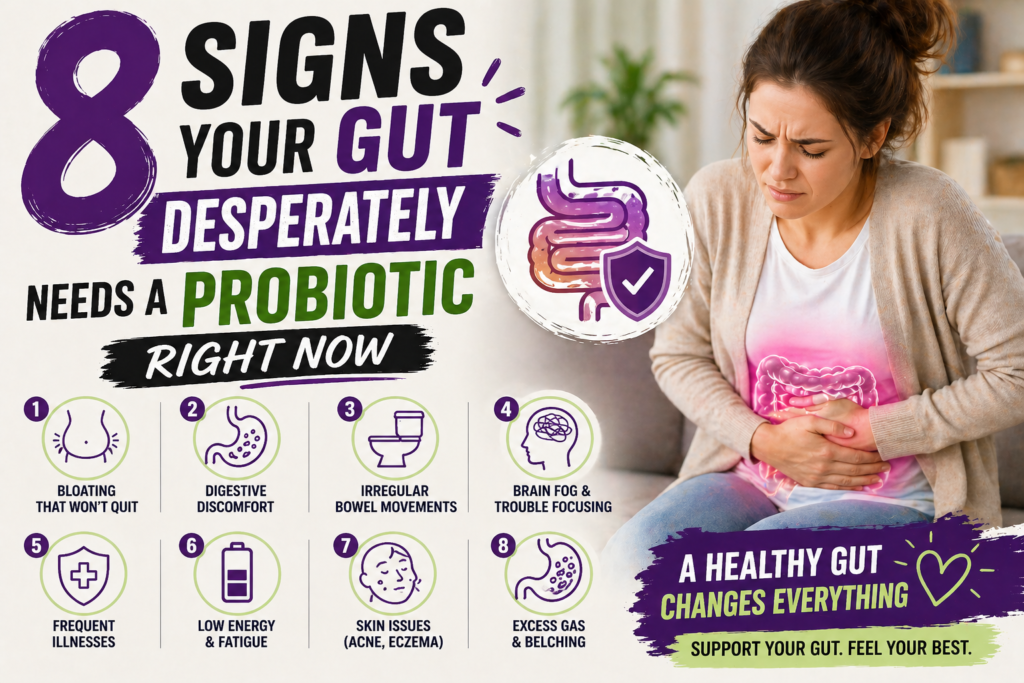
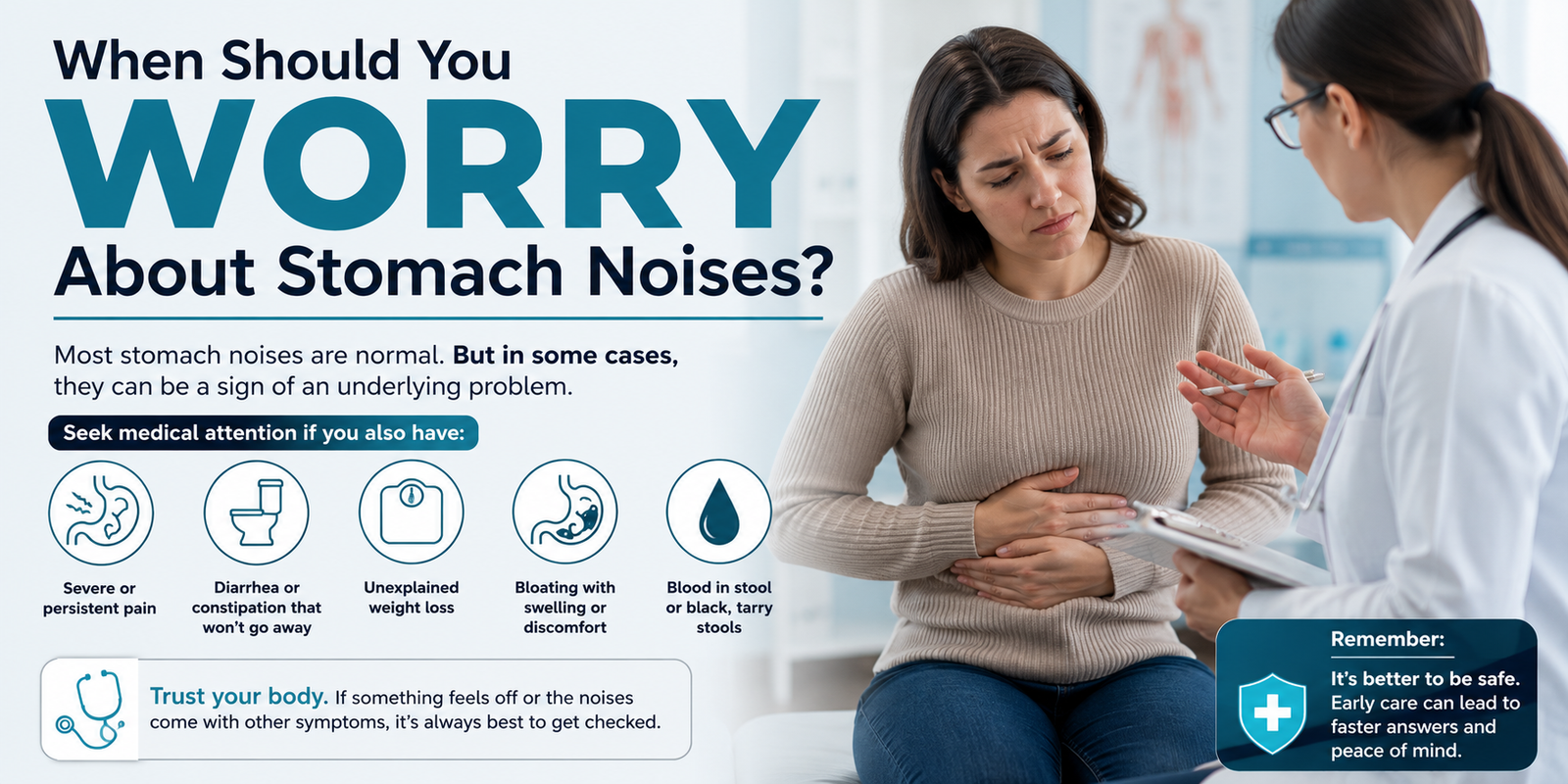
This is compounded if your gut microbiome is weighted toward more gas-producing bacterial species — which is common in people with gut issues and becomes more pronounced as GLP-1 medications alter the gut environment through changed transit and reduced food intake. Signs your gut bacteria are out of balance overlap significantly with the GLP-1 bloating picture.


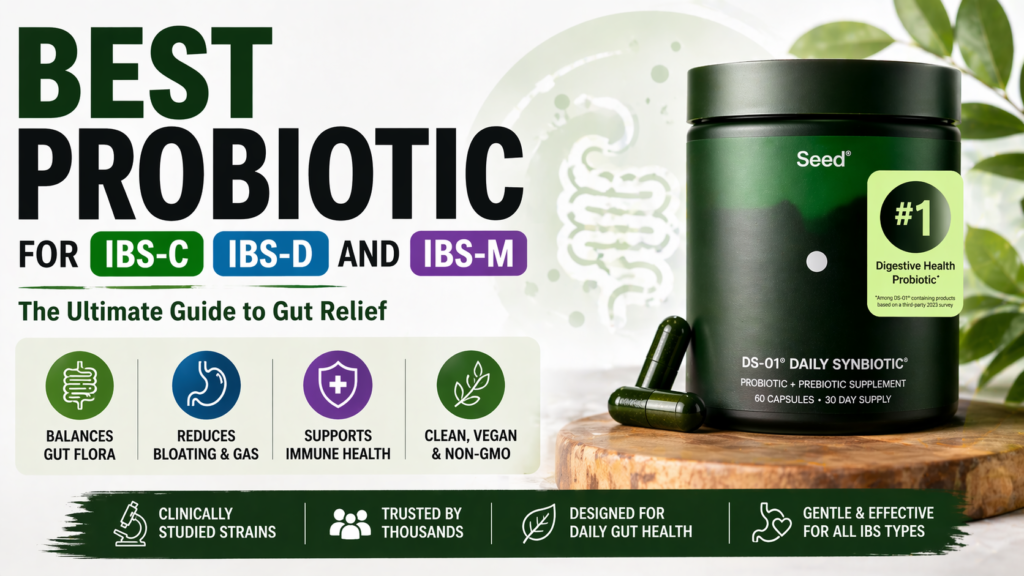
The practical implication: supporting your gut microbiome with a quality synbiotic during GLP-1 treatment isn’t just a general health measure — it directly reduces the gas-producing bacterial activity that drives bloating. Seed DS-01 shifts the microbiome toward beneficial strains that ferment food more efficiently and produce less gas as a byproduct. 👉 Check the current price on Amazon.
The Digestive Enzyme Disruption
Normal digestive enzyme secretion is timed to coordinate with food moving through the digestive tract at a normal rate. When GLP-1 medications significantly slow that rate, the timing coordination breaks down. Enzymes that should meet food in the small intestine arrive out of sync. Food that should be fully broken down by the time it reaches your gut bacteria arrives partially undigested.
More undigested food reaching your bacteria means more substrate for fermentation. More fermentation means more gas. More gas in a slow-moving gut means more bloating.
This is exactly why taking a digestive enzyme supplement with every meal makes a meaningful difference for GLP-1 bloating — not just for general digestion but specifically because it compensates for the disrupted enzyme timing that the medication produces. Better breakdown upstream means less fermentation substrate downstream means less gas means less bloating.

Zenwise Health Digestive Enzymes taken at the start of every meal addresses this directly. Many GLP-1 users notice a meaningful reduction in post-meal bloating within the first week of consistent use. 👉 Check the current price on Amazon.

High-FODMAP Foods — The Hidden Amplifier
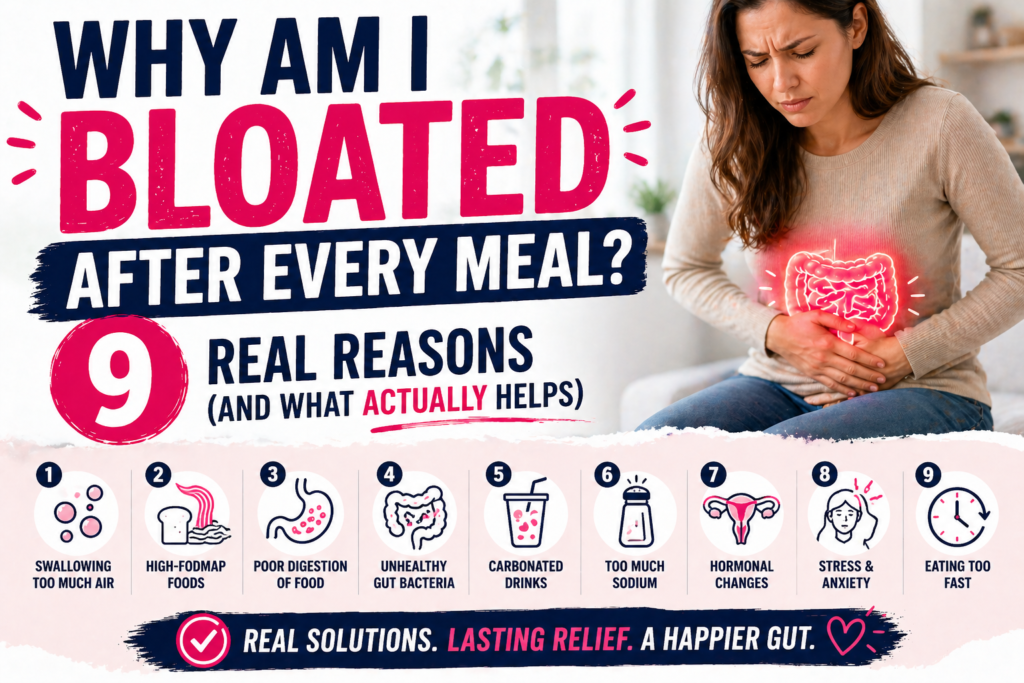
FODMAPs — fermentable carbohydrates found in garlic, onions, beans, wheat, certain fruits, and dairy — produce significant gas through bacterial fermentation even on normal transit. On GLP-1-slowed transit, the same FODMAP load produces dramatically more gas because fermentation time is extended.
Many people on GLP-1 medications find that foods they previously tolerated reasonably well become significant bloating triggers — this is why. The food hasn’t changed. The transit time in which bacteria can work on it has changed substantially.
Identifying your highest-impact FODMAP foods and reducing them specifically — particularly at dinner when transit is slowest — produces noticeable bloating reduction for most GLP-1 users. The most common high-impact culprits:
- Garlic and onions — hidden in almost every savory recipe and sauce
- Beans and lentils — high fermentation load even in small portions
- Cruciferous vegetables — broccoli, cauliflower, Brussels sprouts
- Wheat in large portions — bread, pasta, baked goods
- Apples, pears, and stone fruits
- Dairy for lactose-sensitive people
This doesn’t mean eliminating all of these permanently. It means being strategic about when and how much — smaller portions, earlier in the day, with digestive enzyme support.
Swallowed Air — More Than You’d Expect
GLP-1 nausea changes how people eat — often toward eating more quickly to get it over with, or through discomfort that causes irregular swallowing patterns. Both increase swallowed air. And swallowed air in a slow-moving gut accumulates exactly the same way fermentation gas does.
Eating slowly and deliberately — which the food timing article covers in detail for nausea — also directly reduces the swallowed air component of GLP-1 bloating. The two problems share the same solution.
Carbonated drinks are a particularly direct contributor — you’re literally swallowing gas into a system that can’t expel it efficiently. Switching to still water and flat beverages during GLP-1 treatment removes one of the most direct and controllable sources of gut gas.
Constipation Bloating — When Stool Buildup Becomes Distension
If GLP-1 constipation is present alongside bloating — which it very often is — the constipation component directly worsens the bloating. Stool that isn’t moving through creates back-pressure that prevents gas from moving through either. The two problems compound each other significantly.
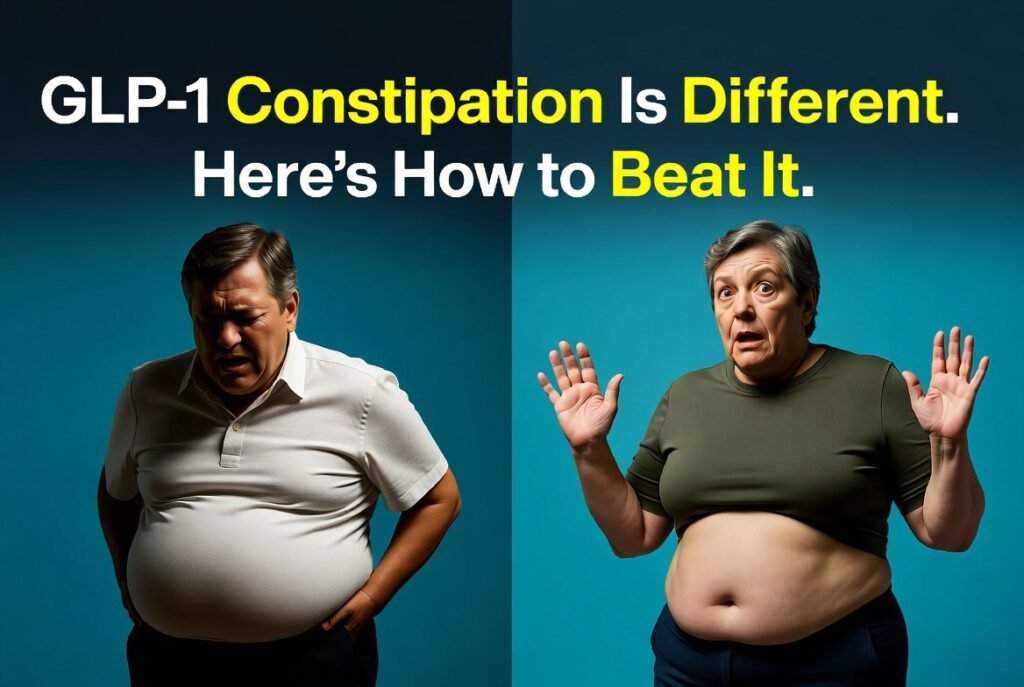
Addressing the constipation piece directly — with magnesium glycinate, psyllium husk, adequate hydration, and movement — also reduces the bloating that constipation-related back-pressure creates. The complete guide to GLP-1 constipation covers the full protocol — and for people dealing with both constipation and bloating simultaneously, managing the constipation is the highest-priority intervention.
The Complete Protocol for GLP-1 Bloating
Digestive enzymes with every meal. Zenwise Digestive Enzymes — one capsule at the start of breakfast, lunch, and dinner. Reduces undigested food reaching gut bacteria, reduces fermentation substrate, reduces gas production directly. 👉 Check the price on Amazon.
Quality synbiotic daily. Seed DS-01 — one dose daily. Shifts microbiome toward less gas-producing bacteria, reduces fermentation intensity from the bacterial composition side. 👉 Check the price on Amazon.
Reduce highest-FODMAP foods at dinner. Keep garlic, onions, beans, and cruciferous vegetables to smaller portions and earlier in the day. The evening meal is when transit is slowest and fermentation time is longest — reducing the fermentation load at this meal has the biggest impact on evening bloating.
Eliminate carbonated drinks. Replace with still water and herbal teas. The gas load from carbonated drinks in a slow-moving gut is disproportionate to how small a change this seems.
Walk after dinner. Even 15 to 20 minutes of gentle walking stimulates colonic motility and helps move accumulated gas through the system before it peaks into uncomfortable evening distension. This is one of the simplest and most consistently effective interventions for end-of-day bloating on GLP-1 medications.

Address constipation if present. Magnesium glycinate in the evening — 500mg before bed — and psyllium husk capsules daily break the constipation-bloating feedback loop that compounds both problems.
Eat smaller portions earlier in the day. Keep dinner the lightest meal of the day. A stomach with less fermentation substrate in the evening produces less evening gas — and the improvement in evening bloating from this single change alone can be significant.

How Long Until Bloating Improves on GLP-1 Medications
With digestive enzymes starting immediately, most people notice reduced post-meal bloating within the first week. The evening distension pattern typically improves meaningfully within two to three weeks of consistent enzyme use combined with dietary adjustments.
The microbiome component — from consistent daily probiotic use — takes longer. At four to eight weeks the bacterial shift toward less gas-producing strains becomes noticeable as a more general reduction in overall gut gas production. This is the layer that produces lasting improvement rather than meal-by-meal management.
For most people the combination of immediate enzyme support plus longer-term probiotic work plus dietary adjustments produces a significant and sustainable reduction in GLP-1 bloating within four to six weeks of consistent effort.
Frequently Asked Questions
Why am I so bloated on Ozempic even though I’m eating less?
Because bloating on GLP-1 medications isn’t primarily about how much you eat — it’s about slowed gut motility causing gas to accumulate rather than move through normally. Less food doesn’t mean less bacterial fermentation activity, and gas that used to move through efficiently now accumulates throughout the day in a slower-moving gut.
Does Ozempic bloating go away?
It typically reduces as your body adapts and as you implement the dietary and supplement strategies above. It may not fully resolve for as long as you’re on therapeutic doses — ongoing management is more realistic than complete elimination for most people.
Can digestive enzymes help with Ozempic bloating?
Yes — this is one of the most directly relevant uses of enzyme supplementation. Disrupted enzyme timing on GLP-1 medications means food arrives in the colon less digested than normal, creating more fermentation and more gas. Enzymes compensate for this directly.
What foods cause the most bloating on Wegovy?
High-FODMAP foods that were already fermentable become significantly more gas-producing on GLP-1-slowed transit. Garlic, onions, beans, cruciferous vegetables, and carbonated drinks are the highest-impact contributors. Fatty foods worsen bloating by further slowing gastric emptying beyond what the medication alone produces.
Does walking help with GLP-1 bloating?
Yes — genuinely and meaningfully. Walking stimulates colonic motility and helps move accumulated gas through the system. A 15 to 20 minute walk after dinner consistently reduces the evening bloating peak that GLP-1 users experience.
Will a probiotic help with Ozempic bloating?
Over time yes — a healthier microbiome composition produces less gas from the same food. The improvement takes four to eight weeks of consistent daily use but addresses the bacterial component of GLP-1 bloating at the root rather than just managing symptoms.

Less Food, Less Bloating — That’s How It Should Work
It will. But it takes active management of the specific mechanisms that GLP-1 medications create — slowed motility, extended fermentation time, disrupted enzyme timing, altered microbiome composition. Address each of these deliberately and the evening distension that feels like a cruel joke alongside your weight loss results becomes genuinely manageable.
Enzymes at every meal. A daily probiotic. Reduce FODMAP load at dinner. Walk after eating. Manage any constipation alongside the bloating. Give it four to six weeks of consistency. Your stomach in six weeks will be substantially different from your stomach today.
More from TummyCure:
- Complete GLP-1 Gut Side Effects Guide
- Ozempic Nausea Is a Food Timing Problem
- GLP-1 Constipation — How to Beat It
- Why Does Ozempic Make Your Stomach Hurt?
- Zenwise Digestive Enzymes — Full Review
- Seed DS-01 — Full Probiotic Review
- Why Do I Bloat More at Night?
- Why Am I Bloated After Every Meal?
- Magnesium Glycinate — Full Review
- The Complete Gut Health Guide
About the Author
Rachel Donnelly is a certified nutritional health coach and gut health writer who spent years struggling with IBS and bloating before making digestive wellness her specialty. She writes for TummyCure with one goal: cut through the noise and tell you what actually works. When she’s not deep in microbiome research, she’s fermenting things in her kitchen and losing arguments with her husband about whether kombucha counts as a dessert.
As an Amazon Associate we earn from qualifying purchases through some links in our articles.