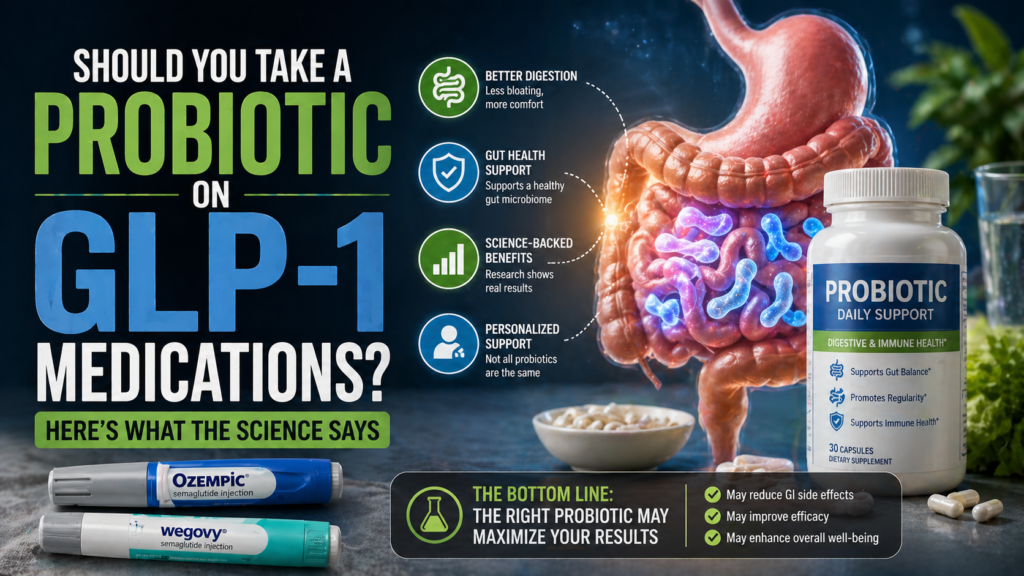
GLP-1 medications like Ozempic and Wegovy change your gut microbiome. Here’s what the research shows about probiotic use during semaglutide treatment — and which one to take.
GLP-1 Medications Change Your Gut — A Probiotic Helps It Keep Up
You started Ozempic or Wegovy for the weight loss. What nobody told you is that these medications fundamentally alter your digestive environment in ways that go well beyond appetite suppression. Transit time slows. Eating patterns change dramatically. The bacterial communities in your gut — which depend on consistent food availability, normal transit, and a stable environment — are adjusting to a completely different set of conditions.
Whether you should take a probiotic on GLP-1 medications isn’t really a question anymore. The more useful question is which one, why, and what it actually does for you while you’re on these drugs. Here’s what the science says.


What GLP-1 Medications Do to Your Gut Microbiome
The research on GLP-1 medications and the gut microbiome is still emerging — these are relatively new drugs at the population scale and longitudinal microbiome data is still accumulating. But what’s been published so far is genuinely interesting and practically relevant.
Animal studies and early human data show that GLP-1 receptor agonists produce measurable changes in gut microbiome composition. Some of these changes appear beneficial — the reduced caloric intake and altered food choices that come with GLP-1 treatment tend to reduce the abundance of bacteria associated with obesity and metabolic dysfunction. Some changes are more complex — significantly slowed intestinal transit gives bacteria more time to ferment in the colon, potentially promoting bacterial overgrowth in some populations and altering the balance between fermentation-favoring and motility-regulating strains.
The net effect on any individual microbiome depends on what their baseline looked like, how significantly their eating patterns have changed, and how long they’ve been on the medication. But the consensus from gut health researchers is consistent: active microbiome support during GLP-1 treatment is warranted — both to manage the gut side effects these medications produce and to support the broader health outcomes that a healthy microbiome underlies.



The Specific Ways a Probiotic Helps on GLP-1 Medications
Reducing Bloating and Gas
This is the most immediately noticeable benefit for most GLP-1 users. Slowed transit gives gut bacteria more time to ferment food — producing more gas from the same dietary substrate. A microbiome weighted toward beneficial, efficiently fermenting strains produces significantly less gas than one weighted toward harmful, gas-producing species.

Consistent probiotic use shifts the bacterial composition toward less gas-producing strains over 4–8 weeks. The bloating that peaks in the evening on GLP-1 medications reduces as this bacterial shift occurs. Not immediately — the microbiome takes time to rebalance — but consistently and meaningfully with daily use. Why GLP-1 medications cause so much bloating explains the fermentation mechanism that probiotics directly address.
Supporting Gut Motility
Specific probiotic strains — particularly Bifidobacterium lactis and Bifidobacterium longum — produce compounds that stimulate intestinal motility through their interaction with gut nerve cells. GLP-1 medications reduce motility pharmacologically. A probiotic containing motility-supporting strains provides a bacterial counterbalance that partially offsets the medication’s motility-reducing effect.

This is most relevant for constipation — the most persistent GLP-1 gut side effect. While a probiotic alone won’t fully resolve GLP-1 constipation, it’s an important component of the complete management protocol alongside magnesium glycinate and psyllium husk. The complete approach to GLP-1 constipation covers where probiotic support fits in the protocol.
Maintaining Gut Lining Integrity
Your gut microbiome produces short-chain fatty acids — particularly butyrate — that are the primary fuel source for the cells lining your colon and are essential for maintaining gut barrier integrity. When the microbiome is disrupted and butyrate-producing bacteria decline, gut lining health suffers.
Rapid weight loss — which GLP-1 medications produce — creates metabolic and inflammatory changes that can affect gut lining integrity. Supporting the butyrate-producing bacterial populations with a quality synbiotic maintains the gut lining health that underlies immune function, reduced systemic inflammation, and protection against increased intestinal permeability. This connects directly to why people on GLP-1 medications who support their microbiome consistently tend to feel better systemically — not just digestively.
Supporting Mental Health Through the Gut-Brain Axis
GLP-1 medications affect mood and mental state through several mechanisms — some people experience improved mood alongside weight loss, others experience anxiety or low mood as their body adjusts. The gut-brain axis is directly relevant here. Your gut bacteria produce a significant portion of your body’s serotonin and communicate with your brain through the vagus nerve — the health of your microbiome directly influences mood and anxiety levels. Emerging research on Ozempic and mental health effects adds another perspective to this gut-brain discussion.

Maintaining a healthy, diverse microbiome through GLP-1 treatment supports the gut-brain communication that underlies mood stability. How gut health affects anxiety and depression covers this mechanism in detail — and it’s directly relevant to anyone experiencing mood changes alongside the physical side effects of GLP-1 treatment.
Enhancing the Metabolic Benefits of GLP-1 Treatment
This is the most exciting emerging area — early research suggests that the gut microbiome may actually influence the efficacy of GLP-1 medications themselves. Specific bacterial metabolites appear to modulate GLP-1 receptor sensitivity and the downstream metabolic effects of GLP-1 activation. People with healthier, more diverse microbiomes at baseline appear to have better metabolic responses to GLP-1 treatment in preliminary data.
This research is preliminary and should be interpreted cautiously — we’re not yet at the point of recommending specific probiotic strains to enhance GLP-1 drug efficacy. But the direction of evidence consistently suggests that gut microbiome health and GLP-1 medication outcomes are positively correlated. Maintaining your microbiome during treatment is good practice on multiple levels simultaneously.
What to Look for in a Probiotic on GLP-1 Medications
Not all probiotics are equally relevant to the GLP-1 context. Here’s what specifically matters:
Multiple strains — not just one. The GLP-1 gut environment is altered across multiple dimensions simultaneously — motility, fermentation, gut lining integrity, gut-brain signaling. Single-strain probiotics address one narrow mechanism. A multi-strain product covers the full picture more comprehensively.
Bifidobacterium strains specifically. Bifidobacterium species are the most relevant for GLP-1 users — they support colonic motility, produce butyrate for gut lining maintenance, and have the strongest clinical evidence for reducing constipation and bloating. Products that include multiple Bifidobacterium strains alongside Lactobacillus strains provide the best coverage for the GLP-1 gut context.
A prebiotic component. Standard probiotics introduce bacteria but don’t provide the food those bacteria need to establish and thrive. A synbiotic — probiotic plus prebiotic — gives the introduced bacteria a food source that helps them colonize rather than simply pass through. On a GLP-1 medication where you’re eating significantly less food overall, providing explicit prebiotic substrate alongside the probiotic bacteria is particularly valuable.
Acid-resistant delivery. Most probiotic bacteria die in stomach acid before reaching the intestines where they need to work. Products with acid-resistant capsule technology deliver meaningfully more live bacteria to the intestinal environment where they can actually do their job.
Clinically studied strains. The specific strains matter enormously — not just the genus and species but the particular strain designation. Products that use strains with published clinical research behind them are meaningfully more likely to deliver the effects they claim.
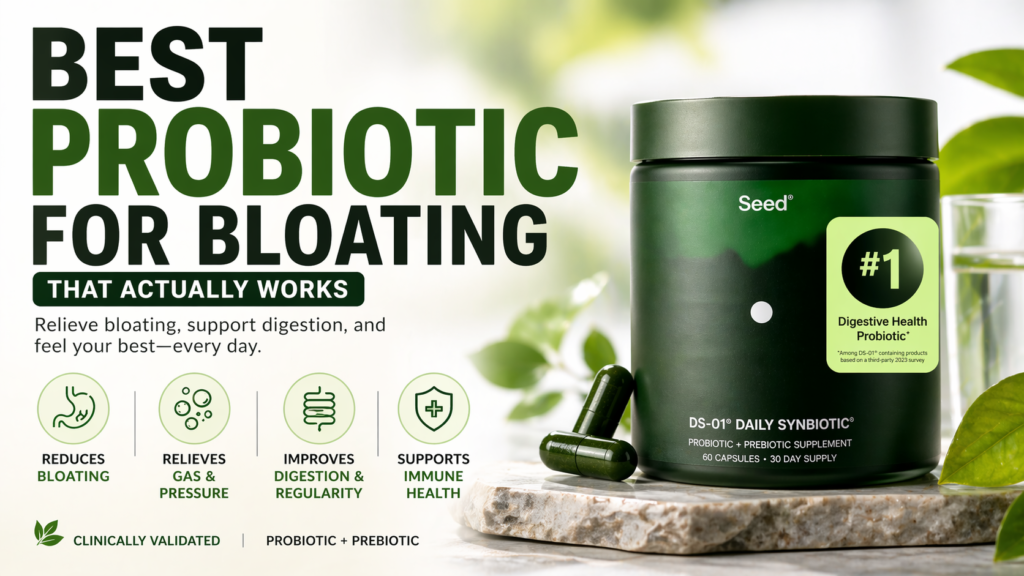
Our Top Recommendation: Seed DS-01 Daily Synbiotic

For GLP-1 users specifically, Seed DS-01 checks every relevant box — and then some.
It contains 24 clinically studied strains including multiple Bifidobacterium species specifically relevant to the motility, gut lining, and fermentation mechanisms that GLP-1 medications alter. It uses a nested two-capsule design — the outer capsule is a prebiotic made from Indian pomegranate fiber that feeds the inner probiotic capsule through the stomach and into the intestines. The entire system is acid-resistant, ensuring the bacteria survive the journey to where they need to work. It’s shelf stable, vegan, and the research transparency behind each strain is more rigorous than anything comparable in the market.
For the specific challenges GLP-1 medications create — excess gas from extended fermentation, constipation from reduced motility, gut lining stress from rapid weight loss, gut-brain axis changes affecting mood — the multi-strain, prebiotic-included, acid-resistant format of Seed DS-01 is the most comprehensively appropriate product available.

Check the current price of Seed DS-01 on Amazon
We spent 90 days testing it and documented the full experience here: Seed DS-01 Review — Is It Actually Worth $50 a Month?
When to Start and How to Take It
Start your probiotic at the same time you start your GLP-1 medication — don’t wait until side effects appear. The microbiome changes from altered transit and reduced food intake begin immediately, and getting ahead of them with consistent probiotic support from day one produces better outcomes than trying to repair a disrupted microbiome after the fact.
Take it daily — consistency is everything with probiotics. The bacterial rebalancing is a gradual process that requires daily reinforcement. Missing doses slows the process and reduces the cumulative benefit.
Take it with your first meal of the day. Food buffers stomach acid and protects the bacteria during their transit to the intestines — even with an acid-resistant capsule design, taking probiotics with food improves delivery.
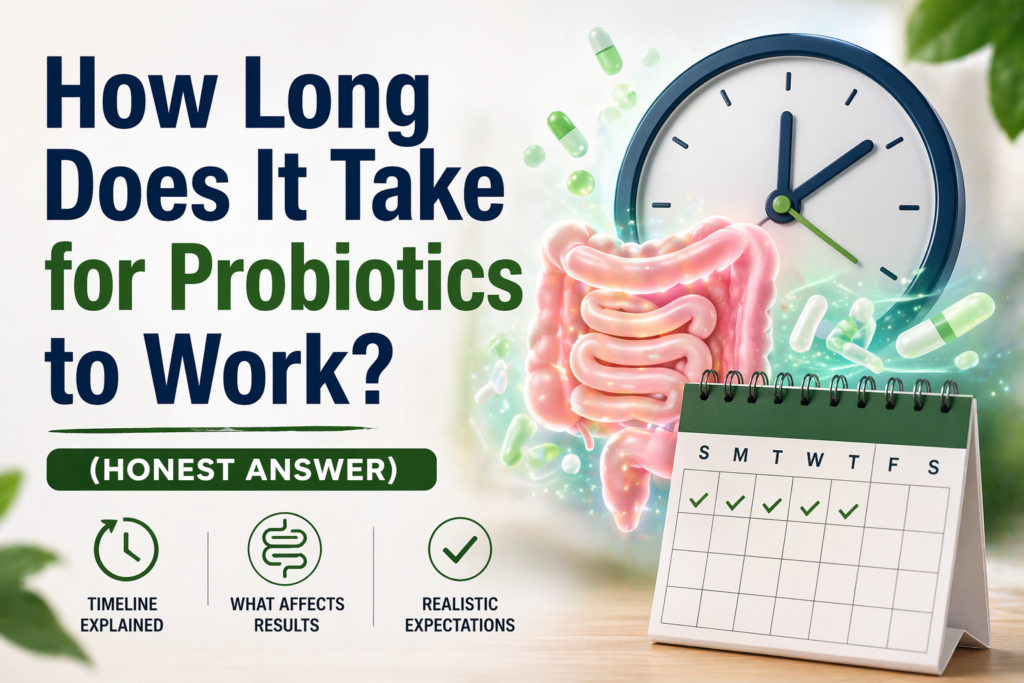
Give it 60 to 90 days before fully evaluating. Microbiome rebalancing takes time. Early benefits — reduced bloating, improved gas — may be noticeable within two to four weeks. The deeper motility, gut lining, and mood benefits typically become clearer at the 6 to 10 week mark. The honest timeline for probiotic results sets appropriate expectations so you don’t quit before the meaningful changes arrive.
Probiotics Alone Aren’t Enough — The Complete GLP-1 Gut Stack
A probiotic is the foundation of gut support during GLP-1 treatment but it works best as part of a broader approach. The complete stack for GLP-1 gut health:
Seed DS-01 daily — microbiome rebalancing, motility support, gut lining health. Amazon price here.

Zenwise Digestive Enzymes with every meal — compensates for disrupted enzyme timing, reduces fermentation substrate. Amazon price here.

Magnesium Glycinate 500mg in the evening — gentle motility support for constipation, sleep quality.

Psyllium Husk Capsules daily — soluble fiber for stool consistency and prebiotic support.
Multi Collagen Peptides daily — gut lining structural support during rapid weight loss.
The full picture of why each piece matters is in our comprehensive guide: GLP-1 Gut Side Effects — The Complete Guide.
Frequently Asked Questions
Should I take a probiotic while on Ozempic?
Yes — GLP-1 medications alter gut transit, reduce food intake, and change the gut environment in ways that benefit from active microbiome support. A quality synbiotic taken consistently throughout GLP-1 treatment helps manage side effects, maintains gut health through the dietary changes the medication produces, and supports the broader health outcomes a healthy microbiome underlies.
Can a probiotic help with Ozempic side effects?
Yes — particularly for bloating, gas, constipation, and the gut-brain axis changes that affect mood. The bacterial rebalancing a quality probiotic produces addresses several of the specific mechanisms driving GLP-1 gut side effects. Results build over 4–8 weeks of consistent daily use.
Is Seed DS-01 good for GLP-1 users?
It’s our top recommendation specifically for this context. The multi-strain formula includes Bifidobacterium strains relevant to motility and gut lining support, the prebiotic component is particularly valuable when food intake is reduced, and the acid-resistant delivery ensures bacteria survive to the intestines where they’re needed.
When should I start a probiotic on Wegovy?
Day one — ideally at the same time you start the medication. Getting ahead of the microbiome changes from altered transit and reduced food intake produces better outcomes than addressing them after they’ve developed.
How long does it take for a probiotic to help with GLP-1 side effects?
Early benefits like reduced bloating and gas typically become noticeable at two to four weeks. Motility benefits, mood improvements, and gut lining support become clearer at six to ten weeks of consistent daily use.
Can I take a probiotic and digestive enzymes together on GLP-1 medications?
Yes — they work on completely different mechanisms and complement each other well. Enzymes address food breakdown at each meal. Probiotics address the bacterial composition of your gut over time. Both are useful, neither is redundant of the other.


Your Gut Is Working Harder Than You Realize — Give It the Support It Needs
GLP-1 medications are doing something remarkable — resetting the metabolic and appetite systems that made weight management so difficult. Your gut is adapting to a fundamentally different operating environment in the process. A quality daily probiotic is the most important tool you have for supporting that adaptation — reducing the side effects that make the medication hard to tolerate, maintaining the gut health that underlies everything from your immune system to your mood, and potentially supporting the metabolic outcomes the medication is producing.
Start Seed DS-01 on day one. Take it every day. Give it 90 days. Your gut will be in a substantially better place — and so will you.
Try Seed DS-01 on Amazon — our top probiotic recommendation for GLP-1 users.
More from TummyCure:
- Complete GLP-1 Gut Side Effects Guide
- Seed DS-01 — Full Review
- Why Ozempic and Wegovy Make You So Bloated
- GLP-1 Constipation — How to Beat It
- Ozempic Nausea Is a Food Timing Problem
- Why Does Ozempic Make Your Stomach Hurt?
- Probiotic vs Synbiotic — What’s the Difference?
- How Long Do Probiotics Take to Work?
- 8 Signs Your Gut Desperately Needs a Probiotic
- The Complete Gut Health Guide
About the Author
Rachel Donnelly is a certified nutritional health coach and gut health writer who spent years struggling with IBS and bloating before making digestive wellness her specialty. She writes for TummyCure with one goal: cut through the noise and tell you what actually works. When she’s not deep in microbiome research, she’s fermenting things in her kitchen and losing arguments with her husband about whether kombucha counts as a dessert.
As an Amazon Associate we earn from qualifying purchases through some links in our articles.