
Flat stomach in the morning, bloated by 8pm — you’re not imagining it. Here’s exactly why bloating gets worse as the day goes on and what actually fixes it.
You Were Fine This Morning — So Why Does Your Stomach Look Like This by 8pm?
You wake up, your stomach is flat. You go about your day. By dinnertime you’re uncomfortable. By 8 or 9pm you look and feel like you swallowed a basketball. Your waistband is cutting into you, your clothes don’t fit right, and you’re wondering what on earth happened between 7am and now.
If this is your daily reality, you’re not imagining it — and you’re not alone. Evening bloating that builds throughout the day is one of the most common digestive complaints out there. And the reason it gets worse as the day goes on isn’t random. There are specific, well-understood reasons your body accumulates gas and distension as the hours pass — and once you understand them, fixing it becomes a lot more straightforward.

The supplement that makes the biggest immediate difference for this specific pattern is a digestive enzyme taken with every meal. Read our Zenwise Digestive Enzymes review or check the current price on Amazon here.
But let’s talk about why this happens first — because the why changes what you do about it.


Reason 1: Bloating Is Cumulative — It Builds All Day Long
This is the most important thing to understand about why bloating gets worse at night. It isn’t a separate event that happens in the evening. It’s the accumulation of everything that happened to your gut from the first meal of the day onward.
Every meal generates some gas. Every instance of imperfect food breakdown adds to the fermentation load in your colon. Every bit of swallowed air from eating, drinking, or talking adds to the pressure in your digestive tract. None of these things fully resolve between meals. They stack.
By the time you’ve eaten three meals, had a few drinks, snacked, and gone about a full day of life — the accumulated gas and digestive byproducts in your system is at its daily peak. That’s why 8pm feels so much worse than 8am. Your morning stomach reflects a night of fasting and gas expulsion during sleep. Your evening stomach reflects a full day of digestion happening imperfectly.
The practical implication: anything that reduces the amount of gas produced at each meal compounds across the day. Taking a digestive enzyme with breakfast, lunch, and dinner doesn’t just help with each individual meal — it reduces the cumulative load that builds toward that miserable evening bloat.



Reason 2: Your Digestive Enzyme Output Drops as the Day Goes On
Your body’s enzyme secretion isn’t constant throughout the day. Research has shown that digestive enzyme production follows a circadian rhythm — it tends to be higher earlier in the day and lower in the evening. This makes some evolutionary sense: your body is more primed for digestion during active daylight hours than late in the evening.
The practical consequence is that the same meal eaten at 7pm is digested less efficiently than the same meal eaten at noon. More undigested food reaches your large intestine. More fermentation happens. More gas is produced. And that gas is being added to everything that has already accumulated throughout the day.
This is one of the most compelling arguments for taking digestive enzymes with your evening meal specifically — even if you don’t take them at other times. Your enzyme output is at its daily low exactly when your cumulative gas load is at its daily high. Supplementing that evening enzyme deficit can make a dramatic difference to how you feel by bedtime.

If you’re not sure whether enzyme deficiency is part of your picture, these 8 signs that your body needs digestive enzymes will tell you quickly.
Reason 3: You’re Eating Your Largest Meals Later in the Day
Most people eat their smallest meal at breakfast, a moderate lunch, and their largest meal at dinner. This is exactly backwards from what your digestive system handles most efficiently.
Your digestive capacity — enzyme output, gastric acid production, gut motility — is most robust in the morning and early afternoon. It naturally winds down as evening approaches. Eating your largest, most complex meal at exactly the point when your digestive system is least equipped to handle it is a reliable recipe for significant evening bloating.
Heavy proteins, large portions of carbohydrates, rich sauces, fatty foods — all of these put significant demand on your digestive enzymes. When you eat them at dinner, your reduced evening enzyme output struggles to keep up. More undigested material reaches the colon. More fermentation. More gas. More bloating by bedtime.
Shifting toward a heavier lunch and lighter dinner is one of the most effective but underused interventions for evening bloating. Even without changing what you eat — just shifting when you eat the larger portions — many people experience a significant reduction in their evening bloating within a week.

Reason 4: Gut Motility Slows Significantly in the Evening
Gut motility — the muscular contractions that move food and gas through your digestive tract — is strongly influenced by your circadian rhythm and activity level. It’s most active during the day when you’re upright, moving, and physically active. As evening approaches and you become more sedentary, motility naturally slows.
Slower motility means food and gas move through your system less efficiently. Gas that would have passed through and been expelled during a more active period of the day instead accumulates and sits in your intestines. The physical result is that uncomfortable, distended feeling that peaks in the evening hours.
This is why even a short walk after dinner makes such a meaningful difference to evening bloating for so many people. You don’t need vigorous exercise — 15 to 20 minutes of gentle walking after your evening meal is enough to stimulate gut motility, help gas move through your system, and reduce the evening accumulation that makes you so uncomfortable by bedtime.
It’s also why people who are very sedentary — desk job all day, couch in the evening — tend to have the most pronounced evening bloating. Movement is medicine for gut motility, and the absence of it allows gas to pool.
Reason 5: Your Gut Bacteria Are Most Active in the Evening
Your gut microbiome — the trillions of bacteria in your large intestine — follows its own daily rhythm. Research has shown that bacterial fermentation activity tends to peak in the evening hours, coinciding with when most people have consumed the majority of their daily food intake.
For people with a well-balanced microbiome, this isn’t a problem — beneficial bacteria manage the fermentation process efficiently and gas production stays within comfortable limits. But for people with a disrupted microbiome — too many gas-producing harmful bacteria, not enough beneficial ones — peak fermentation time in the evening means peak gas production and peak bloating.

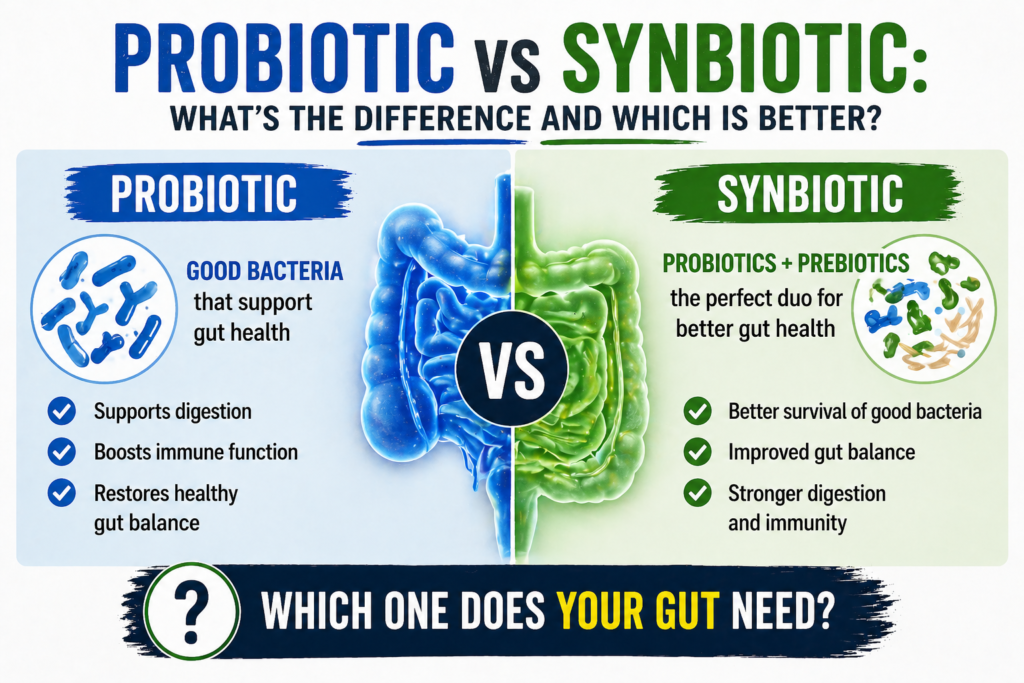
This is the long-game solution to evening bloating: rebalancing your gut bacteria so that even peak fermentation hours don’t produce excessive gas. A quality multi-strain synbiotic like Seed DS-01 addresses this at the root — gradually shifting your microbiome composition toward beneficial bacteria that ferment food more efficiently and produce less gas. The results take 4–8 weeks to become clearly noticeable, but they represent a lasting fix rather than ongoing symptom management.
Check the current price of Seed DS-01 on Amazon

If you’re not sure whether a bacterial imbalance is driving your evening symptoms, these 8 signs your gut desperately needs a probiotic are worth reading.
Reason 6: What You’re Eating for Dinner Is the Problem
Evening meals tend to have several characteristics that make them particularly gas-producing — often without people realizing it.
Garlic and onions are in almost every savory dinner recipe — sauces, soups, stir-fries, marinades. They’re also two of the highest-FODMAP foods that exist. For people with any degree of FODMAP sensitivity, garlic and onions alone can generate significant gas that peaks in the hours after dinner.
Large portions of carbohydrates — pasta, rice, bread, potatoes — at dinner provide a substantial fermentation substrate for your gut bacteria right when fermentation activity is peaking and enzyme output is declining. The combination is particularly bloating-prone.
Cruciferous vegetables — broccoli, cauliflower, Brussels sprouts, cabbage — are extremely healthy and also extremely gas-producing for many people. They contain complex sugars that ferment heavily in the colon. Eating them at dinner rather than earlier in the day means that gas production happens during the hours when you’re least active and least able to expel it comfortably.
Alcohol relaxes the lower esophageal sphincter, slows gastric emptying, and disrupts gut motility — all of which contribute to bloating and digestive discomfort. If wine or beer with dinner is part of your routine and evening bloating is a significant issue, this connection is worth taking seriously.
Eating late compounds everything. The later you eat, the less time your body has for active digestion before you lie down. When you lie down, gravity no longer assists the movement of food through your digestive tract. Gas that would have moved through and been expelled while you were upright instead sits and accumulates.
Reason 7: Stress Accumulates Throughout the Day
Most people’s stress levels are higher in the evening than in the morning — even if the morning starts rushed. Work stress, relationship dynamics, financial worries, decision fatigue — these accumulate throughout the day and reach their peak in the hours when you’re trying to wind down.
Chronic stress has a direct and well-documented effect on digestive function. It impairs enzyme secretion, slows gut motility, increases gut sensitivity, and disrupts the gut microbiome. The gut-brain connection runs both ways — the state of your nervous system directly affects the state of your digestion.
If you eat dinner in a stressed, distracted, or rushed state — which most busy people do most evenings — you’re eating at the point of your daily stress peak with the worst digestive conditions of the day. Your enzyme output is lower. Your gut motility is slower. Your gut sensitivity is higher. Everything that makes bloating worse is amplified.
This is why slowing down around dinner specifically — eating without screens, taking a few slow breaths before you start, sitting at a table rather than on a couch — makes a more meaningful difference to evening bloating than it might seem. Activating your parasympathetic nervous system before eating literally improves enzyme secretion and gut motility. It’s not just mindfulness advice — it’s physiology.

Reason 8: You May Have Undiagnosed IBS or SIBO
For some people, evening bloating that is severe, progressive, and resistant to dietary changes isn’t just a lifestyle issue — it’s a sign of an underlying condition worth investigating.
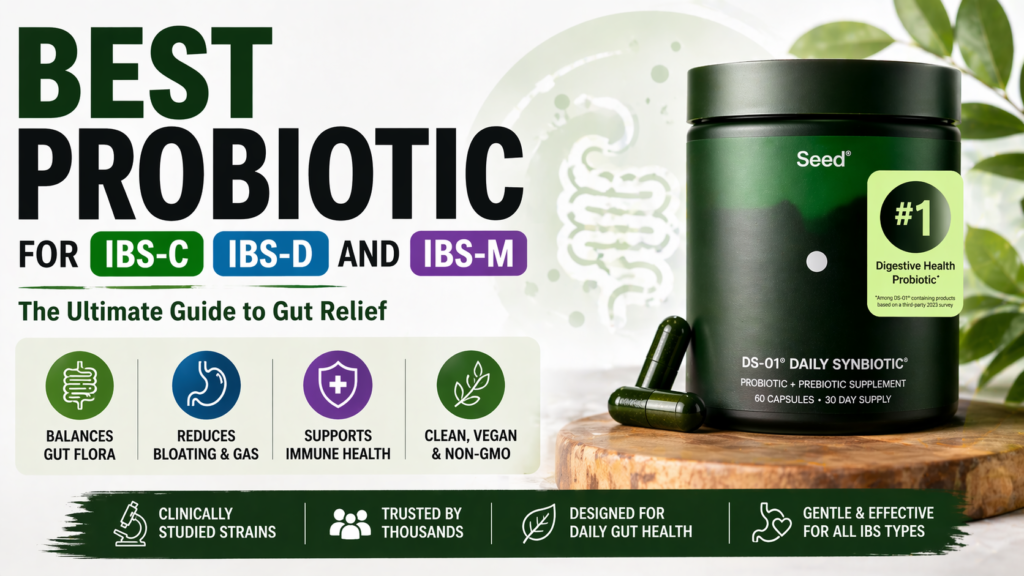
IBS — irritable bowel syndrome — frequently produces bloating that worsens throughout the day. The hypersensitive gut of someone with IBS reacts more strongly to normal amounts of gas, and the cumulative fermentation of a full day of eating produces more discomfort than in someone without the condition. Understanding which probiotic is best for your type of IBS is an important starting point for managing this pattern long-term.
SIBO — small intestinal bacterial overgrowth — is a condition where bacteria that normally live in the large intestine overgrow into the small intestine. This causes fermentation to happen much earlier in the digestive process than it should, producing gas that accumulates rapidly after eating and often creates visible abdominal distension that gets progressively worse through the day. If your bloating is severe, starts quickly after eating, and is accompanied by significant visible distension, SIBO is worth discussing with your doctor.
What to Do About Evening Bloating: A Practical Protocol
Understanding the causes makes the solutions clear. Here’s what actually works, in order of impact.
Take a digestive enzyme with every meal — especially dinner. This is the fastest-acting intervention. Enzymes ensure food gets properly broken down before it reaches your colon’s bacteria. Less undigested food at dinner means less evening fermentation and dramatically less evening bloating for most people. Start with Zenwise Health Digestive Enzymes — take one capsule right at the start of every meal. Check the price on Amazon
Start a quality synbiotic for the long game. Rebalancing your gut bacteria eliminates the root cause of excessive fermentation. Seed DS-01 is our top recommendation — 24 clinically studied strains in an acid-resistant synbiotic capsule. Give it 60–90 days of daily consistency. Check the price on Amazon
Make dinner your lightest meal. Shift your larger, more complex meals to lunch. Keep dinner simpler, smaller, and lower in gas-producing foods. This single dietary change makes a bigger difference to evening bloating than almost anything else.
Identify and reduce your evening trigger foods. Garlic, onions, cruciferous vegetables, beans, large carbohydrate portions, and alcohol are the most common culprits. You don’t have to eliminate everything — identify which specific foods cause the most reaction and reduce those first.
Walk after dinner. Even 15–20 minutes of gentle walking stimulates gut motility and helps gas move through your system before you settle in for the evening. It’s one of the simplest and most effective post-dinner habits for bloating.
Eat dinner earlier and slower. Give yourself at least 2–3 hours between dinner and bed. Slow down during the meal. Chew thoroughly. Eat without screens. All of these reduce swallowed air and improve digestive efficiency during the meal that matters most for how you feel at bedtime.
Manage your evening stress response. Even five minutes of calm before dinner — a few slow deep breaths, stepping away from work, leaving your phone in another room — can meaningfully improve your digestive enzyme output and gut motility during the meal.

How Long Until Evening Bloating Gets Better?
With digestive enzymes starting immediately, most people notice a meaningful reduction in post-dinner bloating within the first week. The evening bloating doesn’t disappear overnight — remember, it’s cumulative — but the peak severity typically reduces noticeably once meals are being broken down more completely.
With a synbiotic like Seed DS-01 added, the bacterial fermentation component improves over 4–8 weeks. By the 6–8 week mark, most people with this pattern are experiencing significantly less evening distension than they were before starting.
Combined with dietary adjustments — lighter dinners, reduced trigger foods, walking after meals — the full protocol typically produces dramatic improvement in evening bloating within 4–6 weeks for most people.
Frequently Asked Questions
Why is my stomach flat in the morning but bloated at night?
Because bloating is cumulative. Your morning stomach reflects overnight fasting and gas expulsion during sleep. Your evening stomach reflects a full day of accumulated gas from three meals, reduced digestive enzyme output in the evening hours, peak gut bacteria fermentation activity, and a full day of swallowed air. It’s not one meal causing it — it’s everything stacking up across the day.
Is it normal to bloat more at night?
It’s extremely common — but not inevitable or something you have to accept. Evening bloating that builds throughout the day consistently points to specific addressable causes including enzyme deficiency, bacterial imbalance, and dietary timing issues. It’s very fixable with the right approach.
What can I take to stop bloating at night?
A digestive enzyme supplement taken with dinner is the fastest-acting intervention — it ensures your evening meal gets properly broken down before bacteria ferment it. Our top recommendation is Zenwise Health Digestive Enzymes. For long-term relief, a quality probiotic like Seed DS-01 rebalances the gut bacteria driving the fermentation.
Does walking after dinner actually help bloating?
Yes — genuinely and meaningfully. Even 15–20 minutes of gentle walking stimulates the intestinal contractions that move gas through your system. People who walk after dinner consistently report less evening bloating than on days when they don’t. It’s one of the simplest, most evidence-backed interventions for post-dinner bloating.
What foods cause the most bloating at night?
Garlic and onions are at the top of the list — they’re in almost every savory dinner recipe and are highly fermentable. Cruciferous vegetables, beans and lentils, large carbohydrate portions, alcohol, and dairy (for those with lactose sensitivity) are the other major culprits for evening bloating specifically.
Can bloating at night be a sign of something serious?
In most cases no — it’s a sign of the cumulative digestive issues described above. However, if your evening bloating is severe, came on suddenly, is accompanied by pain, unexplained weight loss, or blood in the stool, see your doctor to rule out conditions that need medical evaluation.

Does a probiotic help with evening bloating?
Yes — over time. A quality probiotic rebalances the gut bacteria responsible for excessive fermentation during the evening peak activity period. It takes 4–8 weeks to produce clearly noticeable results, but it addresses the root cause rather than just the symptom. The best probiotic specifically for bloating covers this in more detail.
Stop Dreading Your Evenings
Evening bloating that builds throughout the day is miserable in a specific way — it takes what should be your relaxing wind-down time and turns it into hours of physical discomfort. You can’t enjoy dinner. You can’t get comfortable on the couch. You don’t want to be touched. You just want your stomach to go back to the way it was this morning.
The good news is this pattern is one of the most addressable forms of chronic bloating. The causes are specific, the solutions are targeted, and the timeline for improvement — especially with digestive enzymes — is faster than most people expect.
Start with enzymes at dinner tonight. Add a synbiotic for the long game. Take a walk after you eat. Give it a few weeks of consistency. Your evenings are about to get a lot more comfortable.
Try Zenwise Digestive Enzymes on Amazon
More from TummyCure:
- Why Am I Bloated After Every Meal?
- Zenwise Digestive Enzymes — Full Review
- Best Digestive Enzymes for Bloating
- Seed DS-01 — Full Probiotic Review
- Best Probiotic for Bloating
- 8 Signs Your Gut Needs a Probiotic
- 8 Signs Your Body Needs Digestive Enzymes
- Digestive Enzymes vs Probiotics — Do You Need Both?
- Stomach Gurgling at Bedtime — Here’s Why It Happens
- Why Does My Stomach Hurt When I Wake Up?
About the Author
Rachel Donnelly is a certified nutritional health coach and gut health writer who spent years struggling with IBS and bloating before making digestive wellness her specialty. She writes for TummyCure with one goal: cut through the noise and tell you what actually works. When she’s not deep in microbiome research, she’s fermenting things in her kitchen and losing arguments with her husband about whether kombucha counts as a dessert.
As an Amazon Associate we earn from qualifying purchases through some links in our articles.