If you’ve been dealing with frequent burping for a while, you’ve probably come across probiotics as a possible solution.
I know I did.
It seemed like every time I searched for answers about gas, bloating, or digestion, someone recommended taking a probiotic.
That made me wonder whether probiotics actually help with burping or if they’re simply another supplement that’s recommended for every digestive problem.
After spending time researching digestive health, I found the answer isn’t as straightforward as many articles make it sound.
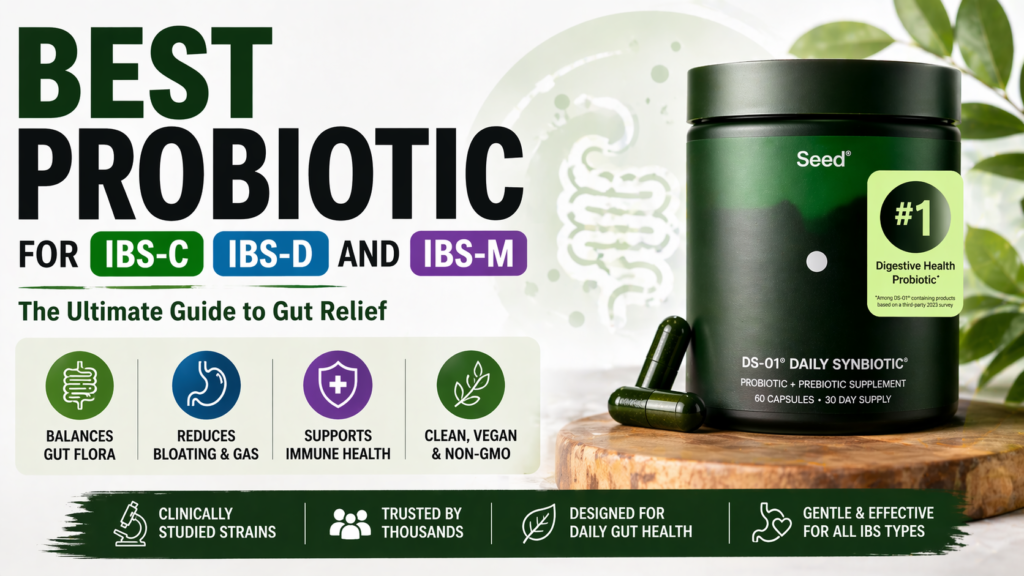
Probiotics may help some people with frequent burping. Because probiotic benefits vary from person to person, The Truth About Gut Health Most People Still Get Wrong helps separate common assumptions from more nuanced guidance.
For others, they probably won’t make much difference.
It all depends on what’s causing the burping in the first place.
What Are Probiotics?
Probiotics are live microorganisms that help support a healthy balance of bacteria in your digestive tract.
Your gut naturally contains trillions of bacteria.
Most are beneficial and help with:
- Breaking down food.
- Producing certain vitamins.
- Supporting your immune system.
- Helping regulate digestion.
When that balance changes, digestive symptoms such as bloating, excess gas, and changes in bowel habits may become more noticeable.
That’s why probiotics are often recommended for digestive health.
Can Probiotics Actually Reduce Burping?
Sometimes.
But not because they stop burping directly.
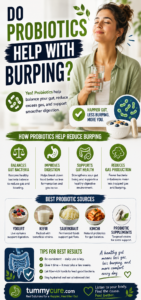
Instead, probiotics may help improve the overall environment inside your digestive system.
If your burping is partly caused by excess gas produced during digestion, improving your gut bacteria may reduce some of that gas over time.
That means probiotics are generally more helpful for burping that’s accompanied by:
- Bloating.
- Excess gas.
- IBS.
- Digestive discomfort after meals.
- Changes in bowel habits.
If your burping is simply caused by drinking soda or swallowing air while eating, probiotics probably won’t make much difference.

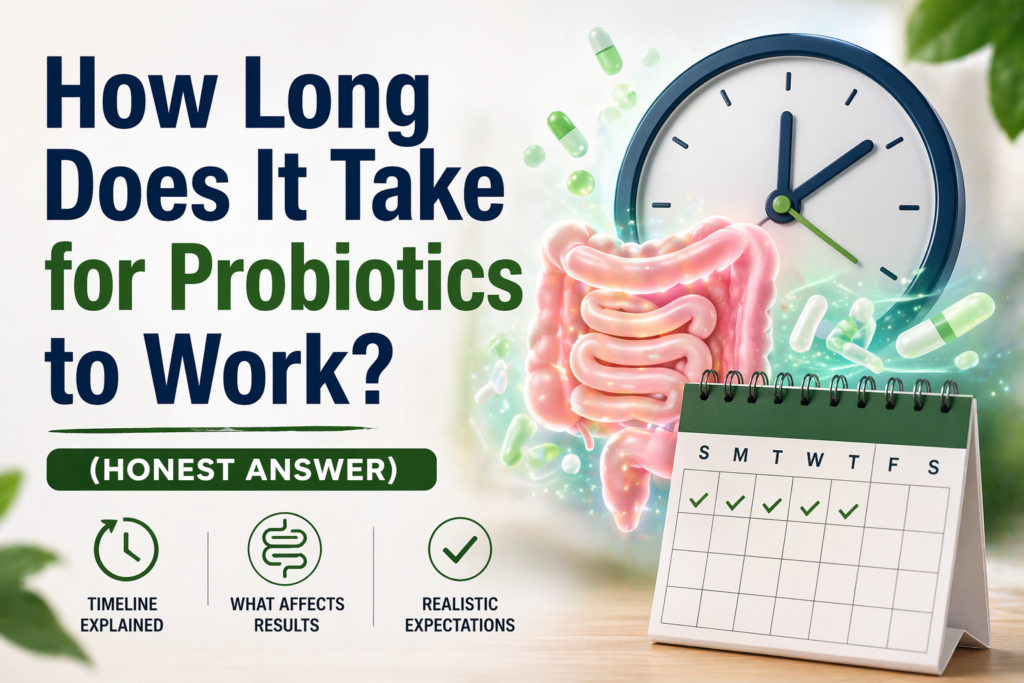
When Probiotics Are Most Likely to Help
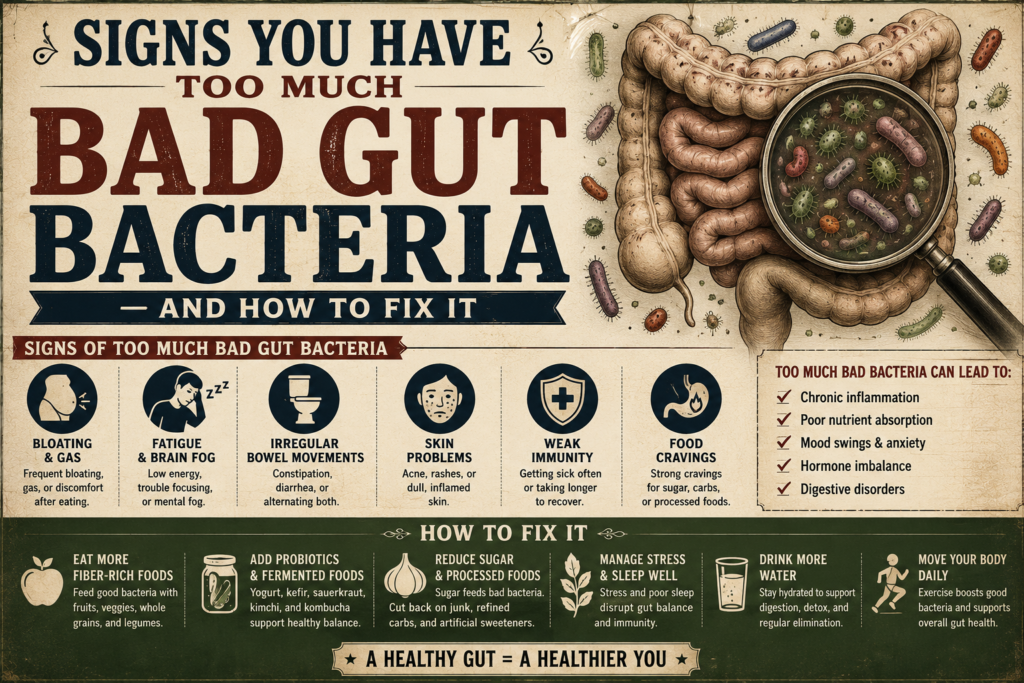
From everything I researched, probiotics seem most helpful when burping is only one part of a bigger digestive picture.
For example, if you regularly experience bloating after meals along with burping, improving your gut bacteria may help reduce both symptoms.
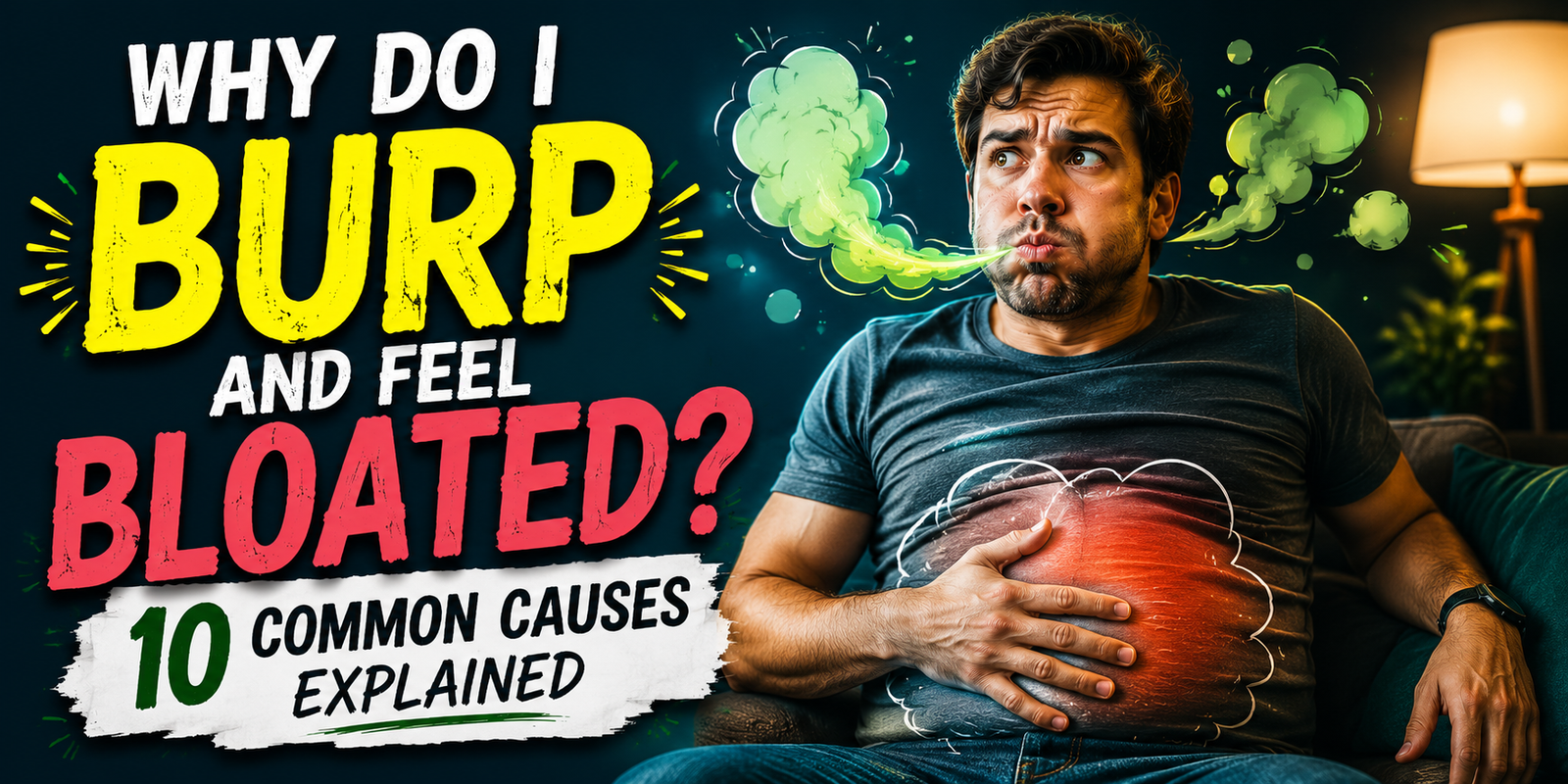
If that’s what you’re dealing with, Why Do I Burp and Feel Bloated? Common Causes Explained explains why these symptoms often occur together.
Your Gut Bacteria Matter More Than I Realized
One thing that surprised me was how much your gut bacteria influence digestion.
Healthy bacteria help break food down efficiently.
When that balance is disrupted, digestion may become less efficient, allowing more fermentation to occur in the intestines.
That fermentation naturally creates gas.
More gas can mean:
- Burping.
- Bloating.
- Flatulence.
- Stomach pressure.
One thing I found especially interesting is how long it can take your gut microbiome to recover after antibiotics.
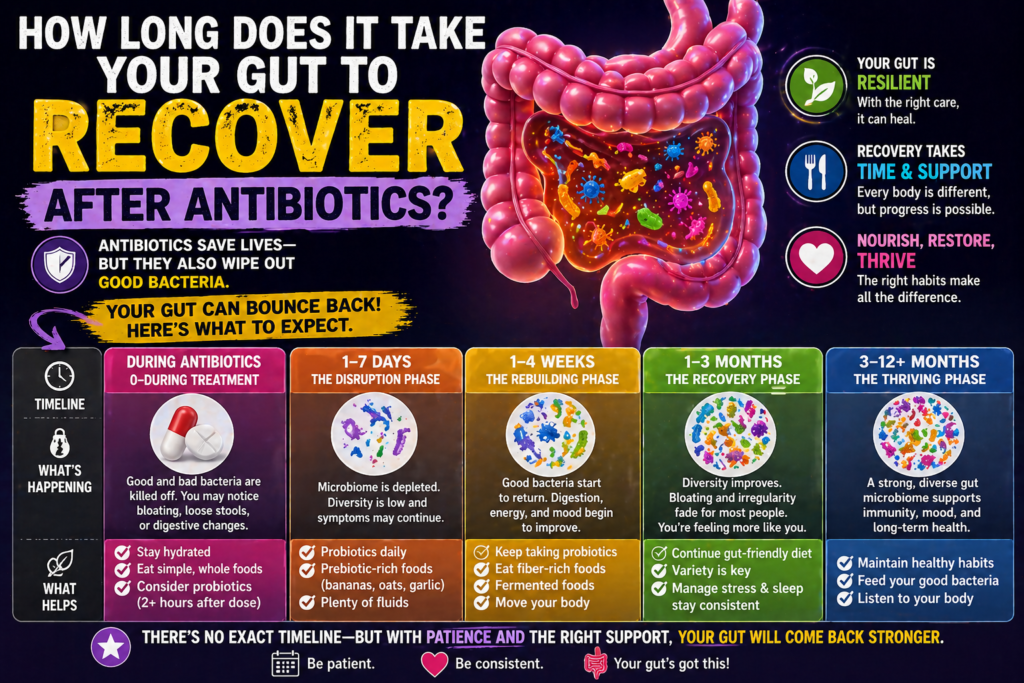
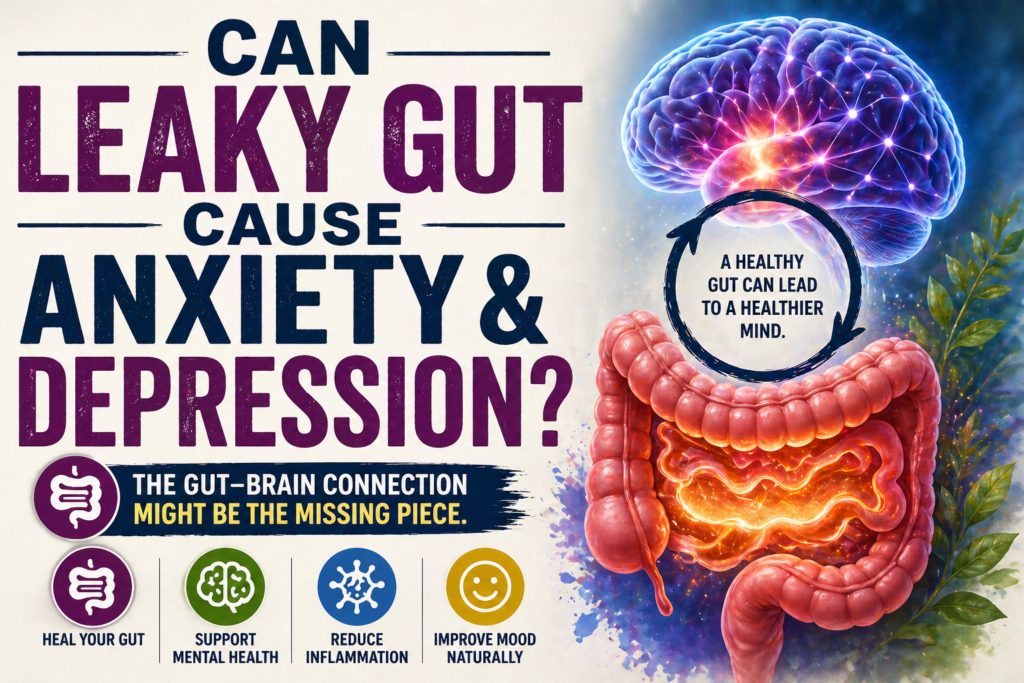
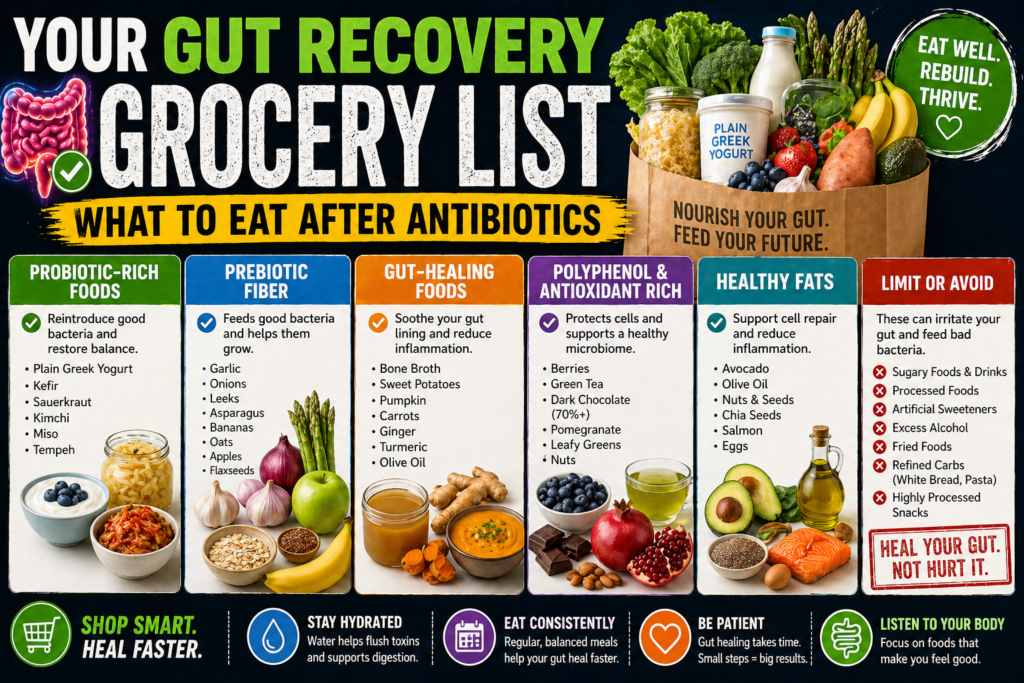
If your digestive symptoms began after taking antibiotics, How Long Does It Take Your Gut to Recover After Antibiotics? explains why your digestive system may still be adjusting weeks later.

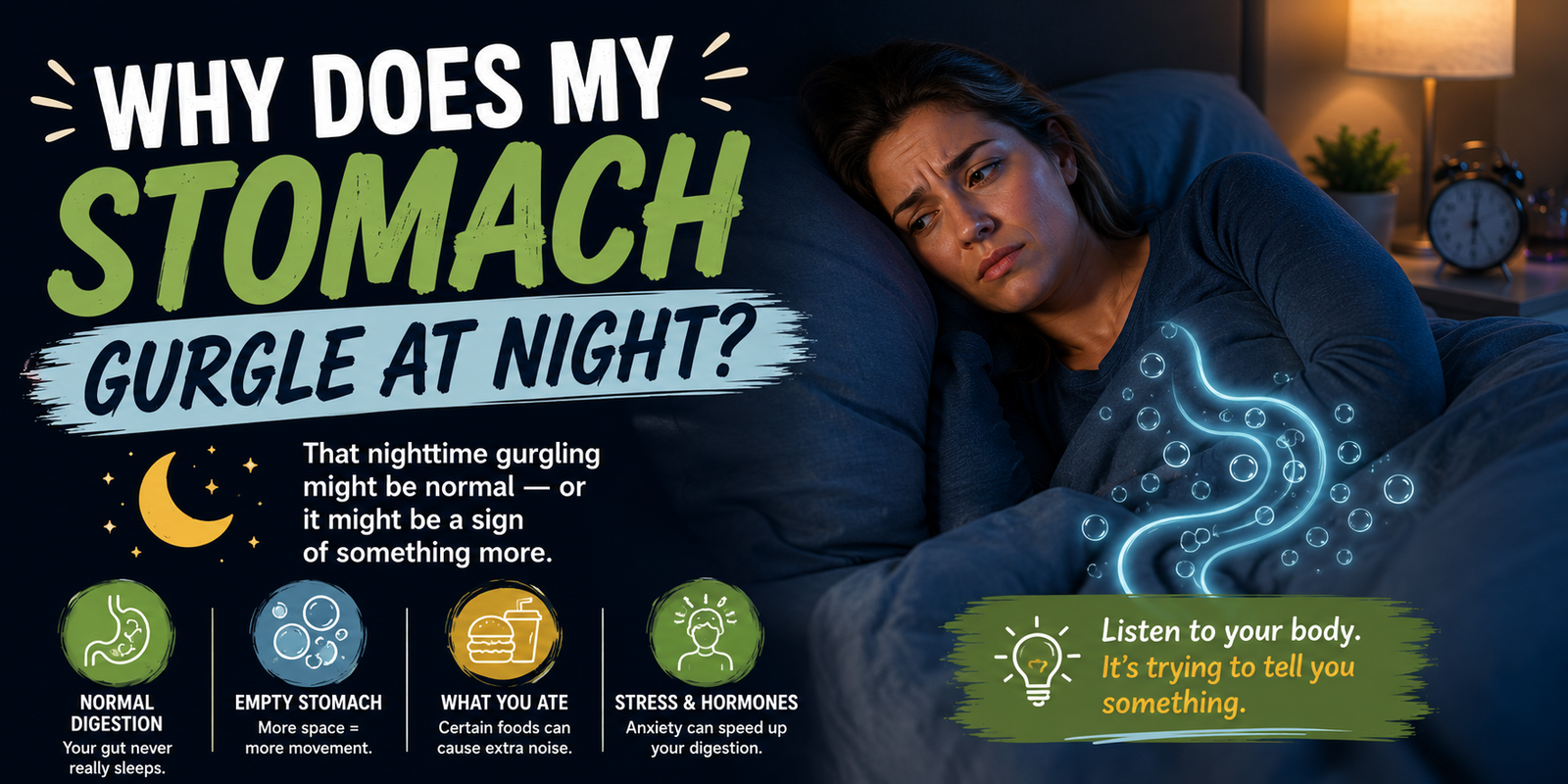
Probiotics Aren’t a Cure for Every Cause of Burping
This was probably the biggest takeaway for me.
Probiotics aren’t designed to stop burping itself.
They’re designed to support a healthier digestive system.
If your burping is mainly caused by:
- Drinking carbonated beverages.
- Eating too quickly.
- Swallowing excess air.
- Anxiety.
- Acid reflux.
A probiotic alone probably isn’t going to solve the problem.
That’s why understanding the cause is always more important than simply buying a supplement.
Digestive Enzymes vs. Probiotics
I spent a lot of time comparing these because they’re often mentioned together.
The easiest way I found to think about them is this:
Digestive enzymes help break food down.
Probiotics help support the bacteria that continue the digestive process.
They’re not competitors.
In some situations they may actually complement each other.
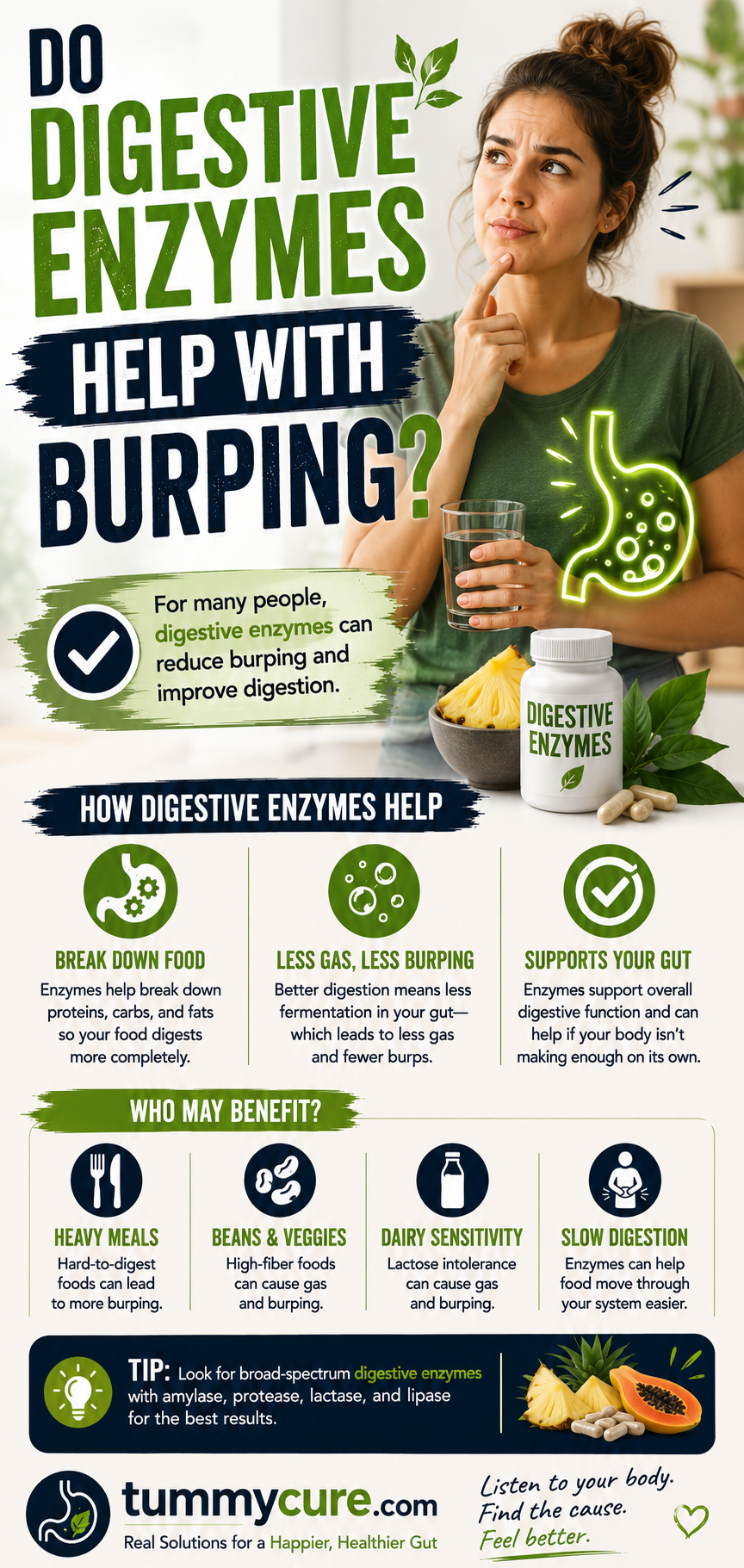
If you’re trying to decide between them, Do Digestive Enzymes Help With Burping? explains when digestive enzymes may make more sense than probiotics.
Should You Try a Probiotic?
I don’t think everyone who burps needs to run out and buy one.
But I do think there are situations where a probiotic is worth considering.
For example, I would be much more interested in trying one if my burping was accompanied by:
- Frequent bloating.
- Excess gas.
- IBS symptoms.
- Digestive changes after antibiotics.
- Ongoing stomach discomfort after meals.
Those situations suggest your gut microbiome could be playing a role.
On the other hand, if your burping only happens after drinking soda or eating too quickly, changing those habits is likely to have a much bigger impact than adding a supplement.
How I Would Choose a Probiotic
After researching dozens of digestive supplements, I realized one thing pretty quickly.
Not all probiotics are the same.
Different products contain different bacterial strains, different strengths, and different combinations.
Instead of buying the first bottle I saw, I looked for products that:
- Clearly list the probiotic strains they contain.
- Include an adequate number of live cultures.
- Come from a well-established manufacturer.
- Are designed specifically for digestive health.
The more transparent a company is about what’s inside the bottle, the more confidence I have in the product.

My Thoughts on Taking Probiotics With Digestive Enzymes
A question I see quite often is whether you have to choose one or the other.
From everything I’ve learned, the answer is no.
Digestive enzymes and probiotics do different jobs.
Digestive enzymes help your body break food down during digestion.
Probiotics help maintain a healthier balance of bacteria after the food reaches your intestines.
For some people, using both may make sense depending on what’s causing their digestive symptoms.
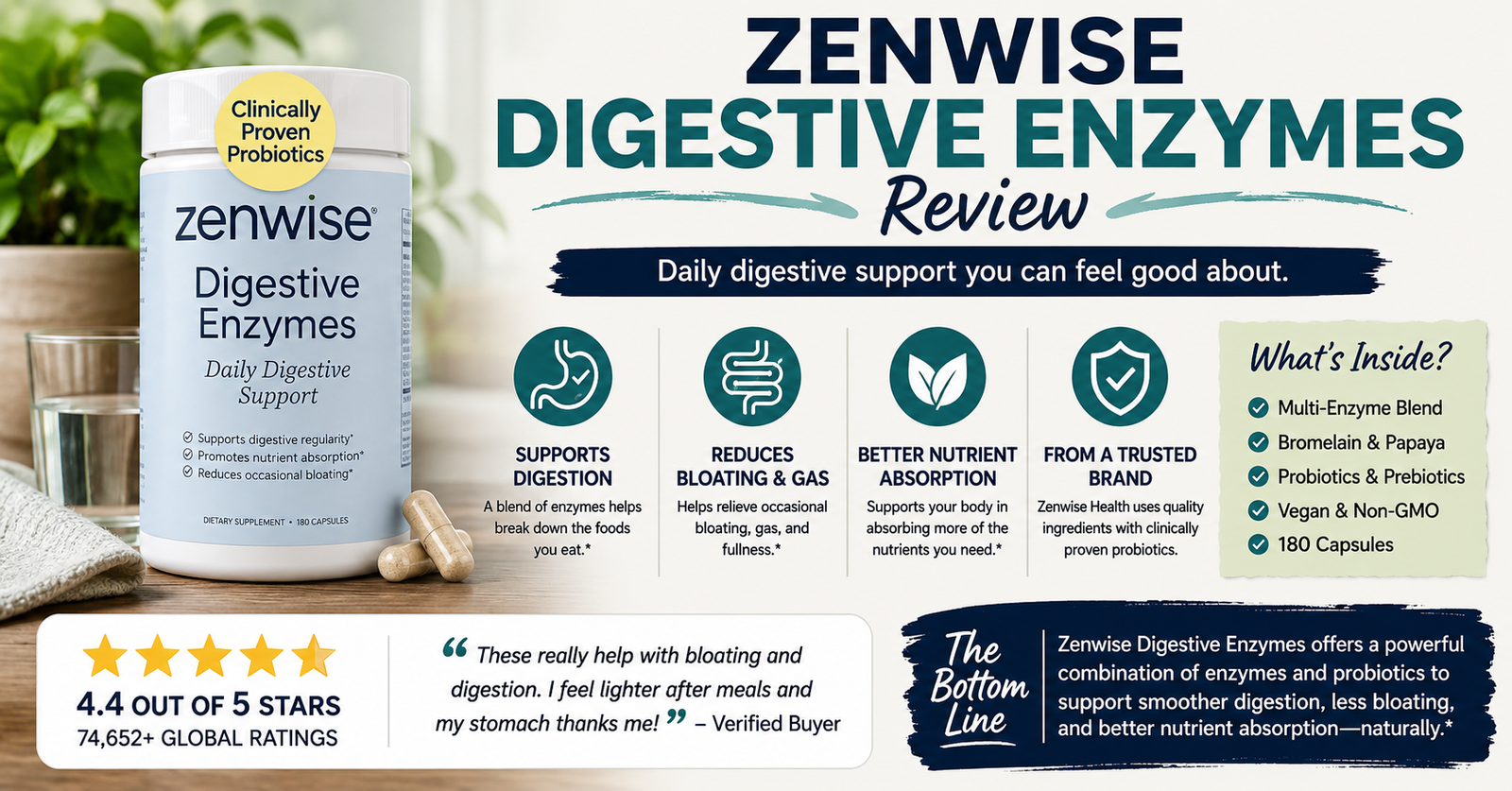
In fact, one reason I like Zenwise Digestive Enzymes Review is that the formula combines digestive enzymes with probiotics and prebiotics in a single supplement instead of requiring multiple products.
Simple Habits I’d Try Along With a Probiotic
Whether I decided to take a probiotic or not, I’d still focus on improving the habits that have the biggest impact on digestion.
Those include:
- Eating meals more slowly.
- Chewing food thoroughly.
- Drinking fewer carbonated beverages.
- Staying upright after eating.
- Keeping a food journal.
- Managing stress as much as possible.
- Getting regular physical activity.
For me, supplements make much more sense when they’re supporting healthy habits instead of replacing them.

When It’s Time to Talk With Your Healthcare Provider
While probiotics are generally considered safe for most healthy adults, they aren’t the answer to every digestive problem.
If your burping continues despite lifestyle changes, or if it’s accompanied by more concerning symptoms, it’s important to seek medical advice.
Contact your healthcare provider if you experience:
- Difficulty swallowing.
- Persistent vomiting.
- Vomiting blood.
- Black or tar-like stools.
- Severe abdominal pain.
- Unexplained weight loss.
- Burping that continues getting worse over time.
Those symptoms deserve a proper medical evaluation instead of self-treating with supplements.
Frequently Asked Questions
Can probiotics stop burping?
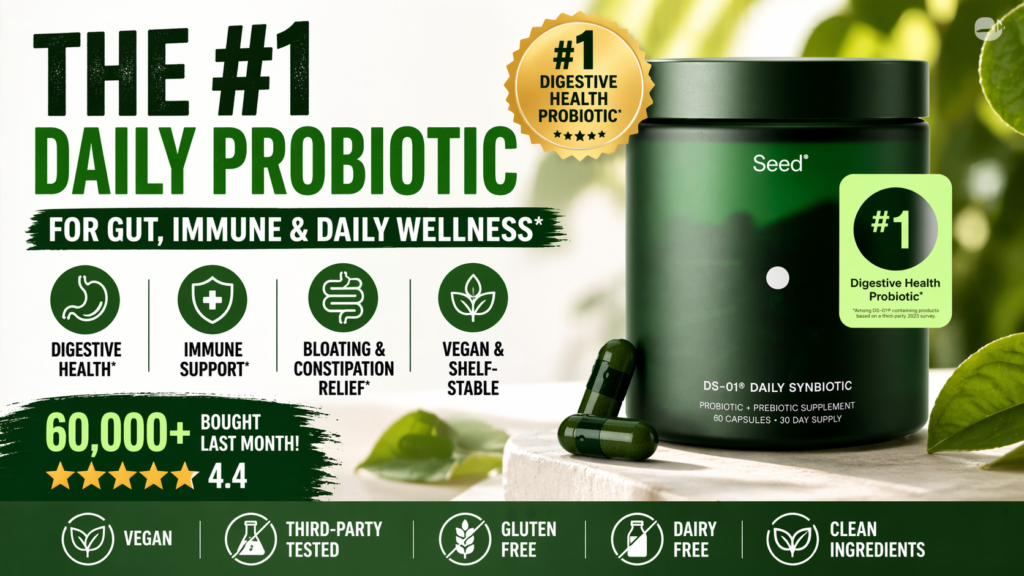
They may help if your burping is related to an imbalance in your gut bacteria, IBS, or excess gas production. They are less likely to help if your burping is caused by swallowed air, carbonated drinks, or eating too quickly. Readers comparing probiotic options may also want to see how Seed DS-01 performed for bloating and digestion.
How long does it take for probiotics to help?
Everyone is different. Some people notice digestive improvements within a few weeks, while others may need longer depending on the underlying cause of their symptoms.
Are probiotics better than digestive enzymes?
Neither is better overall because they do different things. Digestive enzymes help break food down, while probiotics support the balance of beneficial bacteria in your digestive tract.
Can I take probiotics and digestive enzymes together?
Yes. Many people take both because they support digestion in different ways. Some supplements, including certain digestive support formulas, combine enzymes, probiotics, and prebiotics into one product.
Will probiotics help with burping and bloating?
They may if those symptoms are related to gut bacteria or IBS. However, they won’t fix every cause of burping or bloating, which is why identifying the underlying issue is so important.
Author: Natalie Mercer
Natalie Mercer is a digestive health writer who enjoys helping readers better understand common digestive symptoms through practical, research-informed guidance. She focuses on gut health, digestive wellness, and reviewing supplements objectively so readers can make informed decisions alongside advice from their healthcare providers.
As an Amazon Associate we earn from qualifying purchases through some links in our articles.