
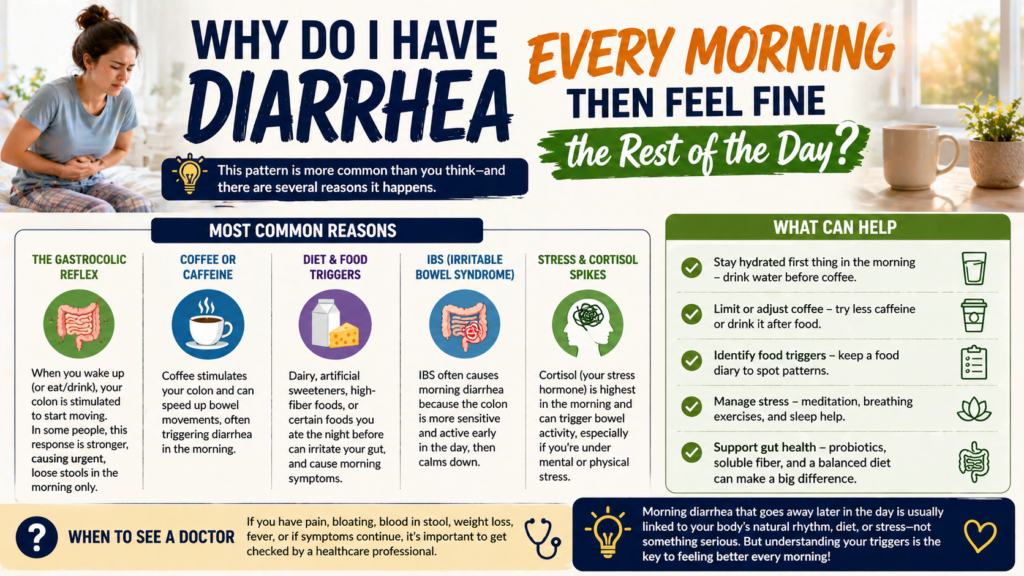
If you have diarrhea every morning but feel completely normal by mid-morning, there’s a specific reason. Here’s what’s causing it and what actually fixes it.
It Happens Every Single Morning — Then You’re Fine
You wake up. Within 30 minutes — sometimes less — you’re rushing to the bathroom with urgent, loose stools. It might happen once. It might happen two or three times before you finally feel empty enough to get on with your day. And then, almost like a switch flips, you feel completely normal. The rest of the day is fine. No urgency, no cramping, no issues whatsoever.
Until tomorrow morning. When it starts all over again.
This specific pattern — morning diarrhea that resolves on its own and doesn’t come back until the next day — is one of the most common and least talked about digestive complaints out there. Most people who experience it have been doing so for months or years and have just accepted it as their normal. It’s not. It’s a specific, recognizable pattern with specific, addressable causes.

One of the most effective long-term interventions for this pattern is a quality multi-strain probiotic. Read our full Seed DS-01 review or 👉 check the current price on Amazon.
But first — let’s understand what’s actually causing this.


Why Morning Is Different for Your Gut
Your digestive system doesn’t operate the same way around the clock. It follows a circadian rhythm — a daily biological cycle that governs when different digestive processes are most and least active.
During sleep your gut slows significantly. Motility — the muscular contractions that move content through your digestive tract — decreases to a maintenance level. Your colon conserves water. Digestive secretions reduce. Your gut is essentially in a low-activity overnight mode.
When you wake up, several things happen simultaneously that jolt your digestive system back into action — and for people with sensitive or reactive guts, that morning activation is when things go wrong.
Understanding which of these morning mechanisms is driving your specific pattern is the key to fixing it.


Cause 1: The Morning Cortisol Surge
The most significant driver of morning diarrhea for most people is cortisol — your primary stress hormone, which surges naturally in the first hour after waking as part of your body’s process of becoming alert and ready for the day.
This is called the cortisol awakening response and it’s completely normal. But cortisol has a direct effect on your gut — it stimulates intestinal contractions and speeds up motility. In people with a healthy, well-regulated gut this produces a normal urge for a morning bowel movement. In people with IBS, a disrupted microbiome, or an already-reactive gut, the cortisol surge produces an exaggerated response — urgent, loose, multiple trips to the bathroom before the body settles down.
This is also why morning diarrhea is almost always worse on stressful days or during anxious periods of life. Additional psychological stress on top of the already-elevated morning cortisol tips an already reactive gut over the edge. The gut-brain connection is never more obvious than in this specific morning pattern.
Cause 2: IBS-D — The Most Likely Explanation
If this pattern has been happening consistently for months, IBS-D (diarrhea-dominant irritable bowel syndrome) is the most common underlying diagnosis — and the one worth investigating properly if you haven’t already.
IBS-D is characterized by a hypersensitive gut that reacts more strongly than normal to the signals that trigger bowel movements. The morning cortisol surge, the gastrocolic reflex triggered by the first food or drink of the day, and the increase in gut motility that comes with waking — all of these normal morning events trigger an exaggerated colonic response in someone with IBS-D.
The reason symptoms are primarily in the morning rather than throughout the day is that these morning triggers are the strongest daily stimuli for gut motility. Once the initial wave passes and cortisol levels normalize, the gut settles down. The hypersensitivity is still there — but without the morning triggers amplifying it, symptoms don’t manifest in the same way for the rest of the day.
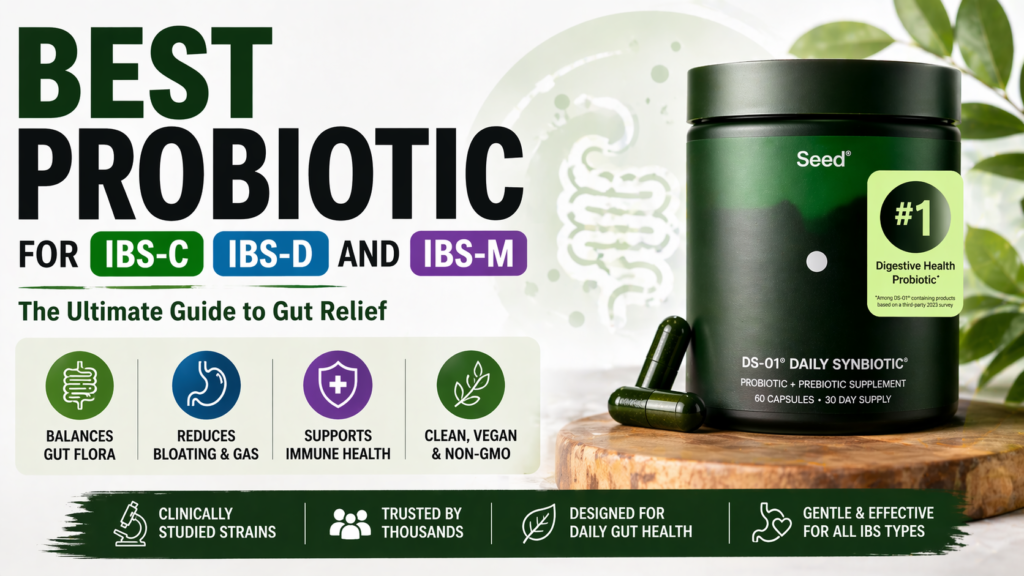
Managing IBS-D requires addressing the underlying bacterial imbalance and gut hypersensitivity that makes the morning response so exaggerated. Choosing the right probiotic for IBS-D specifically is one of the most important steps — the research on specific strains for diarrhea-dominant IBS is solid and the right product makes a meaningful difference over 6–8 weeks of consistent use.



Cause 3: The Gastrocolic Reflex — Amplified
The gastrocolic reflex is the signal your stomach sends to your colon when it receives food or liquid — essentially telling the colon to contract and make room for incoming material. This is why most people feel an urge to use the bathroom after breakfast.
For people with a sensitive gut, this reflex is dramatically amplified. Even coffee — which stimulates both the gastrocolic reflex and gut motility independently of its caffeine content — can trigger an urgent bathroom trip within minutes of the first sip. The first meal of the day does the same thing, often more severely because the colon has been holding overnight content for 7–8 hours.
If your morning diarrhea is specifically triggered by coffee or breakfast rather than occurring the moment you wake up, the gastrocolic reflex is the primary mechanism. This is still most common in people with IBS or a reactive gut — but the trigger point is different, which matters for management.

Interestingly, why coffee makes your stomach hurt specifically in the morning has its own specific explanation that goes beyond just caffeine — and it’s worth understanding if coffee is a consistent trigger for you.
Cause 4: Your Gut Bacteria Are Out of Balance
The composition of your gut microbiome directly influences gut motility and the intensity of the gastrocolic reflex. A microbiome with too many gas-producing, motility-disrupting bacteria and too few beneficial regulatory strains produces a gut that moves too fast — especially in the morning when all the natural stimuli for motility are already elevated.

Post-antibiotic morning diarrhea is one of the clearest examples of this. Antibiotics wipe out beneficial bacterial populations that help regulate gut motility and stool consistency. The resulting imbalance often shows up as morning urgency and loose stools that can persist for weeks or months after the antibiotic course ends. Restoring gut bacteria after antibiotics requires a deliberate, specific approach — the microbiome doesn’t just reset itself automatically.
Even without antibiotics, a diet high in sugar and processed food, chronic stress, poor sleep, and a sedentary lifestyle all shift the microbiome toward a composition that makes gut motility less regulated and morning symptoms more pronounced.
A quality synbiotic like Seed DS-01 addresses this at the root — gradually shifting the bacterial balance toward the strains that regulate motility, reduce gut hypersensitivity, and make the morning cortisol response proportionate rather than explosive. 👉 Check the current price on Amazon.


Cause 5: What You Ate the Night Before
Your morning gut is partly a reflection of your previous evening’s digestion. Food that wasn’t properly broken down at dinner ferments overnight in your colon. By morning, that fermentation has been going on for hours — producing gas, organic acids, and fermentation byproducts that irritate the colon wall and accelerate motility.
When you then add the morning cortisol surge and the gastrocolic reflex from breakfast or coffee on top of an already irritated, gas-filled colon — the result is urgent, loose morning stools.
This is why what you eat at dinner matters so much for how your mornings feel. High-FODMAP dinners — garlic, onions, beans, large portions of carbohydrates, dairy — provide the most fermentable material for overnight bacterial activity. Heavy, late dinners give your gut less time to process before sleep and more material to ferment through the night.

If you notice your morning symptoms are consistently worse after certain dinner foods — particularly garlic-heavy dishes, beans, or dairy — the overnight fermentation connection is likely significant for you. A digestive enzyme taken with dinner helps break food down more completely before it reaches the colon, reducing the overnight fermentation that sets up a difficult morning. Zenwise Health Digestive Enzymes is our top recommendation for this purpose. 👉 Check the price on Amazon.
Cause 6: Bile Acid Malabsorption
This is a less commonly discussed but genuinely significant cause of morning diarrhea that many people have never heard of — and that frequently goes undiagnosed because it mimics IBS-D so closely.
Bile acids are produced by your liver and released into your small intestine to help digest fats. Normally, the vast majority of bile acids are reabsorbed in the last section of the small intestine (the terminal ileum) and recycled. When this reabsorption process doesn’t work properly, excess bile acids reach the colon where they act as a powerful stimulant for motility — producing urgent, watery diarrhea.
Bile acid malabsorption tends to produce diarrhea specifically in the morning because that’s when the previous night’s bile production has accumulated and the first food or movement of the day releases it into an empty gut. The symptoms are often described as sudden, urgent, and watery — and can occur before breakfast as well as after it.
If your morning diarrhea is consistently watery, very urgent, and has been unresponsive to dietary changes and probiotics, bile acid malabsorption is worth discussing with your doctor. It’s diagnosed with a specific test and responds well to targeted treatment with bile acid sequestrants.



Cause 7: Anxiety and the Morning Mind-Gut Loop
For many people, the anticipation of morning diarrhea creates anxiety — and that anxiety feeds directly back into the gut, making the morning symptoms worse. It becomes a self-reinforcing loop: you know you’re going to have a difficult morning, you wake up already tense about it, that tension elevates your cortisol and sensitizes your gut further, and the symptoms are worse than they might otherwise have been.
This is the gut-brain axis in its most frustrating expression. The anxiety about your gut symptoms directly worsens those symptoms. It doesn’t mean the symptoms are psychological in origin — the underlying gut sensitivity is real and physiological. But the anxiety layer amplifies it in ways that are worth addressing directly.

Practical things that break this loop: establishing a calm morning routine that doesn’t revolve around rushing, giving yourself adequate time in the morning so bathroom trips don’t create schedule panic, and addressing the underlying gut issues so the symptoms become less severe and the anticipatory anxiety naturally reduces. The connection between gut health and mental health is bidirectional — improving your gut genuinely reduces anxiety, and reducing anxiety genuinely improves your gut.
Why It’s Fine the Rest of the Day
Understanding why symptoms resolve after the morning rush helps clarify what’s actually driving them.
By mid-morning, cortisol levels have normalized from their peak. The gastrocolic reflex from breakfast has completed. The overnight fermentation byproducts have been expelled. Your gut has emptied and the colonic pressure that was building has released. The stimuli that were driving the morning urgency have passed — and without those specific triggers, your gut functions normally for the rest of the day.
This is actually a useful diagnostic clue: if your gut is completely fine from mid-morning onward, it means the underlying sensitivity is there but only expresses when the morning triggers are present. Fix those triggers — reduce overnight fermentation, rebalance the gut bacteria amplifying the cortisol response, calm the gut-brain axis — and you fix the morning without needing to manage symptoms all day.

What Actually Helps — The Practical Protocol
Start a quality synbiotic daily. This is the most important long-term intervention. Rebalancing your gut bacteria reduces the hypersensitivity of the gut-brain axis, improves motility regulation, and makes the morning cortisol response proportionate rather than explosive. Seed DS-01 is our top recommendation — 24 clinically studied strains including strains specifically studied for IBS-D and diarrhea regulation. Give it 60–90 days. 👉 Check the price on Amazon.
Take a digestive enzyme with dinner specifically. Reducing overnight fermentation is one of the most direct ways to improve morning symptoms. A comprehensive enzyme like Zenwise ensures dinner gets properly broken down before the bacteria get to work on it overnight. 👉 Check the price on Amazon.
Make dinner lighter and earlier. Less food fermenting overnight means a less irritated colon in the morning. Reducing high-FODMAP dinner ingredients — garlic, onions, beans, large carb portions — and eating at least 2–3 hours before bed gives your gut more time to process before overnight bacterial fermentation kicks in.
Delay or reduce morning coffee. If coffee is a consistent trigger, trying decaf or delaying your first coffee until after breakfast gives your gut a chance to settle before adding a strong motility stimulant. Even switching from a large strong coffee to a smaller, weaker one can make a meaningful difference.
Establish a calmer morning routine. Give yourself extra time so that bathroom trips don’t create panic. Reduce morning stress wherever possible. Even 5 minutes of slow breathing before getting up can meaningfully reduce the cortisol awakening response and blunt the gut reaction that follows.
Consider a low-FODMAP approach for 4–6 weeks. Reducing fermentable carbohydrates temporarily while your gut heals can significantly reduce morning symptoms driven by overnight fermentation. This isn’t a permanent diet — it’s a reset that makes space for the probiotic and enzyme work to take effect.
When to See a Doctor
Morning diarrhea that is consistent, predictable, and resolves by mid-morning is almost always functional rather than structural — IBS, gut imbalance, bile acid issues. But see your doctor if:
- There is blood in your stool
- You’re losing weight without trying
- Symptoms have changed suddenly after being stable
- Diarrhea is waking you from sleep — this is a significant red flag for inflammatory bowel disease
- You have significant abdominal pain alongside the diarrhea that doesn’t resolve after emptying
- You’re over 50 and this pattern is new
For most people reading this, the pattern has been going on for a long time and is consistent and predictable — which is actually reassuring from a medical standpoint. Consistent, predictable functional symptoms are very different from new, changing, or progressive symptoms that need investigation.
Frequently Asked Questions
Why do I have diarrhea every morning but feel fine the rest of the day?
The most common explanation is a combination of the natural morning cortisol surge, an amplified gastrocolic reflex, and gut bacterial imbalance — all of which drive exaggerated morning motility that settles down once morning stimuli normalize. IBS-D is the most common underlying condition. Overnight fermentation from dinner also sets up the morning reaction.
Is morning diarrhea a sign of IBS?
It’s one of the most classic presentations of IBS-D. If you’ve been experiencing this pattern for more than three months, discussing it with your doctor and considering an IBS diagnosis is worthwhile — not because you need medication necessarily, but because a proper diagnosis helps you approach management more effectively.

Can probiotics help with morning diarrhea?
Yes — significantly, over time. The right probiotic strains reduce gut hypersensitivity, regulate motility, and rebalance the bacterial communities driving exaggerated morning responses. Give it 60–90 days of consistent daily use. Understanding the realistic probiotic timeline keeps you from quitting too early.
Does coffee make morning diarrhea worse?
For many people, yes. Coffee stimulates gut motility through multiple independent mechanisms — its acidity, its effect on bile production, and compounds beyond caffeine that directly trigger intestinal contractions. If coffee is a consistent trigger, reducing the amount or strength, or delaying it until after breakfast, often produces a noticeable improvement.
What should I eat for dinner to avoid morning diarrhea?
Lower-FODMAP, easier-to-digest dinners reduce overnight fermentation and morning gut irritation. Avoiding garlic, onions, beans, very large carb portions, and dairy helps. Eating dinner earlier — at least 2–3 hours before bed — gives your gut more processing time before overnight bacterial activity peaks.
Can anxiety cause morning diarrhea?
Yes — both through the morning cortisol surge (which anxiety elevates further) and through direct gut-brain axis effects that increase gut sensitivity and motility. The anticipatory anxiety about morning symptoms can itself make those symptoms worse, creating a self-reinforcing loop that improves as the underlying gut issues are addressed.
How long does it take for morning diarrhea to improve with treatment?
With a quality probiotic, most people notice some improvement at 3–4 weeks and meaningful improvement at 6–8 weeks. Dietary changes like reducing FODMAP triggers and taking a digestive enzyme with dinner can improve morning symptoms faster — sometimes within the first two weeks.
You Don’t Have to Start Every Day Like This
Morning diarrhea that’s been happening for months or years feels like just how your body works. It isn’t. It’s a specific, recognizable pattern with specific, fixable causes — and the people who address those causes rather than just enduring them every morning consistently find that the pattern improves significantly, often dramatically.
Start with a quality synbiotic for the bacterial rebalancing work. Add a digestive enzyme at dinner to reduce overnight fermentation. Make dinner lighter and earlier. Give your morning more time and less stress. Then give it 60–90 days of real consistency.
Your mornings can be completely different. That’s worth working toward.
👉 Try Seed DS-01 on Amazon — our top pick for morning diarrhea and IBS-D.
👉 Try Zenwise Digestive Enzymes on Amazon — take with dinner to reduce overnight fermentation.
More from TummyCure:
- Best Probiotic for IBS-D
- Seed DS-01 — Full Review
- Living With IBS-D
- Zenwise Digestive Enzymes — Full Review
- Why Does Coffee Make My Stomach Hurt in the Morning?
- How to Restore Gut Bacteria After Antibiotics
- How Long Do Probiotics Take to Work?
- Diarrhea Every Morning Then Fine — Here’s What’s Going On
- Why Does My Stomach Hurt After Eating But Goes Away After Pooping?
- The Complete Gut Health Guide
- Is Your Gut Sabotaging Your Mental Health?
About the Author
Rachel Donnelly is a certified nutritional health coach and gut health writer who spent years struggling with IBS and bloating before making digestive wellness her specialty. She writes for TummyCure with one goal: cut through the noise and tell you what actually works. When she’s not deep in microbiome research, she’s fermenting things in her kitchen and losing arguments with her husband about whether kombucha counts as a dessert.
As an Amazon Associate we earn from qualifying purchases through some links in our articles.