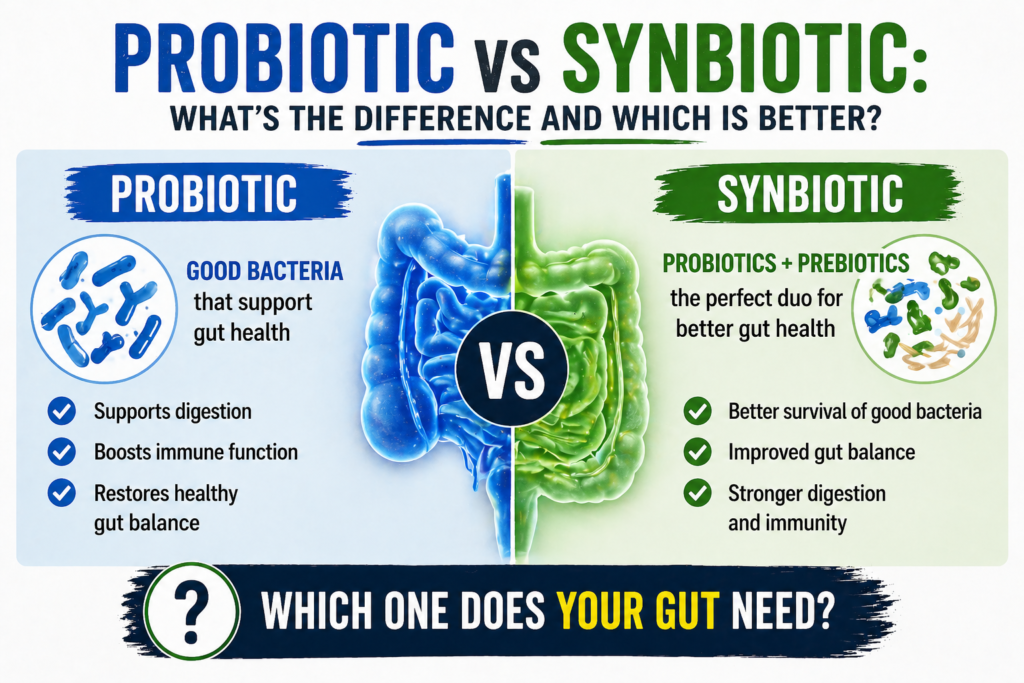
A synbiotic isn’t just a fancy probiotic — it’s actually more effective. Here’s the difference and why it matters for your gut health.
Most People Have Never Heard of a Synbiotic
You know what a probiotic is. You’ve probably taken one. But if someone asked you the difference between a probiotic and a synbiotic, would you know the answer?
Most people don’t — and it’s actually a really important distinction if you’re serious about improving your gut health. Because the two aren’t the same thing, and the gap in effectiveness between them is bigger than most supplement brands want to admit.
Let’s break it down in plain language.
| Quick Comparison | Probiotic | Synbiotic |
|---|---|---|
| Contains live bacteria | Yes | Yes |
| Contains prebiotic fiber | Usually No | Yes |
| Bacteria fed and supported | No | Yes |
| Longer-lasting gut colonization | Limited | Better |
| Overall effectiveness | Good | Better |
What Is a Probiotic?
A probiotic is a supplement (or food) that contains live beneficial bacteria. When you swallow a probiotic capsule, you’re introducing live microorganisms into your digestive system — bacteria like Lactobacillus and Bifidobacterium strains that are known to benefit gut health.
The goal is to replenish or add to the beneficial bacteria already living in your intestines. A healthy gut microbiome is diverse and balanced. When that balance gets disrupted — by antibiotics, poor diet, stress, illness — probiotics help restore it.
Standard probiotics are effective. The problem is that the bacteria introduced by a probiotic don’t always stick around. Without the right environment and food source, they may pass through your system without fully colonizing. That’s where synbiotics change the game.


What Is a Synbiotic?
A synbiotic is a combination of probiotics AND prebiotics designed to work together. The prebiotic component — usually a type of plant fiber — serves as food for the probiotic bacteria, helping them survive, multiply, and establish themselves in your gut more effectively.
Think of it this way: a probiotic drops beneficial bacteria into your gut. A synbiotic drops the bacteria AND brings their lunch. The result is bacteria that are better fed, more likely to survive stomach acid, and more likely to actually colonize your intestines long-term.
| Component | What It Does | Found In |
|---|---|---|
| Probiotic (live bacteria) | Replenishes beneficial gut bacteria | Both probiotics and synbiotics |
| Prebiotic (fiber) | Feeds and supports the live bacteria | Synbiotics only |
| Combined synergistic effect | Better colonization, longer-lasting results | Synbiotics only |
Why Does It Matter That Bacteria Have Food?
This is the part that gets overlooked most often. Probiotic bacteria are living organisms. Like any living thing, they need fuel to survive and thrive. Without a food source, even the best bacterial strains introduced by a probiotic may not establish themselves effectively in your gut.
Prebiotics — typically inulin, FOS (fructooligosaccharides), or other plant-based fibers — pass through your stomach undigested and arrive in your intestines where the bacteria live. There, they serve as a fuel source that allows beneficial bacteria to grow, multiply, and outcompete the harmful bacteria that cause digestive issues.
When probiotics and prebiotics are combined in a synbiotic, the bacteria arrive with their food source already available. The result is more effective colonization, faster results, and longer-lasting gut health benefits.



Probiotic vs Synbiotic: Which Should You Take?
For most people who are serious about improving their gut health — not just taking something because they feel like they should — a synbiotic is the better choice. The research supports it, the logic supports it, and real-world results back it up.
That said, there are situations where a targeted single-strain probiotic makes sense. If you specifically need Lactobacillus rhamnosus GG for acute diarrhea, a product like Culturelle delivers that targeted strain effectively and affordably.
But for comprehensive, long-term gut health — covering bloating, irregularity, immunity, and the full range of digestive wellness — a synbiotic wins.
| Goal | Better Choice |
|---|---|
| Targeted acute diarrhea relief | Single-strain probiotic (Culturelle) |
| Long-term bloating reduction | Synbiotic (Seed DS-01) |
| IBS-C or IBS-M management | Synbiotic (Seed DS-01) |
| Post-antibiotic recovery | High-CFU probiotic or synbiotic |
| Overall gut + immune + skin health | Synbiotic (Seed DS-01) |
The Best Synbiotic Available Right Now
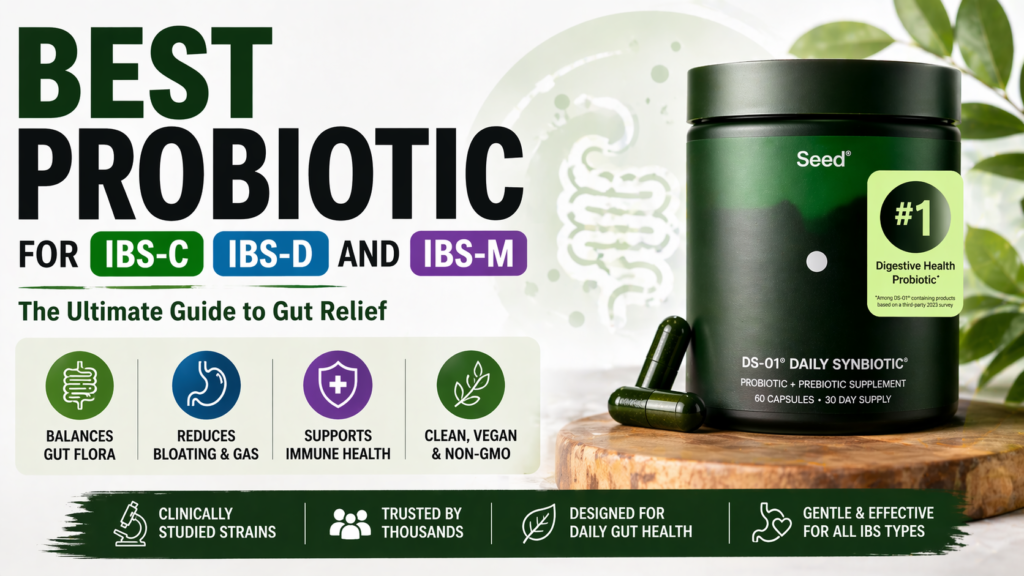
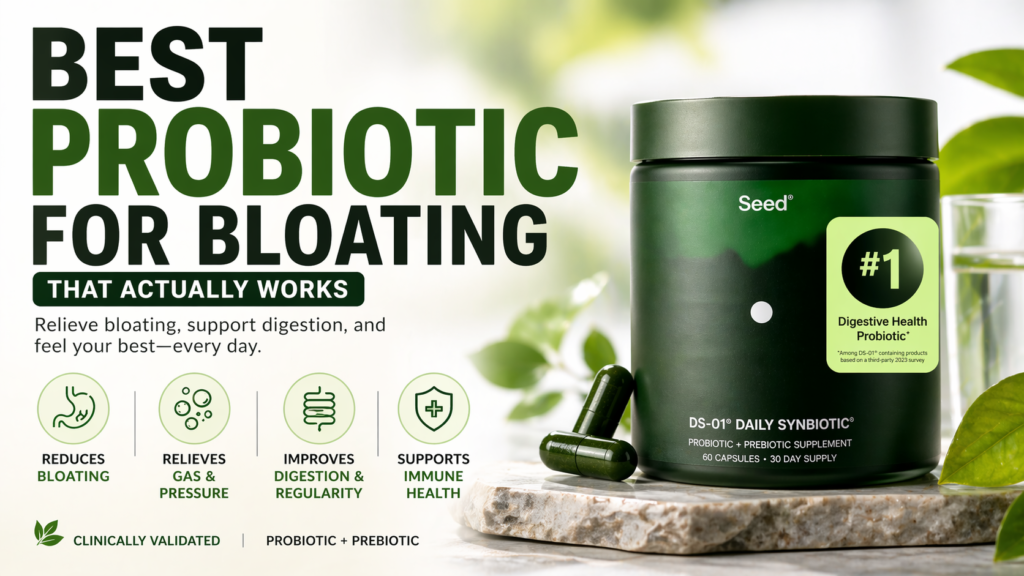
Seed DS-01 Daily Synbiotic is the gold standard in this category. It uses a genuinely innovative two-in-one nested capsule — the outer layer is a prebiotic made from Indian pomegranate, and the inner capsule contains 24 clinically studied probiotic strains. The design protects the bacteria through stomach acid and delivers both the probiotics and their prebiotic food source together to your intestines.
It’s shelf stable, vegan, and backed by more published research than any comparable product. It’s also more expensive than a standard probiotic — but when you understand what you’re actually getting, the price makes sense.
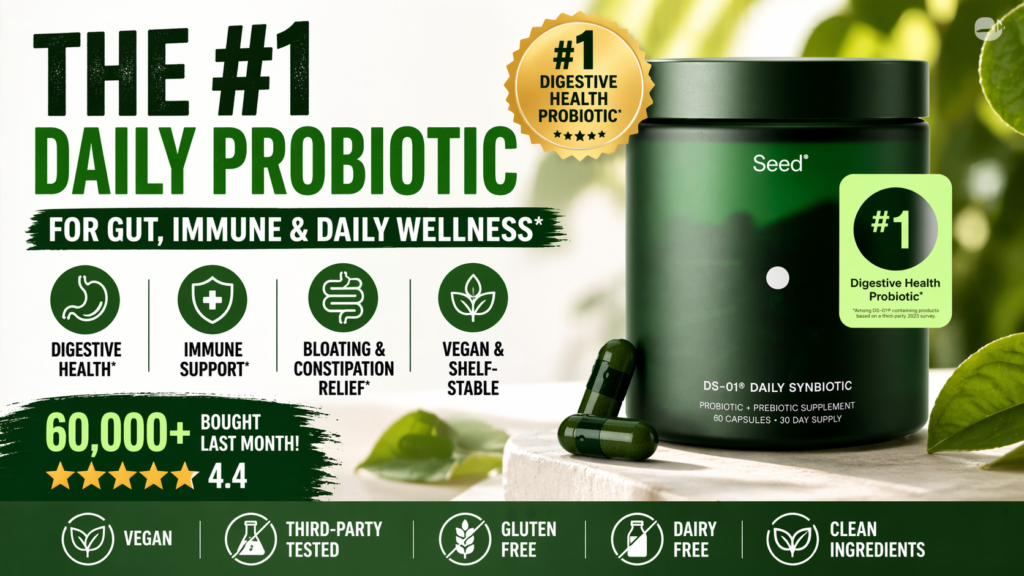
We tested it ourselves and wrote a full breakdown: Seed DS-01 Review — Is It Worth $50 a Month?
Check the current price of Seed DS-01 on Amazon
Can You Get Prebiotic Benefits From Food Instead?
Yes — and you should try to, regardless of whether you’re taking a synbiotic. Prebiotic-rich foods include garlic, onions, leeks, asparagus, bananas, oats, and flaxseed. Eating more of these naturally feeds your beneficial gut bacteria.
The reason a synbiotic still makes sense even for people who eat well is precision. The prebiotic fiber in a synbiotic like Seed is formulated specifically to feed the probiotic strains in the same capsule. That synergy between specific prebiotic and specific probiotic strains is something food alone can’t reliably replicate. That combination is also central to choosing a probiotic for bloating, which compares formulas designed for digestive discomfort.
| Prebiotic Food Source | Prebiotic Type |
|---|---|
| Garlic and onions | Inulin and FOS |
| Oats | Beta-glucan |
| Bananas (slightly underripe) | Resistant starch |
| Asparagus | Inulin |
| Flaxseed | Mucilage fiber |
Frequently Asked Questions
Is a synbiotic better than a probiotic?
For most people with general gut health goals, yes. The addition of a prebiotic significantly improves how well the probiotic bacteria survive and establish in your gut. The research supports synbiotics as more effective for long-term gut health outcomes.
What is the best synbiotic supplement?
Seed DS-01 is currently the most research-backed synbiotic available. It combines 24 clinically studied probiotic strains with a prebiotic outer capsule in a shelf-stable, acid-resistant design. Read our full Seed DS-01 review for more detail.
Can I take a probiotic and prebiotic separately instead?
Yes — taking a separate prebiotic supplement alongside your probiotic can improve results. The advantage of a synbiotic is the convenience and the fact that the prebiotic is specifically formulated to work with the probiotic strains in the same product.
Are there any side effects of synbiotics?
The same adjustment period that applies to probiotics applies to synbiotics — some temporary gas or bloating in the first week is normal. This typically resolves within 5–7 days as your gut adapts.
Bottom Line
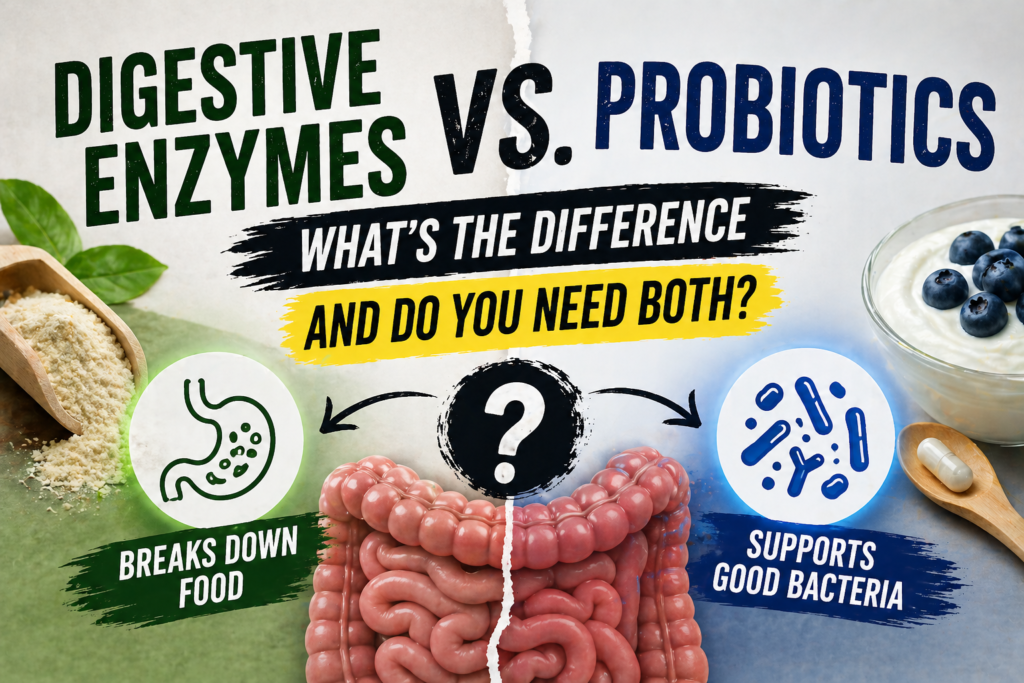
The difference between a probiotic and a synbiotic comes down to one thing: does the bacteria have food? A synbiotic says yes — and that makes a meaningful difference in how effectively the bacteria survive, colonize, and actually improve your gut health. Readers comparing supplements can also see how probiotics fit with digestive enzymes in a broader guide to choosing between gut-health approaches.
If you’re going to invest in a gut health supplement, invest in one that gives the bacteria the best possible chance of working. Seed DS-01 is the best example of a true synbiotic on the market today.
More from TummyCure:
- Seed DS-01 Full Review
- How to Restore Gut Bacteria After Antibiotics
- Kefir: A Natural Gut Healing Powerhouse
About the Author
Rachel Donnelly is a certified nutritional health coach and gut health writer who spent years struggling with IBS and bloating before making digestive wellness her specialty. She writes for TummyCure with one goal: cut through the noise and tell you what actually works. When she’s not deep in microbiome research, she’s fermenting things in her kitchen and losing arguments with her husband about whether kombucha counts as a dessert.
As an Amazon Associate we earn from qualifying purchases through some links in our articles.