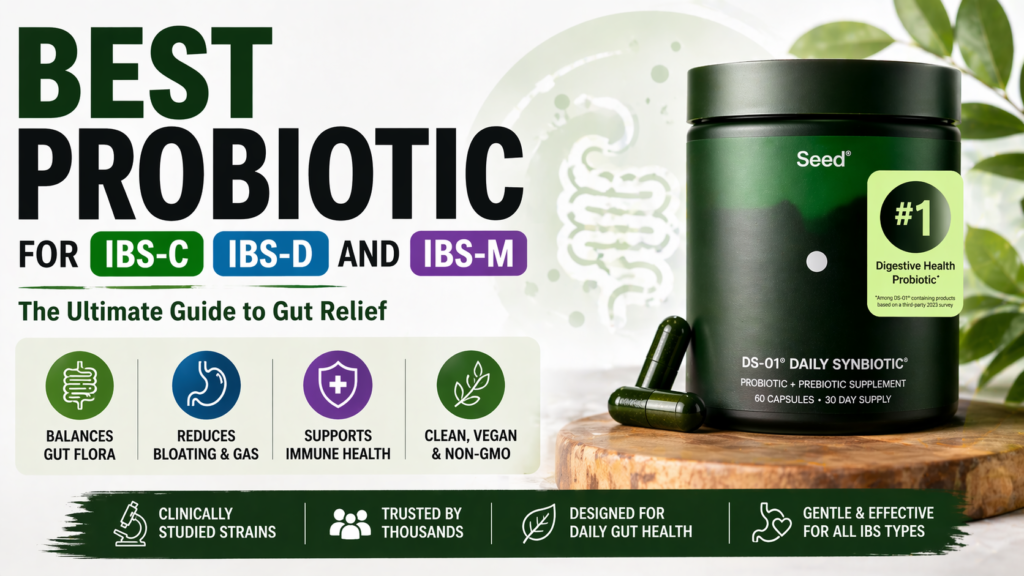
Not all probiotics work for IBS — the right one depends on your type. Here’s what actually helps for IBS-C, IBS-D, and mixed symptoms.
IBS Is Exhausting — And Most Probiotics Don’t Cut It
If you have IBS, you already know the drill. One day you can’t go. The next day you can’t stop. Your stomach hurts after meals that never used to bother you. You’ve probably tried half the things on the internet and been disappointed by most of them.
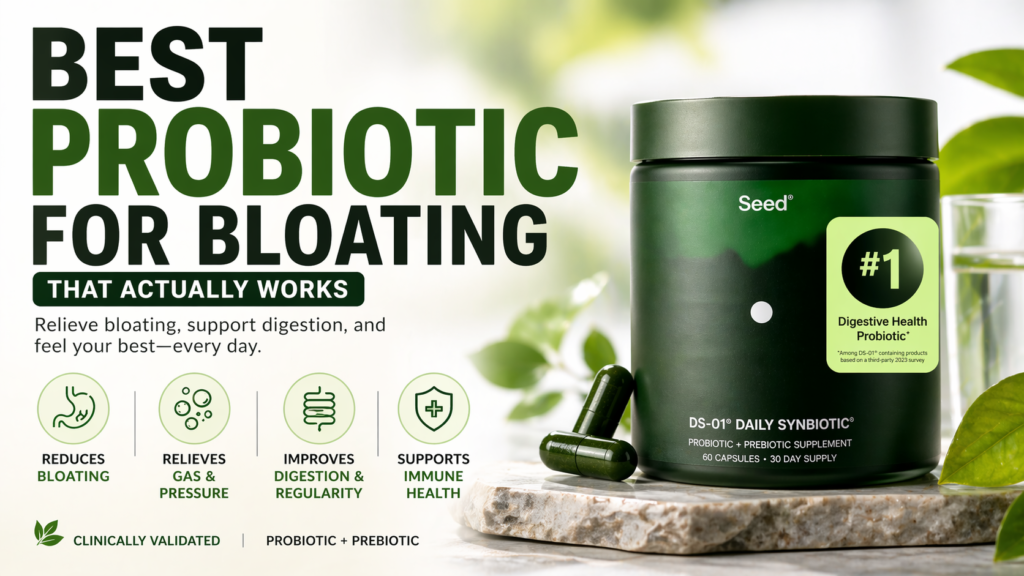
Here’s the thing about probiotics and IBS — the research is genuinely promising. But the results vary wildly depending on which strains you use, which type of IBS you have, and how consistent you are. Most people try a random probiotic, don’t notice much, and give up. That’s usually a strain problem, not a probiotic problem. Readers whose IBS includes prominent bloating can compare the right probiotic strains for bloating before choosing a product.
Let’s fix that.
| IBS Type | Top Pick |
|---|---|
| IBS-C (constipation dominant) | Seed DS-01 |
| IBS-D (diarrhea dominant) | Culturelle Pro Strength |
| IBS-M (mixed) | Seed DS-01 |
| Post-antibiotic IBS flare | Garden of Life Raw |
Can Probiotics Actually Help IBS?
Short answer: yes, for many people. Longer answer: it depends on the strains, your specific type of IBS, and how long you stick with it.
The gut microbiome plays a central role in IBS. Research consistently shows that people with IBS have measurably different gut bacteria compositions compared to people without it — less diversity, lower levels of beneficial bacteria, and higher levels of gas-producing and inflammatory strains.
Probiotics work by reintroducing beneficial bacteria that help regulate gut motility (how fast or slow things move), reduce inflammation in the gut lining, and compete with the bad bacteria causing your symptoms. This doesn’t happen overnight — we’re talking weeks to months — but the evidence for specific strains is solid.
| IBS Symptom | How Probiotics Address It |
|---|---|
| Bloating and gas | Reduces fermentation by harmful bacteria |
| Diarrhea (IBS-D) | LGG and other strains slow transit and firm stools |
| Constipation (IBS-C) | Bifidobacterium strains improve gut motility |
| Cramping and pain | Anti-inflammatory strains reduce gut lining irritation |
| Urgency | Better bacterial balance reduces hypersensitive gut response |
The Best Probiotics for IBS
#1 — Seed DS-01 (Best for IBS-C and IBS-M)
For IBS with constipation or mixed symptoms, Seed DS-01 is our top recommendation. The reason is simple: it addresses IBS from multiple angles simultaneously. The 24-strain formula includes Bifidobacterium strains that have been clinically studied for improving gut motility and reducing constipation, plus strains that target bloating and abdominal discomfort directly.
The two-in-one capsule design — prebiotic outer layer feeding the probiotic inner capsule — means more of the bacteria actually survive to your intestines where they can do the work. For IBS sufferers, that delivery system difference is significant.
Most people with IBS-C or IBS-M report noticeable improvement in regularity and a reduction in bloating and cramping within 3–4 weeks. Full results take 60–90 days of daily use.
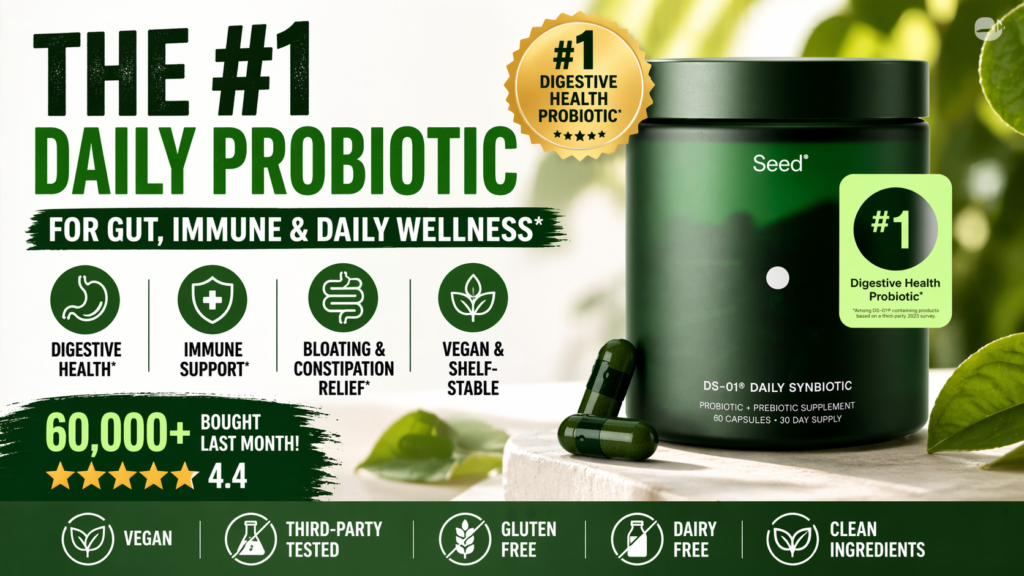
Read our full breakdown: Seed DS-01 Review — Is It Worth $50 a Month?
Check the current price of Seed DS-01 on Amazon
| Why Seed Works for IBS | Detail |
|---|---|
| Multi-strain formula | Addresses bloating, motility, and inflammation together |
| Prebiotic included | Feeds bacteria for longer-lasting gut colonization |
| Acid-resistant delivery | Bacteria survive stomach acid to reach intestines |
| Bifidobacterium strains | Clinically studied for IBS-C and constipation relief |
#2 — Culturelle Pro Strength (Best for IBS-D)
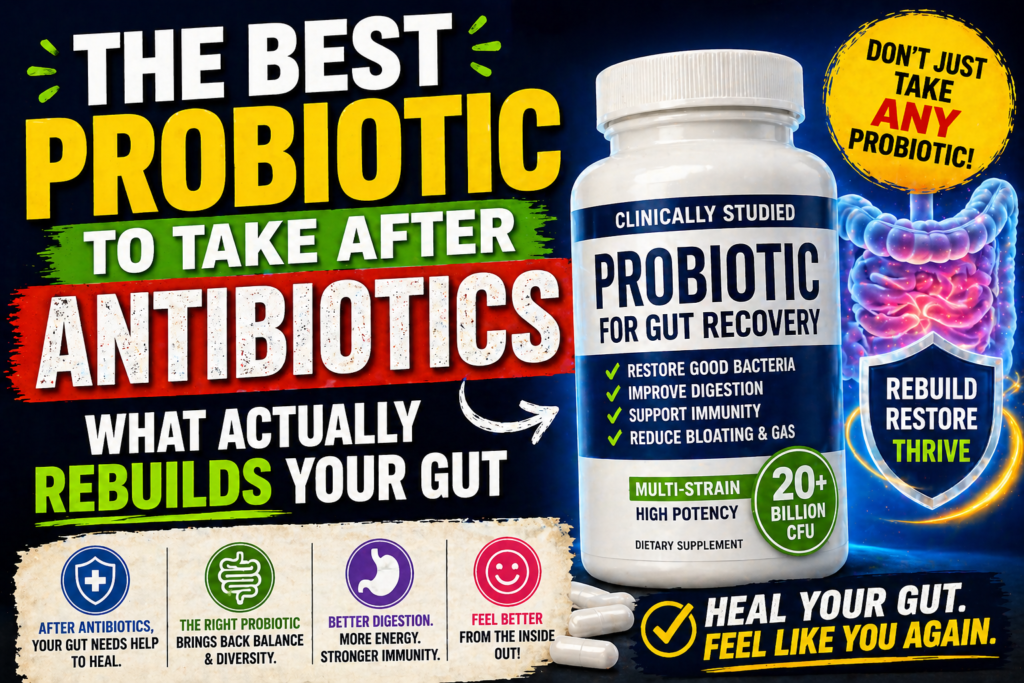
For IBS with diarrhea as the primary symptom, Culturelle Pro Strength is hard to beat at the price point. The Lactobacillus rhamnosus GG strain (LGG) is one of the most extensively studied probiotic strains for diarrhea — it’s been shown in multiple clinical trials to reduce frequency, urgency, and loose stools.
It won’t do everything Seed does, but for IBS-D specifically, it’s a targeted and affordable choice.
Check the current price of Culturelle on Amazon
#3 — Garden of Life Raw Probiotics (Best Post-Antibiotic IBS Flare)
When antibiotics have wiped out your gut bacteria and triggered an IBS flare, you need volume — a lot of bacterial strains reintroduced quickly. Garden of Life Raw delivers 100 billion CFU across 34 strains plus digestive enzymes, making it a strong option for rebuilding a depleted microbiome. Just keep it refrigerated.
Check the current price of Garden of Life on Amazon
| Product | Best IBS Type | Key Strength | Price/Month |
|---|---|---|---|
| Seed DS-01 | IBS-C, IBS-M | Full-spectrum 24-strain synbiotic | ~$50 |
| Culturelle Pro | IBS-D | LGG strain, best studied for diarrhea | ~$25 |
| Garden of Life | Post-antibiotic flare | 100B CFU, 34 strains, digestive enzymes | ~$35 |
IBS-C vs IBS-D vs IBS-M — Does It Change What You Take?
Yes — and this matters more than most people realize.
IBS-C (constipation dominant) responds best to Bifidobacterium-heavy formulas that improve gut motility and help move things along. Seed DS-01 is ideal here.
IBS-D (diarrhea dominant) responds well to Lactobacillus strains — particularly LGG — that help firm up stools and reduce urgency. Culturelle is specifically strong here.
IBS-M (mixed) is the trickiest because you need a formula that can balance both. Multi-strain products like Seed work best because they cover both ends of the spectrum simultaneously.
| IBS Type | Key Strains to Look For | Recommended Product |
|---|---|---|
| IBS-C | Bifidobacterium lactis, B. longum | Seed DS-01 |
| IBS-D | Lactobacillus rhamnosus GG | Culturelle Pro |
| IBS-M | Multi-strain with both Lacto + Bifido | Seed DS-01 |
Frequently Asked Questions
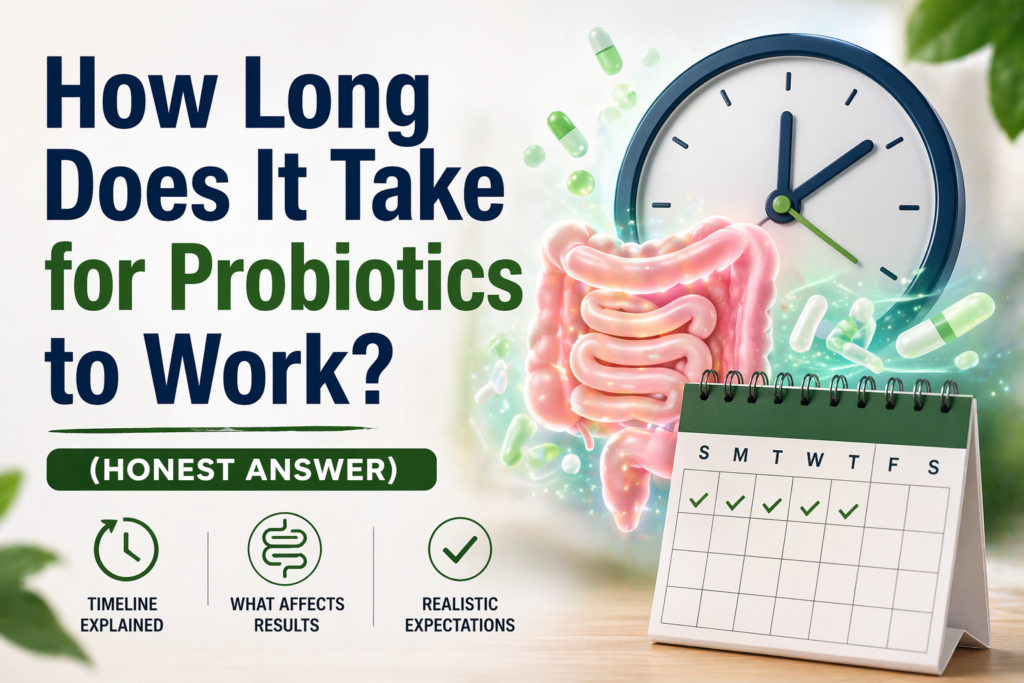
How long do probiotics take to work for IBS?
Most people notice some improvement within 2–4 weeks, but meaningful relief from IBS symptoms usually takes 6–8 weeks of consistent daily use. Don’t judge a probiotic after just two weeks. Readers comparing those milestones can use understanding the realistic timeline for probiotic results to see what typically happens from the first week onward.
Can probiotics make IBS worse?
Temporarily, yes. The first week can bring increased gas or bloating as your gut adjusts. This is normal and usually passes within 5–7 days. If symptoms worsen significantly beyond that, it may not be the right strain for you.
Is Seed DS-01 good for IBS?
Yes — especially for IBS-C and IBS-M. The multi-strain formula covers the range of symptoms better than single-strain products. Read our full Seed DS-01 review for the complete breakdown.
Should I take probiotics every day for IBS?
Yes. Daily consistency is key. Your gut microbiome is constantly being disrupted by diet, stress, and environment. Daily supplementation helps maintain the bacterial balance you’re building.
Are there foods that help probiotics work better for IBS?
Yes — prebiotic foods like bananas, oats, garlic, and asparagus feed your beneficial bacteria and help them thrive. Fermented foods like kefir, kimchi, and yogurt also add natural probiotic support alongside your supplement.
Final Thoughts
IBS is complicated — but your probiotic choice doesn’t have to be. Match the product to your type of IBS, give it enough time to work, and be consistent. That’s the formula.
For most people — especially those with IBS-C or mixed symptoms — Seed DS-01 is the best option available. It’s comprehensive, well-researched, and built for long-term gut health rather than a quick fix.
Try Seed DS-01 on Amazon — our top pick for IBS relief.
More from TummyCure:
- Seed DS-01 Full Review
- IBS-M Relief: Balancing Constipation and Diarrhea Daily
- Living With IBS-D: Managing Symptoms
About the Author
Rachel Donnelly is a certified nutritional health coach and gut health writer who spent years struggling with IBS and bloating before making digestive wellness her specialty. She writes for TummyCure with one goal: cut through the noise and tell you what actually works. When she’s not deep in microbiome research, she’s fermenting things in her kitchen and losing arguments with her husband about whether kombucha counts as a dessert.
As an Amazon Associate we earn from qualifying purchases through some links in our articles.