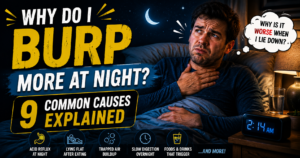
For the longest time, I thought my burping was completely random.
Some days I’d hardly notice it.
Other days I’d be perfectly fine all afternoon, then suddenly start burping repeatedly after dinner while watching TV.
Eventually I realized there was a pattern.
It almost always happened in the evening.
That made me wonder what was different about nighttime compared to the rest of the day.
After learning more about digestion, the answer became much clearer. Your body behaves differently after dinner than it does at breakfast or lunch. You’re usually less active, your meals tend to be larger, and before long you’re lying down to relax or go to sleep.
Those small changes can make burping much more noticeable.
The good news is that nighttime burping is often caused by common digestive issues that can be improved once you identify what’s triggering them.
Is It Normal to Burp More at Night?
It can be.
Many people naturally notice digestive symptoms more during the evening.
Think about what usually happens after dinner.
You slow down.
You sit on the couch.
You may snack while watching television.
A couple of hours later you head to bed.
During that time your digestive system is still working through your largest meal of the day.
If gas builds up or digestion slows down, burping becomes much more likely.
If you’ve noticed burping throughout the day as well, you may want to start with Why Do I Burp So Much After Eating? 11 Common Causes Explained since many nighttime cases actually begin with what happens during dinner.



Why Nighttime Is Different for Digestion
One thing I never considered was how much my evening routine affected my stomach.
Dinner was almost always:
- My largest meal.
- Eaten more quickly because I was hungry.
- Followed by sitting instead of walking.
- Finished with dessert or snacks.
- Sometimes accompanied by carbonated drinks.
That’s almost the perfect setup for trapped gas and burping.
Once I started paying attention, I realized it wasn’t just nighttime.
It was everything leading up to bedtime.



1. You’re Eating Large Evening Meals
This was probably my biggest trigger.
Large meals stretch your stomach much more than smaller meals.
As your stomach expands, pressure builds inside it.
That pressure makes it easier for trapped air to escape through burping.
I noticed this happened far less on nights when dinner was lighter than usual.
Instead of feeling stuffed for hours, my digestion seemed to move much more comfortably.
2. Lying Down Too Soon After Eating
This one made perfect sense once I understood it.
When you’re standing or walking, gravity helps keep stomach contents where they belong.
Once you lie down, that assistance disappears.
Gas moves differently.
Stomach acid may also move upward more easily.
That’s one reason burping often becomes more noticeable after getting into bed.
I found that even waiting an hour or two before lying down helped reduce my evening symptoms.

3. Silent Acid Reflux Often Gets Worse at Night
This surprised me because I rarely experienced heartburn.
Instead, my symptoms were:
- Burping.
- Throat clearing.
- A sour taste.
- Mild coughing.
- Occasionally waking up with a scratchy throat.
Many people have reflux without obvious burning.
Nighttime is when those symptoms often become much more noticeable because you’re lying flat.
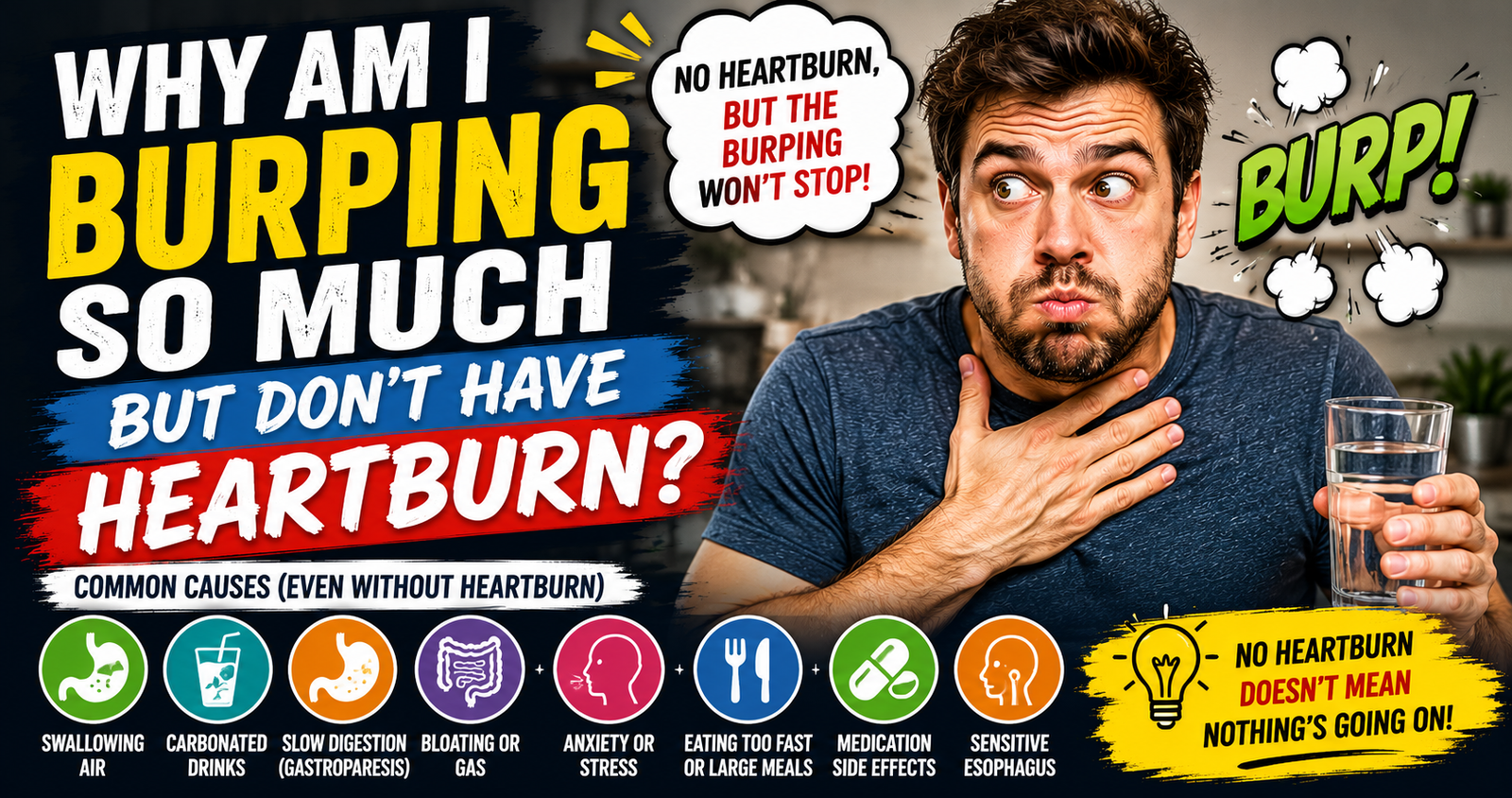
If that sounds familiar, I’d recommend reading Why Am I Burping So Much but Don’t Have Heartburn?. Learning about silent reflux completely changed the way I looked at my own symptoms.
4. Dinner Foods Tend to Produce More Gas
Think about the average dinner.
Pizza.
Pasta.
Burgers.
Mexican food.
Fried chicken.
Compared to breakfast, dinner is often heavier and higher in fat.
Fatty meals generally stay in your stomach longer, giving your digestive system more work to do.
For some people that means more burping later in the evening.

I also noticed bread-heavy dinners tended to bother me more than lighter meals. If that’s something you’ve experienced, you may also find Why Do I Burp After Eating Bread? 8 Possible Reasons helpful because bread isn’t always as easy to digest as people assume.



5. Carbonated Drinks With Dinner
I didn’t think much about what I was drinking until I started noticing a pattern.
On nights when I had water with dinner, I usually burped less.
On nights when I had soda, sparkling water, or beer, the burping often lasted for hours.
The reason is pretty simple.
Those drinks already contain carbon dioxide.
Once that gas reaches your stomach, it has to escape somehow.
Some people notice just a couple of burps.
Others feel like they can’t stop.
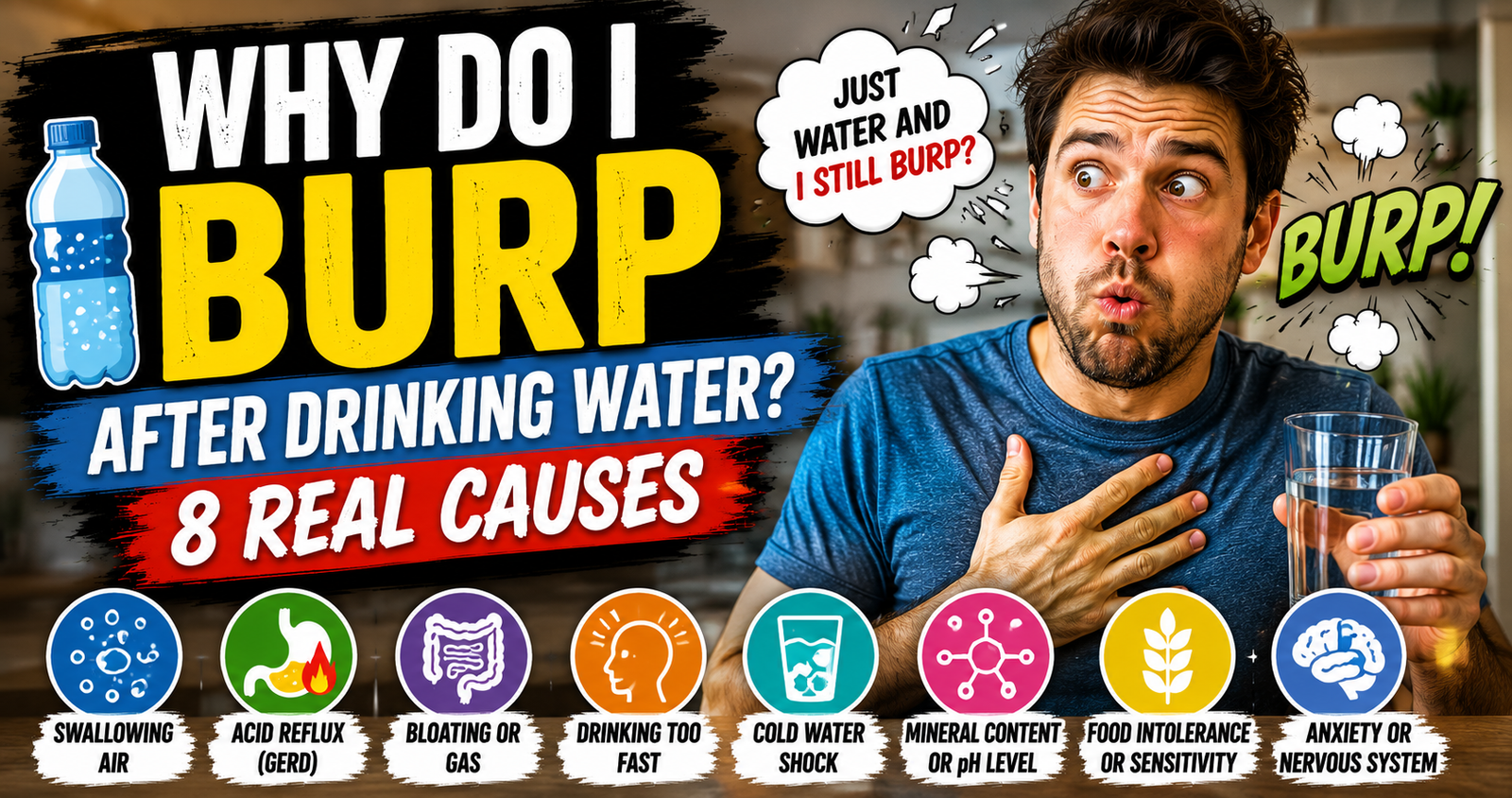
If you’ve ever wondered why plain water sometimes makes you burp too, I explain the difference in Why Do I Burp After Drinking Water? 8 Real Causes. Plain water and carbonated drinks affect your stomach very differently.
6. Trapped Gas Builds Throughout the Day
One thing I found interesting is that your digestive system doesn’t completely reset after every meal.
Gas can slowly build throughout the day.
By evening you’ve already eaten breakfast, lunch, snacks, and dinner.
Even if each meal only produces a little gas, it can add up.
That means nighttime burping isn’t always caused by dinner alone.
It’s sometimes the result of everything you’ve eaten over the past twelve hours.
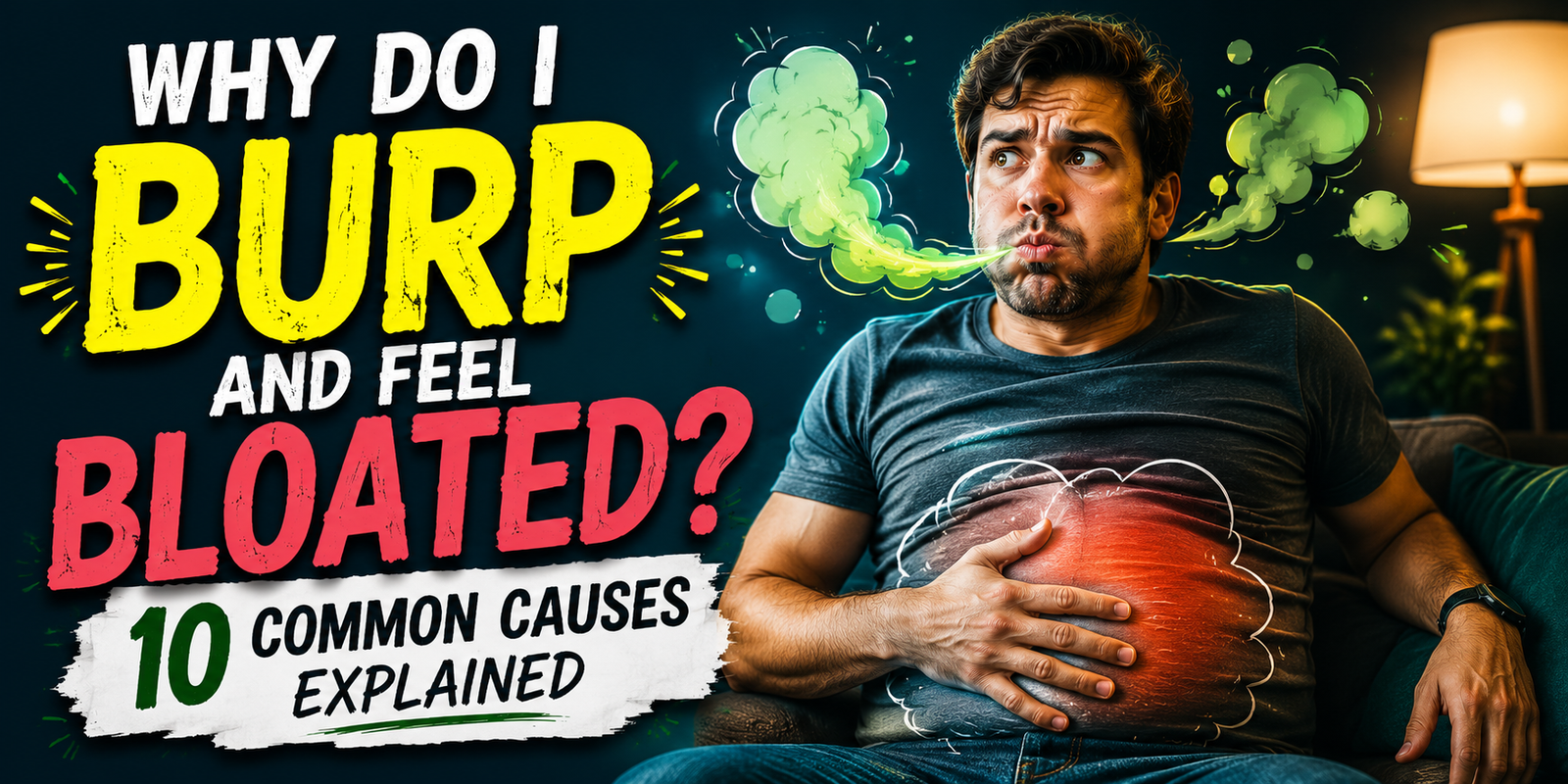
If you’re also feeling pressure or your stomach seems swollen by bedtime, my article Why Do I Burp and Feel Bloated? 10 Common Causes Explained explains why these two symptoms often occur together.



7. A Hiatal Hernia Can Make Nighttime Symptoms Worse
I didn’t know much about hiatal hernias until I started researching digestive problems.
What surprised me was how often symptoms become worse in the evening.
When part of the stomach pushes upward through the diaphragm, lying down may make it easier for both stomach acid and trapped air to move upward.
People with a hiatal hernia commonly notice:
- Burping after dinner.
- Heartburn while lying down.
- Regurgitation.
- Feeling overly full.
- Chest discomfort after eating.

If you’ve already been diagnosed with one, my guide on Hiatal Hernia Diet: What to Eat and Avoid Starting Todaycovers eating habits that may reduce symptoms before bedtime.
8. Sleep Apnea or CPAP Therapy Can Introduce Air
This isn’t one of the most common causes, but it’s worth mentioning because many people never make the connection.
Some people who use CPAP machines swallow small amounts of air while sleeping.
This is called aerophagia.
That swallowed air may lead to:
- Morning burping.
- Bloating.
- Stomach pressure.
- Excess gas.
If your nighttime burping began after starting CPAP therapy, it’s worth mentioning it to your sleep specialist. Sometimes a simple adjustment to your machine’s settings or mask fit can help.

9. Several Evening Habits Can Work Together
For me, there usually wasn’t one single cause.
Instead, it looked something like this:
I skipped lunch because I was busy.
Ate a huge dinner.
Drank a soda.
Sat on the couch for two hours.
Then climbed into bed.
Looking back, it’s easy to see why my stomach struggled.
Each habit added a little more pressure until the burping became almost unavoidable.
Changing just one habit helped a little.
Changing several made a much bigger difference.
What Helped Me Burp Less at Night
Once I noticed my evening routine was part of the problem, I started making a few small adjustments.
The biggest improvements came from:
- Eating dinner a little earlier.
- Choosing smaller evening meals.
- Taking a short walk after dinner.
- Drinking fewer carbonated beverages at night.
- Waiting at least two hours before lying down.
- Paying attention to foods that consistently triggered symptoms.
None of these changes were difficult, but together they made my evenings much more comfortable.
Could Probiotics or Digestive Enzymes Help?
If your nighttime burping is related to poor digestion or excess gas production, they may.
Digestive enzymes may help some people break down meals more efficiently, especially larger dinners that are higher in fat or protein.
Likewise, probiotics may be helpful if your symptoms are connected to an imbalance in your gut bacteria.

I compared several options in Best Digestive Enzymes for Bloating That Actually Work and also reviewed Zenwise Digestive Enzymes after researching one of the most popular products people ask about.

If gut bacteria seem to be part of the problem, you may also find Best Probiotic for Bloating That Actually Worksworth reading.
When You Should See a Healthcare Provider
Occasional burping at night usually isn’t anything to worry about.
However, don’t ignore your symptoms if they’re accompanied by:
- Difficulty swallowing.
- Persistent vomiting.
- Vomiting blood.
- Black or tar-like stools.
- Severe chest or abdominal pain.
- Unexplained weight loss.
- Waking up choking or coughing regularly.
- Symptoms that continue getting worse despite lifestyle changes.
These symptoms deserve prompt medical evaluation.
Frequently Asked Questions
Why do I only burp at night?
Many people eat their largest meal in the evening, drink carbonated beverages with dinner, and lie down shortly afterward. Those habits can all make burping more noticeable at night.
Does lying down make burping worse?
It can. Lying flat changes how gas and stomach contents move, making burping and reflux symptoms more noticeable for some people.
Why do I burp when I first get into bed?
This is often related to digestion still taking place after dinner. Trapped gas, reflux, or swallowed air may become more noticeable once you’re lying down.
Can eating dinner earlier help?
For many people, yes. Giving your stomach more time to digest before bedtime may reduce nighttime burping, especially if late meals seem to trigger your symptoms.
Should I worry if I wake up burping?
Occasional episodes usually aren’t serious. However, if you’re waking frequently with burping, coughing, choking, severe heartburn, or stomach pain, it’s a good idea to discuss those symptoms with your healthcare provider.
Author: Natalie Mercer
Natalie Mercer is a digestive health writer who enjoys helping readers understand everyday digestive symptoms through practical, research-informed advice. She focuses on explaining gastrointestinal conditions in clear, relatable language while encouraging readers to identify patterns in their symptoms and seek medical care when symptoms become persistent or concerning.
As an Amazon Associate we earn from qualifying purchases through some links in our articles.